
How To
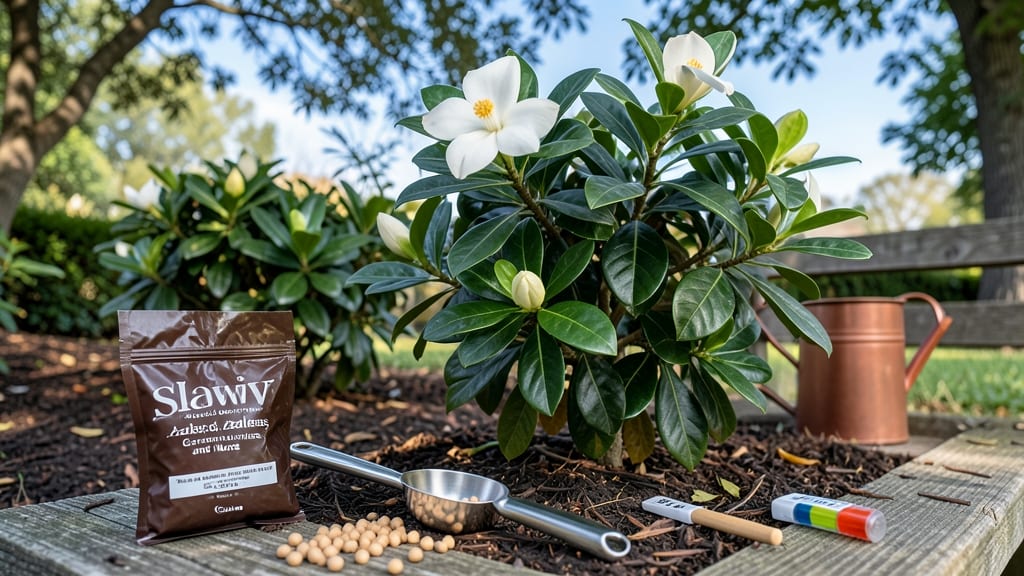
To fertilise gardenias at the right time means catching that first flush of spring growth — when those glossy leaves unfurl and the buds start to swell.
Struggling to coax those stunning white blooms from your gardenia? Timing your fertilisation could be the missing link between a struggling shrub and a fragrant masterpiece.
Too early, and you’ll push tender new growth that won’t survive a late frost. Too late, and you’ll miss the prime window for robust blooms.
Most gardeners in USDA Zones 6-10 should start feeding in early spring, right after the last frost, when the plant wakes up from dormancy. But the real secret lies in understanding your gardenia’s growth phases — and how to adjust your feeding schedule to match them.
Below, I break down the exact months to fertilise, the best types of feed for fragrant blooms, and how to spot when your plant is telling you it’s had enough.
Best times to fertilise gardenias for maximum blooms
Timing your gardenia fertilisation isn't just about feeding the plant—it's about syncing with its natural growth cycles. These acid-loving shrubs need precise care to produce those iconic fragrant white blooms.
The difference between a light feed and a full bloom season often comes down to when (and how often) you fertilise.
Gardenias follow a predictable pattern: early spring growth, summer flowering, and late-summer root strengthening. Each phase demands different nutrients. Skipping the right timing can lead to leaf drop, fewer blooms, or even root burn.
Let's break down the science-backed schedule that transforms struggling shrubs into fragrant showstoppers.
Your early spring fertilisation (March-April) should focus on root stimulation and leaf growth. This is when gardenias wake from dormancy, and a low-nitrogen feed (like 5-10-10) encourages strong new foliage without overwhelming the plant.
Think of it as giving your gardenia a gentle wake-up call—just enough energy to start growing without burning its roots.
By mid-summer (May-July), your gardenia shifts into bloom mode. This is when you switch to a balanced fertiliser (10-10-10) to support flower bud development. The key here is consistency: apply every 4-6 weeks during this phase.
Too much nitrogen now can lead to leafy growth at the expense of blooms, while too little phosphorus will stunt flower production.
Don't stop fertilising when blooms appear—late-summer care (August-September) is about root strengthening. A low-nitrogen, high-potassium feed (like 3-4-6) helps prepare your gardenia for next year's growth.
This phase often gets overlooked, but it's critical for disease resistance and winter hardiness, especially in USDA Zone 6 where frosts are common.
After first frost (typically October 15 in Zone 6), your gardenia enters dormancy. This is when you stop fertilising entirely. Over-fertilising now can stimulate new growth that won't survive winter, leading to weakened plants come spring.
Instead, focus on mulching and watering adjustments to protect roots during cold months.
For gardeners in warmer zones (7-10), the schedule shifts slightly. You can extend your late-summer feed into early fall (September-October) since these regions have longer growing seasons.
However, always monitor your plant's foliar health—if new growth appears after first frost, it's a sign you're fertilising too late.
Pro tip: Pair your fertilisation schedule with regular pruning. Prune spent blooms in early spring to encourage new growth, and shape the shrub after flowering to maintain airflow. This two-step approach maximises both aesthetic appeal and bloom production year after year.
Remember, gardenias are sensitive to over-fertilisation. Always water thoroughly after applying fertiliser to help nutrients reach the roots
How to choose the right fertiliser type for gardenias
Gardenias thrive when given the right nutrients, but not all fertilizers work for these acid-loving shrubs. Their delicate white blooms and glossy leaves demand a balanced NPK ratio with extra micronutrients.
The wrong fertilizer can lead to yellowing leaves or sparse flowers, so choosing wisely is key to keeping your gardenia healthy and blooming.
First, understand that gardenias prefer acidic soil (pH 5.0-6.0). A sulfur-coated fertilizer or one labeled for acid-loving plants is ideal. These formulations include elements like iron and manganese, which gardenias need to prevent chlorosis (yellowing leaves).
Organic options like fish emulsion or cottonseed meal can also work, but they require more frequent applications.
For synthetic fertilizers, look for a balanced NPK ratio like 10-10-10 or 8-3-9. The first number (nitrogen) promotes leafy growth, while the second (phosphorus) supports blooming. The third number (potassium) strengthens roots and disease resistance.
Avoid high-nitrogen fertilizers, as they can lead to lush foliage but fewer flowers, which is the opposite of what you want from a gardenia.
Here’s a quick comparison to help you decide between organic and synthetic fertilizers for your gardenia:
Organic Fertilizers for Gardenias
Pros
- Improves soil structure over time
- Releases nutrients slowly, reducing burn risk
- Supports beneficial microbes in soil
Cons
- Requires more frequent applications
- May contain chunks that need soaking
- Slower results for immediate blooming
Synthetic Fertilizers for Gardenias
Pros
- Provides immediate nutrients for fast growth
- Precise NPK ratios for targeted blooming
- Easy to measure and apply
Cons
- Can burn roots if overapplied
- May raise soil pH over time without acidifiers
- Lacks organic matter benefits
Micronutrients are another critical factor. Gardenias are particularly sensitive to iron deficiency, which causes yellow leaves with green veins. A fertilizer with chelated iron or a separate iron supplement can prevent this issue.
You can also amend your soil with peat moss or sulfur to maintain the right pH level. Always water your gardenia thoroughly after fertilizing to help nutrients penetrate the soil and avoid root burn.
If you’re unsure which fertilizer to choose, start with a balanced, acid-loving plant fertilizer like Miracle-Gro Azalea, Camellia, and Rhododendron. This formula is specifically designed for plants like gardenias and includes the necessary micronutrients.
For organic gardeners, fish emulsion or composted manure can be excellent choices, but dilute them to half-strength to avoid overwhelming your gardenia.
Finally, always follow the label instructions for application rates. Over-fertilizing can do more harm than good, leading to leaf scorch or stunted growth. Monitor your gardenia’s response to the fertilizer—healthy new growth and vibrant blooms are signs you’re on the right track.
Adjust your approach based on what you observe, and don’t hesitate to test your soil pH annually to ensure it stays in the ideal range.