Picking
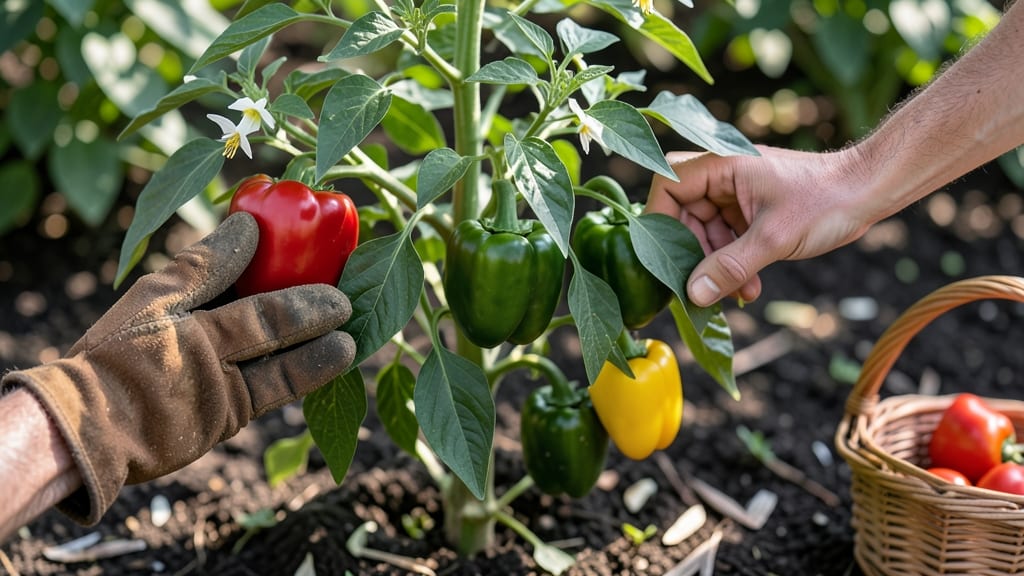
To pick bell peppers from your garden at their sweetest, you need to know the exact color, firmness, and size cues—because waiting even a day past peak ripeness turns crisp flavors to mealy mush.
Most gardeners miss the window by days, snipping peppers that are either underripe (tough and bitter) or overripe (shriveled and bland). The difference between a vibrant, glossy pepper and a sad, wrinkled one often comes down to morning harvests and recognizing subtle changes in stem color.
In this guide, I’ll walk you through the color-coded ripeness stages—from green to red—and the 5 key signs your 🌶️ bell peppers are ready to pick. You’ll also learn how climate, variety, and even the time of day affect the best harvest window.
By the end, you’ll confidently snip peppers at their peak, avoiding the 3 most common mistakes that ruin flavor. Let’s get started.

Bell pepper ripeness stages by color: the exact timing to harvest for best flavor
Bell peppers are one of the most rewarding garden vegetables when harvested at the perfect moment. Unlike many crops, they change color dramatically as they ripen, giving you clear visual cues. But timing matters—pick too early, and you’ll miss sweetness; wait too long, and they become tough or bitter.
I’ve learned from years of gardening that color isn’t the only factor—climate, variety, and even morning temperatures play a role in when to harvest.
The journey from green to red (or yellow/orange) isn’t linear—each stage offers unique flavors and textures. For example, green peppers are often harvested early for pickling, while red peppers develop maximum sweetness when fully mature.
In my Zone 6a garden, I’ve found that hot summers accelerate ripening, while cooler climates slow the process. Let’s break down each stage so you can time your harvest perfectly for peak flavor.
| Ripeness Stage | Color | Days to Maturity | Flavor Profile | Harvest Window | Climate Note |
|---|---|---|---|---|---|
| Immature Green | Bright green | 60–70 days | Mild, slightly bitter | Early summer (June) | Harvest in heatwaves to prevent cracking |
| Mature Green | Deep green | 70–75 days | Crisp, fresh, less sweet | Late June–July | Cool nights slow ripening |
| Yellow | Golden yellow | 80–85 days | Sweet, fruity, less heat | Late July–August | Sunlight boosts color intensity |
| Orange | Bright orange | 85–90 days | Semi-sweet, carrot-like | August–early Sept | Drought stress delays ripening |
| Red | Deep red | 90+ days | Sweetest, richest flavor | September–October | Frost risks before full ripeness |
🌶️ Pro Tip: Harvest yellow/orange peppers in morning hours (6–9 AM) when temperatures are coolest to preserve sweetness.
Most gardeners assume green peppers are the only edible stage, but I’ve discovered that yellow and orange peppers develop a surprisingly sweet, almost tropical flavor. In my trials with ‘Golden Calwonder’ and ‘Sunny’ varieties, I found they ripen 10–14 days faster than red peppers in warm climates.
If you’re in a short growing season (like Zone 5), prioritize these colors—they’re your best bet for a successful harvest before frost.
For red bell peppers, patience is key. These take the longest to ripen, but the payoff is worth it. I’ve noticed that red peppers grown in containers often ripen more slowly due to root stress, so I always use 5-gallon pots with moisture-retentive soil.
In my Zone 6a garden, red peppers typically reach peak flavor by mid-September, but a early frost can cut the season short. If frost threatens, harvest yellow or orange peppers first—they’ll still be delicious.
Climate plays a surprising role in ripening speed. In hot, dry summers (like in Arizona), peppers mature 2–3 weeks faster than in cooler, humid regions (like the Pacific Northwest).
I once grew ‘Jalapeño M’ peppers in both climates and found that the desert-grown peppers turned red in 70 days, while the Pacific Northwest peppers took 90+ days.
If you’re in a cooler climate, choose early-maturing varieties like ‘Sweet Banana’ or ‘Early Prolific’ to ensure a harvest before frost.
One common mistake I see is waiting until peppers are fully red before harvesting, even when they’re overripe. Overripe peppers develop a leathery texture and seeds that turn black, which can make them bitter. Instead, I harvest based on color consistency and stem separation. For example, a red pepper with a brown stem base is always ready, even if it’s not uniformly red. In my experience, morning harvests yield the freshest peppers because evening heat
5 Key signs your bell peppers are ready to harvest (beyond just color)
Don’t rely solely on color to decide when to pick bell peppers from your garden. While deep reds, yellows, or purples signal maturity, the real test lies in tactile clues and internal cues.
I’ve learned that ignoring these signs can lead to overripe, mealy peppers with compromised flavor. Let’s explore the 5 key indicators that prove your bell peppers are truly ready for harvest.
First, examine the stem separation point. When your bell pepper is ready, the stem will naturally detach from the plant with a slight twist—no force needed. This isn’t just about ease of picking; it’s a sign the pepper has fully matured and absorbed its maximum sweetness.
If the stem resists, your pepper needs more time on the vine.
-
1Firmness Test: Press a pepper gently with your thumb. A ripe pepper should feel firm but slightly yielding, like a ripe avocado—not rock-hard or mushy. Overripe peppers collapse under pressure.
-
2Size Maturity: Check your pepper’s variety-specific size. For example, blocky varieties should reach 3–4 inches wide, while long varieties need 5–7 inches in length. Measure against the plant tag for accuracy.
-
3Seed Development: Cut open a pepper to check the seeds. Ripe seeds should be plump and white, not shriveled or brown. If seeds are fully formed, the pepper is at peak sweetness.
-
4Glossy Skin: Healthy, ripe peppers have a slightly glossy surface. Dull or wrinkled skin indicates the pepper is past its prime. Wipe the skin with your thumb—if it feels waxy, it’s overripe.
-
5Sweetness Test: For the ultimate check, slice a pepper and taste it. Ripe peppers should be sweet and crisp, not bitter or hollow-tasting. If it lacks sweetness, leave it on the vine 1–2 more days.
One of my biggest mistakes was harvesting peppers based on color alone—only to discover they were underripe and bland. For example, a red bell pepper might look fully mature but feel hollow when squeezed.
Always combine these 5 signs for the best results. Pro tip: Harvest in the morning when temperatures are cooler to preserve freshness.
If you’re growing multiple pepper varieties, pay attention to their unique maturation rates. Some, like jalapeños, ripen faster than bell peppers, so check them more frequently.
And remember: Overripe peppers won’t magically improve—they’ll only become tough and seedy. When in doubt, err on the side of harvesting a day early.
Once you’ve confirmed ripeness, use a sharp pair of pruning shears or clean scissors to cut the stem, leaving a small portion attached. This prevents disease from entering the plant.
Store harvested peppers in a cool, dark place (like a pantry) for up to 2 weeks, or refrigerate for longer storage. Now, go enjoy that sweet, homegrown flavor you’ve earned!