
Picking
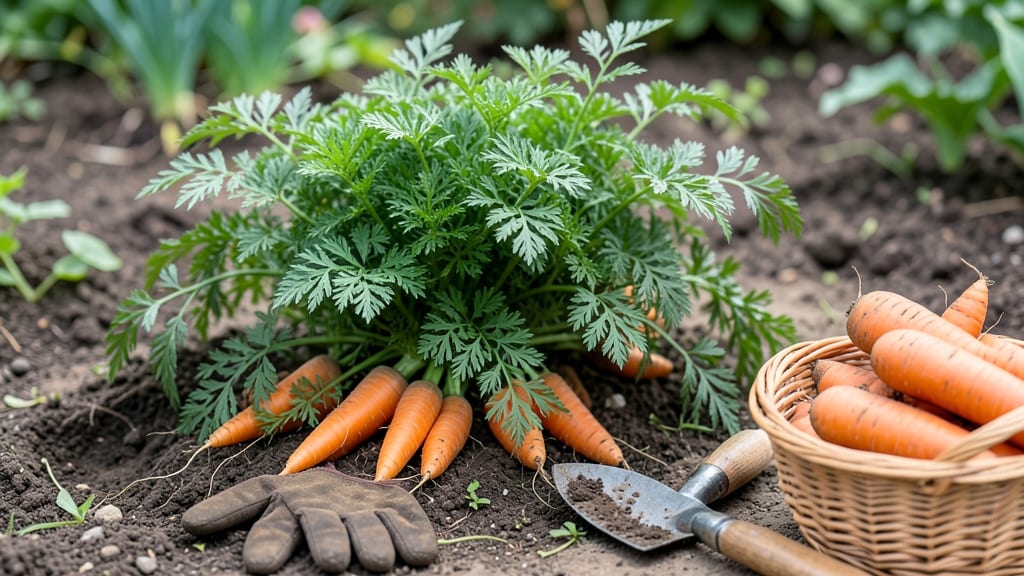
To pick carrots in your garden at the perfect moment means harvesting them when they’re sweetest and crispest—not before they’re ready, and not after they’ve turned woody.
Picture this: You’ve spent weeks nurturing your 🥕, and now you’re staring at a patch of green tops, wondering if it’s time to pull them. One wrong move, and you’ll end up with roots that are either too small or tough enough to chew.
The good news? There’s a simple way to tell—using just your hands and eyes.
Most gardeners wait until the tops are 4-6 inches tall and the roots feel firm when gently squeezed. But there’s more to it than just size—soil moisture, leaf color, and even the time of day can make the difference between a crunchy bite and a sad, limp snack.
In this guide, I’ll walk you through three tactile tests to determine the ideal harvest time, plus the best practices for storing your carrots so they stay fresh long after you pull them from the ground.

3 Tactile tests to determine perfect carrot harvest time
There’s nothing worse than pulling a carrot from the garden only to find it’s still woody and underdeveloped—or worse, already woody and bitter from overgrowth. The secret to harvesting crisp, sweet carrots lies in your hands, not just the calendar.
These three tactile tests let you feel, not guess, when your carrots are at peak flavor and texture, whether you’re growing baby carrots or full-sized roots.
Most gardeners rely on days-to-maturity charts, but soil conditions, weather, and variety differences mean those timelines are just starting points. Instead, use these hands-on assessments to determine ripeness: checking soil resistance, leaf flexibility, and root size.
Each test gives you a different clue—like reading a carrot’s maturity manual through touch alone. Let’s dive into how to use them like a pro.
Gently squeeze the soil around the carrot’s shoulder (where the root meets the leafy top). If the soil resists slightly but gives way, the carrot is ready. Overly loose soil means it’s underripe; rock-hard soil signals overgrowth.
Grasp a leaf stem near the base and bend it gently. A slight bend (like a bow) means the carrot is mature. Leaves that snap easily? Harvest now—before they bolt. Floppy or yellowing leaves mean it’s past prime.
Use your thumb and forefinger to feel the exposed root tip. A firm, smooth carrot (like a pencil’s diameter) is ideal. If it’s smaller than 3 inches, it’s baby-sized; if it’s larger than 8 inches, it may be tough. Forked or knobby roots? Time to harvest before they worsen.
Start with the soil resistance test first—it’s the most reliable for avoiding woody carrots. I’ve seen gardeners skip this step and end up with roots that feel like they’ve been chewed by a squirrel. The trick is to test a few carrots in the same patch, since growth rates vary.
For example, Nantes varieties often mature faster than Danvers, so don’t assume all your carrots are ready at once.
Next, pair the leaf flexibility test with the soil check. Carrot tops are like little barometers for root development. If the leaves feel sturdy but not brittle, you’re in the sweet spot.
Pro tip: Avoid harvesting on hot afternoons—leaves wilt naturally, making them seem less flexible than they are. Always test in the morning for accurate results.
The root size test is where most beginners go wrong—they judge by leaf height alone. A carrot’s shoulder (the widest part just below the leaves) should be 1–2 inches below soil level for mature roots.
Use a ruler or your fingers to measure: hold the carrot vertically and compare it to your thumb (about 1 inch wide). If it’s longer than your thumb, it’s likely ready.
One common mistake? Waiting until the entire patch looks uniform. Carrots mature in waves, so check a few randomly selected plants every 3–5 days once they’re near your target size. For baby carrots (harvested at 3–4 inches), you’ll need to test even more frequently.
I like to mark a test row with flags so I don’t accidentally dig up the wrong carrots.
What if your carrots fail one or more tests? Don’t panic. Underripe carrots can be left in the ground to mature (just keep testing!), while overripe ones are best harvested immediately—even if they’re past their prime.
Store them in the fridge for 2–3 weeks or roast them for a sweeter flavor. The key is to act on the first signs of readiness, not wait for perfection.
For extra accuracy, combine these tests with visual cues. Look for vibrant green leaves (not yellowing) and a smooth, tapered root. Avoid harvesting after a hard frost, as cold weather turns carrots woody.
With these tactile tricks, you’ll never second-guess your harvest again—just crisp, sweet carrots every time you dig.
Carrot growth stages: when to expect harvest-ready roots
Understanding the carrot growth stages helps you predict when your garden roots will reach peak sweetness and crispness. From tiny seedlings to harvest-ready carrots, each phase lasts 50 to 80 days, depending on the variety.
My Nantes carrots typically mature in 70 days, while Danvers varieties take 60 to 65 days—knowing these timelines prevents overgrowth or underripe harvests.
Seasonal adjustments matter too. In cooler climates like USDA Zone 6a, spring-planted carrots often reach harvest by early summer, while fall plantings mature by October. My Chantenay carrots, for example, thrive in shorter seasons and mature in just 65 days, making them ideal for late summer sowings.
| Stage | Days to Maturity | Variety Examples | Harvest Cues |
|---|---|---|---|
| Seedling | 7-14 days | All varieties | First true leaves appear |
| Early Growth | 30-40 days | Danvers, Chantenay | Roots reach 2-3 inches |
| Mature | 50-80 days | Nantes, Paris Market | 6-8 inch roots, firm skin |
| Baby Carrot | 40-50 days | All varieties | 3-4 inch roots, tender texture |
For baby carrots, harvest when roots reach 3-4 inches—this happens around 40 to 50 days for most varieties. My Paris Market carrots, for instance, are ready in just 50 days and stay sweetest when harvested young.
For full-sized carrots, wait until roots reach 6-8 inches and the shoulder (top of the root) is 1-2 inches below soil.
Seasonal timing affects maturity too. In spring plantings, expect harvests by late June, while fall plantings mature by October. My Danvers carrots, planted in August, often reach harvest just before the first frost, giving them time to sweeten in cooler weather—a trick I learned from local farmers.
Don’t let carrots overmature—they become woody and bitter. Check for firmness by gently squeezing the root: if it resists pressure, it’s ready. Also, look for vibrant green leaves (not yellowing) and smooth skin without cracks. These signs confirm your carrots are at peak flavor.
Pro tip: Plant successive crops every 2-3 weeks for a continuous harvest. My garden stays productive this way, with carrots ready from summer through fall. Just remember—harvest timing is the key to crisp, sweet roots every time!