Picking
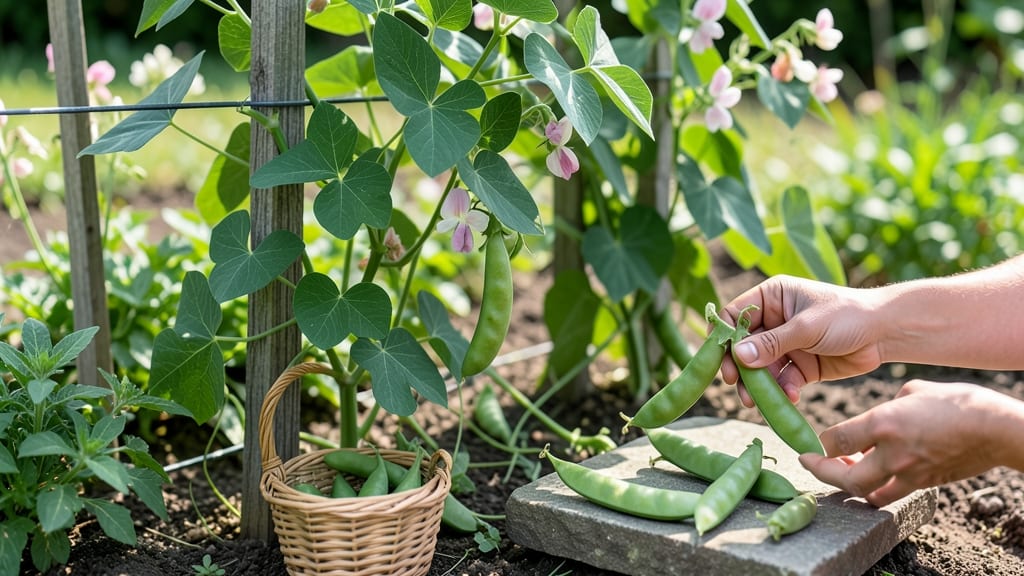
To pick peas from your garden at the perfect moment means capturing their sweetest, crispest flavor—right when they’re firm but before the seeds inside harden.
Peas straight from your garden taste sweeter and fresher than anything you’ll find in the store—but timing is everything. Harvest too early, and you’ll miss out on peak flavor; wait too long, and they’ll turn tough or bitter.
Here’s the key: check for pods that are 2-3 inches long, bright green, and just starting to swell. A gentle squeeze should reveal a slight give, not rock-hard seeds.
Below, I’ll walk you through three simple tests to nail the harvest window, plus tips to maximize your yield and keep the flavor fresh for weeks.

3 Simple visual tests to determine pea ripeness
Knowing exactly when to pick peas from your garden ensures you enjoy their sweetest, most tender flavor. Unlike store-bought peas that often taste bland, homegrown peas packed with freshness when harvested at the right moment.
The key lies in three simple visual cues that reveal perfect ripeness: pod size, color consistency, and texture firmness. Master these tests, and you’ll never miss the peak harvest window again.
First-time pea growers often struggle with timing because peas ripen quickly—sometimes in just a few days. Overlooking these visual signals can mean harvesting peas that are either too immature (mealy and flavorless) or overripe (tough and bitter).
The good news? These tests work for both snap peas and shelling peas, making them universally applicable to your garden. Let’s break down each method so you can confidently pick peas at their prime.
🌱 Numbered Highlights: When to Pick Peas
- Pod Size: Aim for pods that are 2-3 inches long and plump but not bulging. Snap peas should be slightly rounded, while shelling peas should feel firm when gently squeezed. Too small? Wait 1-2 days for fuller flavor.
- Color: Bright, even green (or the variety’s specific hue) signals ripeness. Dull or yellowing pods mean they’re past their prime. Check undersides for discoloration—a sign of overripeness or disease.
- Texture: Gently press a pod—it should yield slightly (like a ripe avocado) but not feel mushy. Overly firm? They’re underripe. Soft or wrinkled? They’ve passed their peak and may be stringy or tough.
- Stem Test: Bend the stem near the pod—it should snap cleanly. If it resists or tears, the pea is still maturing. Pro tip: Harvest in the morning when pods are crispest and most flavorful.
⚠️ Common Mistake: Waiting until pods look "big enough" can lead to tough peas. Harvest frequency (every 2-3 days) prevents overripening and encourages more production.
Let’s start with the most obvious clue: pod size. For snap peas, look for pods that are about the length of your thumb (roughly 2-3 inches). They should feel slightly rounded but not overly swollen.
Shelling peas, like the classic Sugar Snap or Lincoln varieties, follow the same rule—plumpness indicates sweetness. If pods are still pointed or smaller than a golf ball, give them another day or two to mature. Pro tip: Use a ruler or your hand as a quick reference tool while harvesting.
The color of your pea pods is another foolproof indicator. Fresh, ripe peas should boast a vibrant green hue, consistent from top to bottom. Dull or yellowing pods are a red flag—they’ve likely passed their prime and may develop a tough, fibrous texture.
Pay special attention to the underside of the pod, where discoloration often appears first. Varietal differences matter: Some heirloom peas, like Oregon Sugar Pod, may have a slightly bluish tint, while others stay bright green. Always compare pods to the variety’s description in your seed packet.
Texture is where many gardeners trip up, but it’s one of the most reliable tests. A ripe pea pod should feel firm yet slightly yielding when you gently press it between your thumb and forefinger.
Think of it like testing a ripe tomato—just enough give to know it’s ready. Underripe pods feel rock-hard, while overripe pods become soft or wrinkled. If you’re unsure, try the stem snap test: hold the pod’s stem and bend it gently. If it snaps cleanly, it’s ready to pick.
If it resists, wait another day.
One of the biggest mistakes I see in home gardens is harvesting too infrequently. Peas ripen rapidly, and skipping just a day or two can turn your bounty into a tough, stringy mess.
To avoid this, make it a habit to check your pea plants every 2-3 days during peak season. Morning harvests are ideal because peas are crispest and most flavorful after a cool night.
Use sharp scissors or your fingers to snap pods cleanly from the vine—never tug, as this can damage the plant. Regular harvesting also encourages your pea plants to produce more pods, extending your harvest window by weeks.
Seasonal factors can also affect ripeness, especially if you’re growing peas in hotter climates or during late-summer plantings. Heat stress can cause pods to mature faster, so monitor them closely.
If your garden is shaded or cooler, peas may take longer to ripen—don’t rush the process. Frost-sensitive varieties, like many snap peas, should be harvested before temperatures drop below 30°F. Always check your seed packet for specific recommendations, as some varieties are more cold-tolerant than others.
For snap peas, like Sugar Ann or Super Sugar Snap, the goal is to pick pods when they’re crisp and sweet but before the seeds inside become too large.
These peas are best enjoyed fresh, so aim to harvest them within a few hours of picking. Shelling peas, on the other hand, can tolerate slightly larger seeds—they’re meant to be shelled, after all. Look for pods that are fully plump but still tender.
If you’re unsure whether to shell or snap, try both: some varieties, like Oregon Sugar Pod, can be enjoyed either way!
Finally, don’t overlook the seed visibility test. When peas are perfectly ripe, you should be able to see the seeds through the pod’s skin, but they shouldn’t fill the pod completely. If seeds are bulging or nearly touching each other, the pea is overripe.
This test is especially useful for dwarf varieties, where pods can be harder to judge by size alone. Remember: The earlier you harvest, the sweeter and more tender your peas will be. Once pods start to yellow or dry out, their flavor and texture decline rapidly.
With these three visual tests—
Pea variety matters: harvest timing for shelling vs. snap peas
Not all peas are created equal when it comes to harvest timing. Shelling peas, like Sugar Snap, and snap peas, like Sugar Ann, ripen differently, and picking them at the wrong stage can ruin your harvest.
Shelling peas need their pods to fully mature for sweet peas inside, while snap peas should be harvested before they overmature. Understanding these differences ensures a bountiful, flavorful harvest.
For shelling peas, wait until pods are 3-4 inches long and slightly puffy, but before the peas inside become too large. Snap peas, on the other hand, should be picked when pods are 2-3 inches long and crisp, but still tender.
Ignoring these differences can lead to tough, bitter peas or lost yield. Let’s break down the key distinctions so you can harvest at peak perfection.
| Pea Type | Pod Size | Texture | Harvest Window | Days to Maturity |
|---|---|---|---|---|
| Shelling Peas (e.g., Sugar Snap) | 3-4 inches | Firm but yielding | After flowers fade, before peas swell | 60-70 days |
| Snap Peas (e.g., Sugar Ann) | 2-3 inches | Crisp and tender | When pods are fully rounded | 55-65 days |
Harvesting at the right time isn’t just about flavor—it’s about extending your harvest window. For shelling peas, pick every 2-3 days once they start producing. For snap peas, harvest every 1-2 days to encourage more pods.
Regular picking also prevents overcrowding, which can reduce yield and quality. Think of it like pruning: the more you harvest, the more your plants will produce.
Another pro tip: Check pods in the morning when they’re cool and crisp. Avoid harvesting after rain, as moisture can make pods rubbery. If you miss the window, snap peas can turn woody within a day, while shelling peas may develop tough skins.
Staying consistent with your checks ensures you never miss peak ripeness.
To maximize your harvest, consider planting both types in succession. Start with snap peas for an early crop, then follow with shelling peas for a later harvest. This staggered approach gives you fresh peas for weeks, rather than a single overwhelming harvest.
Plus, it’s a great way to experiment with flavors—snap peas are sweet and crunchy, while shelling peas offer a more classic, buttery taste.
Remember, the key to success is observation. Pay attention to pod size, color, and texture, and don’t hesitate to taste-test a few pods to gauge ripeness. With the right timing, you’ll enjoy a garden full of sweet, crisp peas that rival anything you’d buy at the store. Happy harvesting!