
Picking
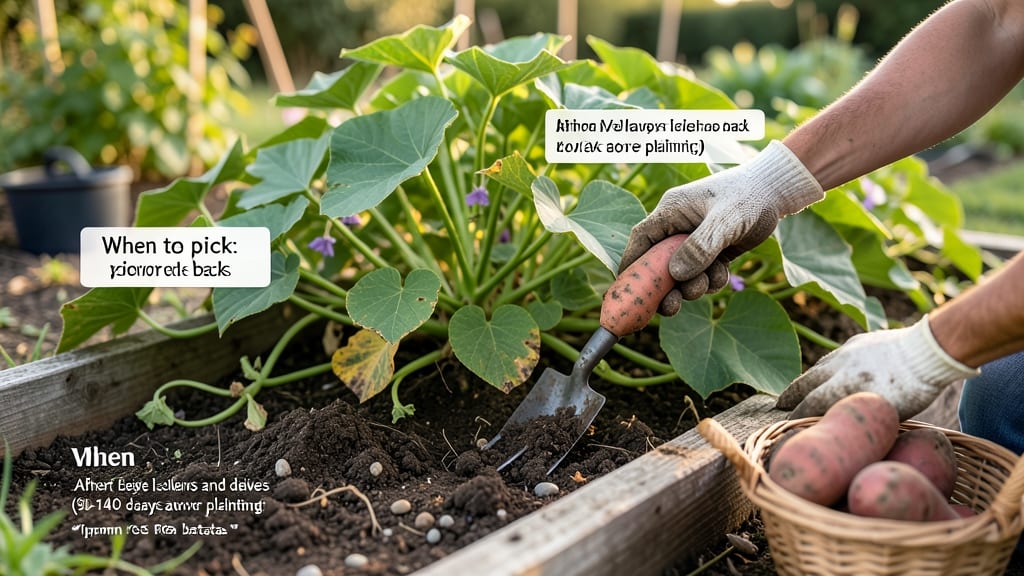
To pick sweet potatoes from the garden at the perfect moment means waiting until 90 to 140 days after planting—when the vines yellow and tubers reach 3 to 6 inches in size.
Sweet potatoes left too long in the ground turn woody and lose their sweet flavor—while harvesting too early means small, underdeveloped tubers. Timing is everything, but how do you know exactly when to pull them from your garden?
Look for yellowing leaves and stems that snap easily when bent—these are clear signs your 🍠 are ready. The skin should also feel firm, resisting pressure from your fingernail, while the tubers reach a size perfect for roasting or storage.
In this guide, I’ll break down the exact visual cues to watch for, how soil temperature affects readiness, and the best practices for storing your harvest to keep it sweet and fresh for months.

How to determine sweet potato readiness using 3 key visual & texture signals
Harvesting sweet potatoes at the right moment ensures maximum sweetness and optimal storage life. The key is watching for three clear visual signals—leaf color, skin firmness, and tuber size—that tell you when your crop is ready to pull.
Ignoring these cues often leads to woody tubers or underdeveloped harvests.
First, pay attention to the vine and leaves. Healthy green foliage means your sweet potatoes still need time in the ground. But when the leaves turn yellow and start wilting, it’s your first sign that the tubers are maturing below.
This process usually begins 2-4 weeks before harvest and accelerates as temperatures drop.
The second signal to watch is the skin texture of the tubers. Gently press a fingernail into the skin—if it doesn’t puncture easily, your sweet potatoes are ready.
Soft skin means they’re still growing and need more time. For Beauregard varieties, this firmness usually appears 10-14 days before the vines fully die back.
Size matters too! Aim for 3-6 inch tubers—anything smaller is underdeveloped, while larger ones may be past their prime. Dig up a test tuber to check: if it’s firm and sweet-smelling, your crop is ready. Smaller tubers (<2 inches) often lack the sweetness and storage potential of fully mature ones.
Don’t wait until the first frost—cold temperatures can damage the tubers. In USDA Zone 6a, that means harvesting by mid-October. If frost hits early, cover plants with row fabric to buy time. But remember: overripe tubers become woody and lose flavor, so timing is critical.
Pro tip: Test one tuber by baking it immediately after harvest. If it’s sweet and moist, your whole crop is ready. If it’s starchy and bland, wait another week. This simple test saves you from harvesting too early or too late.
For container-grown sweet potatoes, the same rules apply. Check for yellowing leaves and firm skin, but be extra gentle when digging—tubers in pots mature faster due to limited soil volume. If your plants are in 5-gallon containers, harvest when the vines yellow, even if tubers are slightly smaller.
Regional differences matter! In warmer climates (Zones 8-10), sweet potatoes may stay green longer. Monitor soil temperatures—when they drop below 55°F (13°C), it’s time to harvest. In cooler areas, prioritize leaf yellowing over tuber size, as growth slows earlier.
Finally, avoid the common mistake of harvesting based on days alone. While most varieties mature in 90-140 days, environmental factors like sunlight and rainfall can shift this window by weeks. Always combine visual cues with texture tests for the best results.
With these three signals—leaf color, skin firmness, and tuber size—you’ll never guess wrong again. Happy harvesting! 🍠
Exact days after bloom: the science-backed harvest window for maximum sweetness
Sweet potatoes don't follow a one-size-fits-all timeline for harvest. While most varieties reach maturity between 90 and 140 days after planting, this window can shift dramatically based on your local climate and growing conditions.
Understanding these variations ensures you harvest at peak sweetness rather than risking tough, fibrous tubers or missed opportunities.
Your first reference point should be the days-to-maturity listed on your seed packets. For example, popular varieties like Beauregard typically mature in 90-100 days, while Georgia Jet may need up to 130 days. However, these are just starting points—real-world conditions often adjust the timeline significantly.
- 90-100 Days: Ideal for early-maturing varieties in warm climates (Zones 9-11). Harvest when vines yellow and skin firms up.
- 100-120 Days: Standard window for mid-season varieties in Zones 7-8. Watch for leaf yellowing and 3-4 inch tubers.
- 120-140 Days: Needed for late varieties or cooler climates (Zones 3-6). Tubers may double in size after 120 days—wait for full vine dieback.
Environmental factors like sunlight exposure and soil temperature play critical roles in adjusting your harvest timeline. Plants in full sun (6+ hours daily) mature faster than those with partial shade, potentially shaving 10-15 days off your harvest window.
Similarly, soil temperatures above 75°F speed up tuber development, while cooler soils delay it.
For gardeners in early-season climates (like Zone 5), consider planting heat-tolerant varieties like Covington or Bonita, which mature in 100-110 days. In late-season areas (Zones 9-11), you might extend the window to 150 days without risking frost damage, as long as you monitor vine health.
Pro tip: Use a harvest journal for 2-3 seasons to track your specific conditions. Note when vines yellow, soil temps, and rainfall patterns to refine your future harvest timing. This local data will become more accurate than seed packet guidelines over time.
Remember, sweet potatoes won't spoil in the ground if left past maturity, but their flavor and texture degrade. The sweetest, most tender tubers come from harvesting at the earliest sign of vine decline—not when they're fully dead. Balance patience with action for the perfect harvest!