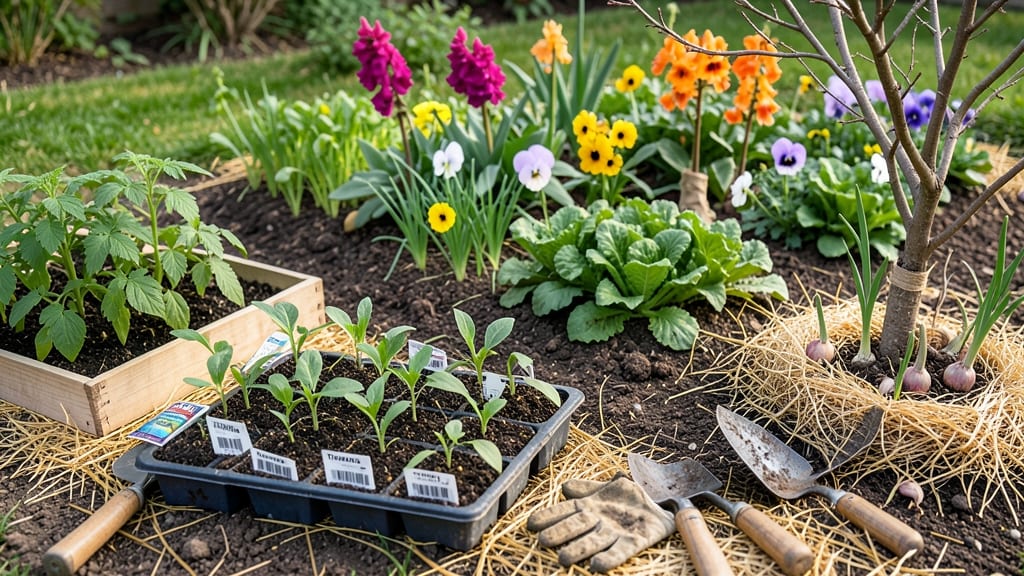
To plant a garden in South Carolina at the right time means fast harvests and thriving 🌱 plants—whether you’re growing tomatoes, peppers, or native flowers.
Picture this: you’ve prepped the soil, ordered your seeds, and then—BAM—a late frost wipes out your seedlings or a heat wave stunts your greens. South Carolina’s warm climate and long growing season are a gardener’s dream, but timing is everything.
Miss the window, and you’ll be left with slow growth or even crop failure.
Most gardeners here know the basics—spring and fall are the prime planting seasons—but the devil’s in the details. Coastal areas like Charleston have different frost dates than the Piedmont, and Zone 7b vs. 8a can shift your schedule by weeks.
Without the right timing, you’re not just wasting money; you’re missing out on the freshest, fastest-growing produce your garden can produce.
Below, I break down the exact months to plant for maximum speed and success, including how to adjust for microclimates, heat waves, and even hurricane season. Ready to turn your garden into a high-speed harvest zone?
🌱When to Plant General Garden Vegetables & Plants Garden Vegetables & Plants
Jan❄️
Feb🌱
Mar🌱
Apr🌱
May🌱
Jun☀️
Jul🌱
Aug🌱
Sep🌱
Oct🌱
Nov🍂
Dec❄️
Ideal Time
Also Good
South Carolina planting zones by month: best start dates for vegetables and flowers
South Carolina’s USDA zones 7b-8a give gardeners a long growing season—but knowing the perfect planting window for each crop is key to success. The last frost date typically falls around mid-March, while the first frost arrives in mid-November.
Coastal areas like Charleston stay warmer longer, while inland Piedmont regions may experience earlier frosts.
For warm-season crops like tomatoes, peppers, and squash, wait until after April 15 to plant directly in the ground. Cool-season crops such as lettuce, broccoli, and spinach thrive when planted in early spring (February-March) or late summer (August-September) for fall harvests.
Flowers like marigolds and zinnias can handle both spring and summer plantings.
Here’s a quick reference for month-by-month planting in South Carolina, tailored to your zone and crop type:
Month
Warm-Season Crops (Tomatoes, Peppers, Squash)
Cool-Season Crops (Lettuce, Broccoli, Spinach)
Flowers (Marigolds, Zinnias, Petunias)
Notes
February
Start seeds indoors
Direct sow hardy greens
Plant pansies, snapdragons
Soil temps <60°F; use row covers
March
Transplant seedlings after last frost
Direct sow peas, spinach
Plant impatiens, sweet alyssum
Wait until soil warms to 60°F
April
Direct sow beans, cucumbers
Harvest early greens
Plant zinnias, marigolds
Avoid planting after April 15 for warm crops
May
Transplant tomatoes, peppers
Plant shade-tolerant lettuce
Plant petunias, geraniums
Use mulch to retain moisture
June-July
Succession plant beans, cucumbers
Avoid planting; too hot
Plant sunflowers, cosmos
Water deeply in heat waves
August
How to adjust planting times for South Carolina’s microclimates and heat waves
South Carolina’s Zone 8a climate brings early heat waves that can shock young plants, while coastal areas stay humid longer than inland regions. Adjusting your planting schedule means healthier crops and avoiding bolted lettuce or sun-scorched tomatoes. The key? Heat-tolerant varieties and flexible timing strategies tailored to your specific microclimate.
Inland areas like Columbia often see 90°F+ temperatures by May, while Charleston’s coastal humidity keeps soil warmer longer. This means fall planting can start earlier in the Lowcountry than in the Upstate. Understanding these differences helps you extend your growing season by weeks, even months.
Method
Traditional Schedule
Extended Schedule
Best For
Spring Warm Crops
Mid-April (after last frost)
Late March (with shade cloth)
Tomatoes, peppers, squash
Fall Cool Crops
Early August
Late July (coastal) / Early Sept (Upstate)
Lettuce, broccoli, spinach
Succession Planting
Every 2 weeks
Every 10-14 days (staggered)
Radishes, beans, kale
Heat-Tolerant Varieties
Standard varieties
'Heatmaster' tomatoes, 'Malagueta' peppers
All warm-season crops
For early planting, use 30% shade cloth to protect seedlings from sudden heat spikes. Remove it after 2-3 weeks once plants establish roots. This trick lets you plant tomatoes in late March instead of waiting until April, giving you a 6-week head start on the season.
Succession planting is another game-changer. Instead of one big harvest, plant radishes every 10 days from March to October. This ensures a steady supply while maximizing space—perfect for small gardens in urban areas like Charleston or Greenville.
Coastal gardeners should prioritize heat-tolerant varieties like 'Celebrity' tomatoes or 'Jalapeño M' peppers, which thrive in 95°F+ temperatures. Inland areas can focus on drought-resistant plants like okra or sweet potatoes, which handle the drier Piedmont heat better than traditional varieties.
Always check soil temperatures with a soil thermometer—aim for 60°F+ for warm crops and 50°F+ for cool-season plants. This simple step prevents wasted effort on plants that won’t germinate in cold soil, even if the air feels warm.