
Tools
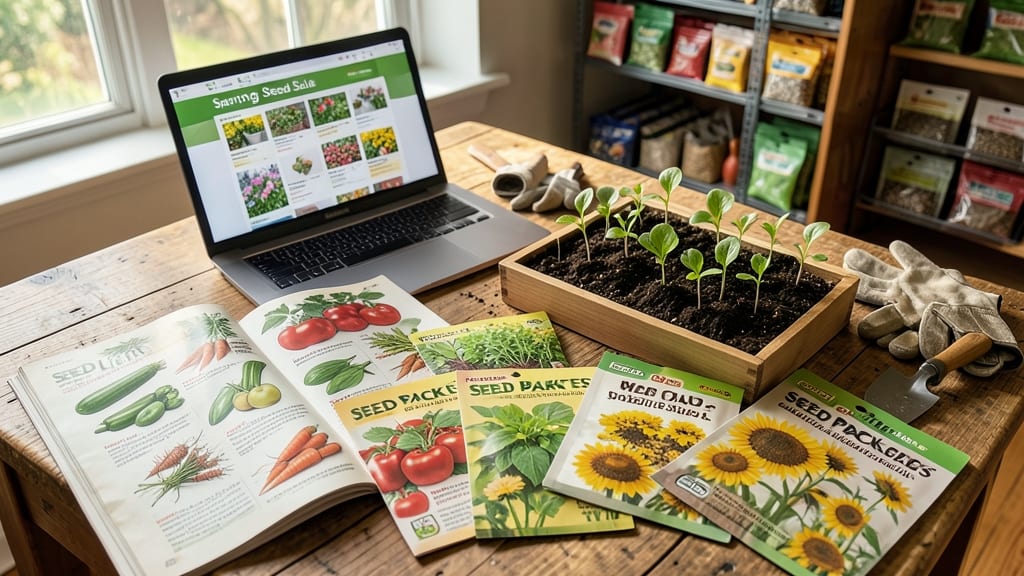
To get seeds for your garden, start with reputable online retailers like Baker Creek Heirloom Seeds or Burpee, then explore local nurseries, seed swaps, and organic-focused stores for specialty varieties. Always verify reviews and shipping policies for heirloom or non-GMO options.
Finding quality seeds for your garden starts with knowing where to look—and why each source matters.
Online retailers like Baker Creek and Burpee offer vast selections, including rare heirloom and organic varieties, with detailed descriptions to help you choose. Local nurseries and seed swaps, however, provide fresher stock better suited to your climate, plus the chance to connect with fellow gardeners for tips.
For specialty seeds, organic-focused stores often carry unique, non-GMO options that may be harder to find elsewhere. Always check germination rates and storage instructions to ensure your seeds will thrive. 🌱
Pro tip: Many online suppliers offer free seed catalogs or samples—perfect for testing varieties before committing to bulk orders. If you're growing for food, prioritize certified organic or non-GMO seeds to meet dietary preferences or sustainability goals.
💡 In This Article
- How to Choose the Best Seed Sources for Your Garden Needs
- Top Seed Companies for Organic, Heirloom, and Rare Varieties
How to choose the best seed sources for your garden needs
Seed quality isn't just about where you buy—it's about how well the source aligns with your growing goals. Organic certifications matter because seeds labeled "organic" are grown without synthetic pesticides or GMOs, which is critical if you're aiming for a chemical-free garden.
For example, High Mowing Organic Seeds guarantees their seeds meet USDA organic standards, ensuring you're planting non-GMO varieties that won't cross-pollinate with conventional crops.
Regional adaptability is another key factor: seeds from local nurseries are often pre-selected for your climate zone, meaning they'll germinate faster and produce stronger plants than varieties shipped from distant regions.
Online retailers like Baker Creek Heirloom Seeds offer unmatched variety, with over 1,500 rare and heirloom varieties—some dating back centuries—but their shipping times can be slow (typically 3-5 business days for standard orders).
Local nurseries, on the other hand, provide fresher stock (often with 90%+ germination rates compared to 80-85% for mail-order seeds stored for months) and may carry region-specific hybrids that thrive in your soil.
Seed swaps, whether through community groups or online forums like Seed Savers Exchange, let you access unique, locally adapted seeds for free or minimal cost, though you'll need to verify germination rates yourself.
Red flags to watch for include seeds with vague descriptions (e.g., "hybrid variety" without specifying traits) or suppliers that don't disclose germination rates. Mislabeling is another risk—always cross-check seed packets with third-party reviews or databases like the USDA's Germplasm Resources Information Network (GRIN).
For example, a packet labeled "organic" should include a certification number; without it, you can't trust the claim.
Storage conditions also impact quality: seeds from online retailers often arrive in airtight, moisture-controlled packaging, while bulk purchases from big-box stores may not offer the same protection, leading to lower viability over time.
Consider your garden's scale and long-term goals. If you're planting a large vegetable garden, bulk purchases from Johnny's Selected Seeds (which offers 25-pound bags of certain varieties) can save money, but their shipping costs may offset savings for smaller orders.
For heirloom collectors, Seed Savers Exchange is invaluable—they maintain a living database of over 25,000 varieties and offer seed-saving workshops to help you preserve rare genetics.
Always factor in shipping policies: some companies (like Territorial Seed Company) ship seeds year-round, while others pause orders during extreme heat or humidity to prevent spoilage.
For specialty needs, such as drought-resistant or disease-tolerant plants, look for suppliers that specialize in those traits. Bountiful Gardens focuses on heat-tolerant varieties perfect for Southern climates, while Fedco Seeds (based in Maine) prioritizes cold-hardy and organic options.
Their catalogs often include growing tips tailored to your region, which can mean the difference between a thriving garden and a failed crop. Pro tip: Many seed companies offer free digital catalogs—download these to compare varieties before ordering, as they include detailed growing instructions and maturity timelines.
Don't overlook the role of customer support. Reputable seed suppliers provide responsive help for issues like delayed shipments or damaged packets. Burpee, for instance, offers a 30-day germination guarantee on their seeds, while smaller companies may not—this can be a dealbreaker if you're investing in expensive rare varieties.
Always check return policies too: some companies (like Seed to Table) allow returns for unopened seeds within 30 days, while others offer store credit only if you've tried to grow them unsuccessfully.