
Planting
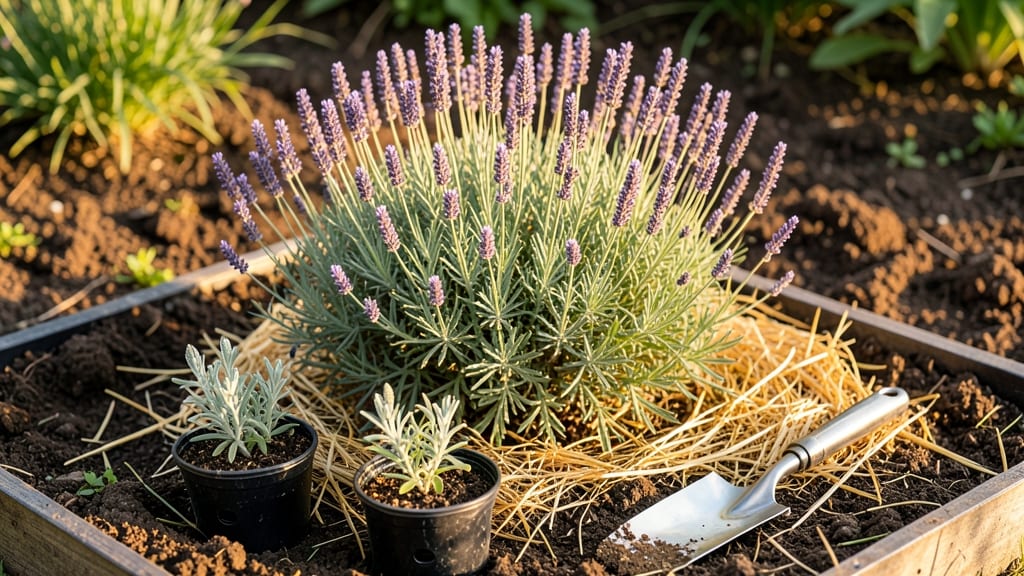
To plant lavender in a vegetable garden, choose the sunniest corner possible, use sandy or gravelly soil with excellent drainage, and space plants 18-24 inches apart. Keep them away from water sources and avoid shady spots where they'll struggle to thrive.
Lavender loves bright, direct sunlight—at least 6-8 hours daily—because it powers its signature fragrance and oil production. 🌞 The plant's roots despise soggy soil, so amend heavy garden beds with perlite or coarse sand to create that perfect well-draining environment.
I've found that planting along garden edges or in dedicated herb sections works best, as it keeps lavender's strong roots from competing with shallow vegetables like lettuce or radishes.
When arranging your garden layout, group lavender with other sun-loving herbs like rosemary or thyme, which share similar care needs. This not only creates a fragrant border but also makes maintenance easier.
For container gardening, use pots with drainage holes and position them where they'll get maximum sunlight exposure—even a balcony facing south can work if you rotate the pots seasonally to ensure even growth.
💡 In This Article
- Optimal Sunlight, Soil, and Drainage for Lavender
- Best Companion Plants and Spacing Layouts for Lavender
Optimal sunlight, soil, and drainage for lavender
Lavender's love for sunlight isn't just preference—it's survival. This Mediterranean native evolved in regions where 10+ hours of direct sun is normal, and its leaves contain oil glands that need intense light to photosynthesize efficiently. Without adequate sunlight, lavender produces fewer essential oils, resulting in weaker fragrance and stunted growth.
In cooler climates (Zones 5-6), aim for at least 6-8 hours of full sun daily, while warmer regions (Zones 7+) can handle morning sun with afternoon shade to prevent leaf scorch from extreme heat.
The soil's drainage capability directly impacts lavender's health through root oxygenation. Lavender roots are particularly susceptible to rot in compacted or clay-heavy soils, which is why gardeners often amend beds with 50% coarse sand or gravel to create a loose, airy medium.
The ideal soil pH range of 6.0-8.0 ensures proper nutrient uptake—calcium and magnesium deficiencies (common in acidic soils) lead to yellowing leaves and poor flowering. I've seen lavender planted in raised beds with 3 inches of gravel at the bottom thrive where in-ground planting failed completely.
Watering habits must adapt to these needs—lavender's deep root system stores moisture efficiently, so overwatering is the #1 killer. Let the top 2-3 inches of soil dry out between waterings, and avoid evening watering to prevent fungal issues.
In vegetable gardens, this means placing lavender at least 3 feet from irrigation lines or drip systems to prevent soggy soil pockets. The plant's silvery-gray foliage actually helps reflect excess heat, but this protective adaptation requires well-draining soil to function properly.
Regional adjustments matter significantly. In Pacific Northwest gardens (Zone 7-8), lavender benefits from afternoon shade in summer to prevent heat stress, while Southern gardens (Zone 9+) may need afternoon shade cloth during peak heat.
The key is observing your plants—if you notice yellowing leaves or wilting despite watering, it's almost always a drainage issue. I've found that planting lavender on sloped ground or mounds creates natural drainage channels that prevent water pooling around the roots.
Container gardening offers another solution for challenging garden spots. Use pots with at least 12-inch depth and fill with a mix of 50% potting soil, 30% perlite, and 20% coarse sand.
The container's edges create natural drainage, and you can move pots to follow the sun's path throughout the day. This flexibility is particularly helpful for urban gardeners with limited space or microclimates that vary dramatically between morning and afternoon.
One surprising benefit of proper placement is pest control. Lavender's strong fragrance naturally repels many garden pests, including aphids and cabbage moths—common vegetable garden nuisances. When planted near broccoli, cabbage, or cauliflower, lavender creates a protective barrier without competing for nutrients.
The plant's deep roots also help break up compacted soil, improving conditions for shallow-rooted vegetables like lettuce and radishes planted nearby.