
Companion Plants
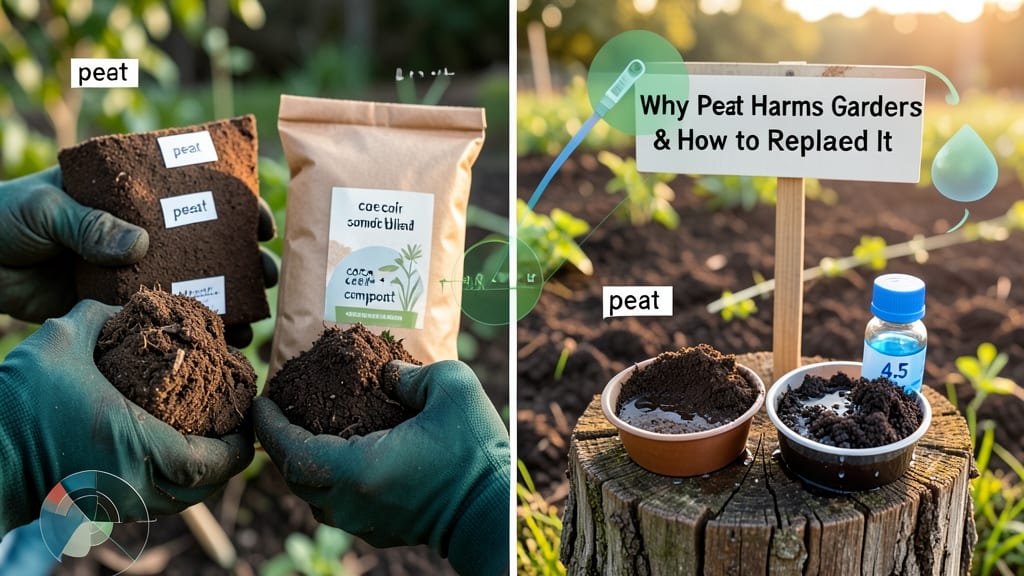
Peat is bad for gardens because its extraction destroys fragile ecosystems, releases stored carbon, and depletes biodiversity. As a non-renewable resource, it contributes to climate change while offering limited long-term soil benefits compared to sustainable alternatives like coconut coir or composted bark.
Peat mining turns delicate wetlands into barren landscapes, wiping out habitats for endangered species like the crossbill and bog asphodel.
These ecosystems act as natural carbon sinks, but once drained, they release massive amounts of methane—a greenhouse gas 25 times more potent than CO₂. 🌍 Even worse, peat regeneration takes centuries, making it a one-way ticket to ecological collapse.
While it temporarily improves soil moisture, the trade-off for your garden's health is far too steep when you consider the planet's long-term damage.
If you're looking for better options, consider coconut coir—it mimics peat's water retention while breaking down harmlessly, or composted bark, which adds nutrients over time. Both choices support sustainable farming practices without the guilt of contributing to environmental destruction.
The shift to these alternatives isn't just eco-friendly; it's a smarter long-term investment for your garden's future.
💡 In This Article
- How Peat Extraction Harms Wetland Ecosystems
- Best Peat-Free Soil Amendments for Healthy Gardens
How peat extraction harms wetland ecosystems
Peat forms over thousands of years in wetlands, where partially decomposed plant matter accumulates in waterlogged conditions. When mined, these ecosystems—often called bogs or fens—are drained and stripped bare, turning vibrant habitats into desolate wastelands.
The process destroys the delicate balance of species adapted to these unique environments, like the Sphagnum moss that dominates peatlands and the bog rosemary, a rare shrub found only in these waterlogged soils. 🌿
One of the most alarming consequences is the release of stored carbon. Peatlands store 30% of the world's soil carbon, more than all other vegetation combined. When drained, microbial activity accelerates, turning peat into CO₂ and methane—a greenhouse gas 25 times more potent than CO₂.
A single drained bog can emit as much carbon as 50,000 cars annually. The damage is irreversible on human timescales, as peat regeneration requires 50-100 years per centimeter of growth.
Beyond carbon emissions, peat extraction disrupts water cycles. Wetlands act as natural sponges, regulating floodwaters and filtering pollutants. Their destruction exacerbates droughts downstream and allows contaminants to seep into groundwater. The Irish Midlands, once covered in peat bogs, now suffers from severe flooding due to lost natural water storage.
This ripple effect shows how peat mining doesn't just harm gardens—it destabilizes entire regions. 🌊
Even the temporary benefits peat offers gardens are outweighed by its costs. While it improves water retention, synthetic alternatives like coconut coir provide similar moisture control without ecological harm. Peat's acidity also creates a sterile environment that suppresses beneficial microbes, unlike composted alternatives that foster diverse soil life.
The trade-off between short-term convenience and long-term planetary health is simply unsustainable.
Consider this: For every ton of peat mined, 20 tons of CO₂ are released. That's equivalent to driving 50 miles in an average car. When you reach for peat, you're not just choosing a soil amendment—you're funding an industry that accelerates climate change.
The irony? Many gardeners use peat to create "healthy" soil while unknowingly contributing to the very environmental crises that threaten food security and biodiversity. 🚫
What's more troubling is the global scale of peat mining. Countries like Russia, Indonesia, and Canada account for 70% of global peat extraction, with Indonesia alone losing 1 million hectares of peatland annually. This isn't just a local issue—it's a global crisis with direct implications for gardeners worldwide.
The peat in your bag might have traveled halfway around the world, carrying with it the ecological cost of destroyed wetlands and displaced species.
The science is clear: Peatlands are among the most effective carbon sinks on Earth, yet we're dismantling them at an alarming rate. The alternatives—like composted bark or worm castings—not only avoid these harms but actively improve soil health.
Making the switch isn't just ethical; it's the responsible choice for anyone who cares about the future of gardening and the planet. 🌱