
Fertilization
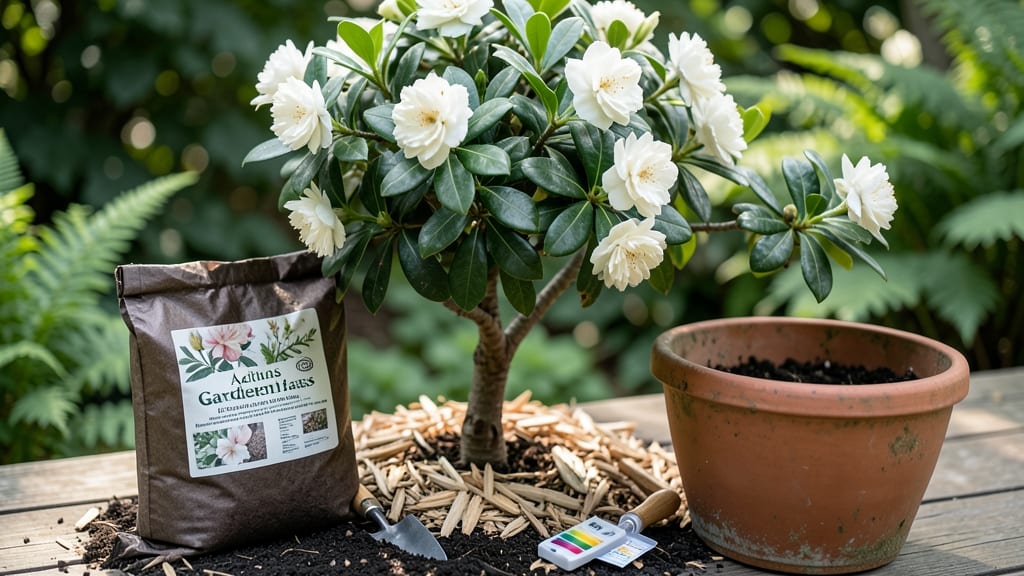
To keep your 🌸 gardenias thriving, you need an acid-based fertilizer that matches their natural soil conditions.
Struggling to keep your gardenias blooming year after year? The secret isn’t just water or sunlight—it’s the right acid-based fertilizer that mimics their natural, acidic soil conditions. Without it, even the most pampered gardenia can turn into a sad, sparse-leaved shadow of its former self.
Gardenias love soil with a pH between 4.5 and 6.0, and that’s where acid-based fertilizers come in. They provide the essential nutrients—like iron and manganese—while keeping the soil chemistry just right for those fragrant, white blooms you adore.
But not all acid-based fertilizers are created equal, and choosing the wrong one can do more harm than good.
In this guide, I’ll walk you through how to pick the best acid-based fertilizer, when and how to apply it, and even how to spot the signs of over- or under-fertilizing. By the end, your gardenias will be blooming like never before!

Why gardenias need acid-based fertilizer and how to choose the right one
If your gardenias are struggling to bloom or their leaves are turning yellow, the issue might be their soil pH. Gardenias thrive in acidic soil with a pH range of 4.5 to 6.0.
When soil becomes too alkaline, these plants can't absorb essential nutrients like iron, manganese, and phosphorus, leading to poor growth and fewer flowers. That's why using an acid-based fertilizer is critical for their health and vibrancy.
In their natural habitat—tropical and subtropical regions—gardenias grow in highly acidic, well-draining soils. Replicating these conditions in your garden or pots is the key to unlocking their full potential.
Without the right acidic fertilizer, gardenias may suffer from chlorosis (yellowing leaves), weak stems, or even fail to produce blooms altogether. Let’s explore how to choose the best acid-based fertilizer for your gardenias.
🌱 Comparison Table: Acid-Based Fertilizers for Gardenias
| Type | Key Ingredients | Best For | Application Method | Pros | Cons |
|---|---|---|---|---|---|
| Iron Sulfate | Iron, sulfur | Quick pH correction, chlorosis | Dissolve in water, soil drench | Fast-acting, affordable | Can burn roots if overused |
| Peat-Based Fertilizer | Peat moss, nitrogen, phosphorus | Long-term soil acidity, slow release | Granular, mix into soil | Improves soil structure, lasts months | May compact over time |
| Citrus-Based Fertilizer | Citric acid, micronutrients | Natural acidity, micronutrient boost | Liquid, foliar spray | Eco-friendly, gentle on roots | Less concentrated, frequent applications |
| Liquid Acid Fertilizer | Sulfur, phosphoric acid, NPK | Quick nutrient uptake, container plants | Dilute and water | Fast results, easy to apply | Requires frequent reapplication |
| Granular Acid Fertilizer | Sulfur-coated urea, NPK | Slow-release, in-ground plants | Spread on soil, water in | Long-lasting, convenient | Slower to take effect |
When selecting an acid-based fertilizer, consider whether your gardenias are planted in containers or in-ground beds. Container gardenias benefit from liquid acid fertilizers because they allow for precise control over nutrient delivery.
In contrast, in-ground gardenias often thrive with granular or peat-based fertilizers, which slowly release nutrients into the soil.
Look for fertilizers labeled specifically for acid-loving plants or azaleas and gardenias. These products typically contain sulfur or phosphoric acid, which lower soil pH while providing essential nutrients.
Avoid general-purpose fertilizers, as they can raise soil pH and worsen nutrient deficiencies. For example, a 6-6-6 NPK ratio with added sulfur is ideal for gardenias.
Signs your gardenias need acid-based fertilizer include yellowing leaves (chlorosis), stunted growth, or fewer blooms. If you notice these symptoms, test your soil’s pH using a simple kit. Aim to keep it between 4.5 and 6.0.
If your soil is too alkaline, start with an iron sulfate treatment to quickly lower the pH before switching to a regular acid-based fertilizer routine.
For potted gardenias, I recommend using a citrus-based liquid fertilizer every 4-6 weeks during the growing season. This not only provides acidity but
Step-by-step guide: how to apply acid-based fertilizer for maximum gardenia growth
Gardenias thrive when their soil pH stays between 4.5 and 6.0, mimicking their native tropical conditions. Without proper acid-based fertilization, you’ll notice fewer blooms, yellowing leaves, and stunted growth.
The key is applying the right product at the right time—whether you’re prepping soil for new plants or maintaining established shrubs.
Start by testing your current soil pH with an inexpensive test kit (available at garden centers). If your soil is too alkaline, you’ll need to acidify it before planting or during early spring feeding. For existing gardenias, focus on monthly feeding schedules and post-bloom care to keep them thriving.
🌱 Step-by-Step Acid-Based Fertilizer Application
-
Step 1: Pre-Planting Soil Acidification
Mix 1 part elemental sulfur or iron sulfate with 10 parts soil (e.g., 1 cup sulfur per 10 sq ft). Water thoroughly to activate. -
Step 2: Choose Your Fertilizer
Opt for liquid acid-based fertilizers (e.g., Miracle-Gro Azalea/Camellia) or granular peat-based formulas. Avoid high-nitrogen blends—they’ll burn roots. -
Step 3: Spring Feeding (March-April)
Apply 1 tbsp granular fertilizer per plant or 1 cup liquid per 10 sq ft. Water deeply to distribute nutrients. Repeat every 6-8 weeks until July. -
Step 4: Post-Bloom Care (August-September)
Switch to a low-nitrogen, high-phosphorus formula (e.g., 10-20-10) to encourage next year’s buds. Dilute liquid fertilizer to half-strength. -
Step 5: Monitor pH Monthly
Use a soil pH test kit to check levels. If pH rises above 6.0, reapply elemental sulfur (1 tsp per sq ft) and water. -
Step 6: Winter Dormancy (October-February)
Skip fertilization entirely. Focus on mulching with pine needles (natural acidifier) to protect roots and maintain soil acidity.
Pro tip: Water your gardenias before applying fertilizer—this prevents root burn. For container-grown gardenias, flush the soil with water after feeding to avoid salt buildup. If you notice brown leaf tips or crispy edges, you’ve overdone it—cut back on frequency and dilute future doses by 50%.
Consistency is key! Gardenias reward patient, pH-balanced care with fragrant blooms year after year. Pair your acid-based fertilizer with regular pruning (after flowering) and mulch top-ups to create the perfect acidic environment. 🌸