
Fertilization
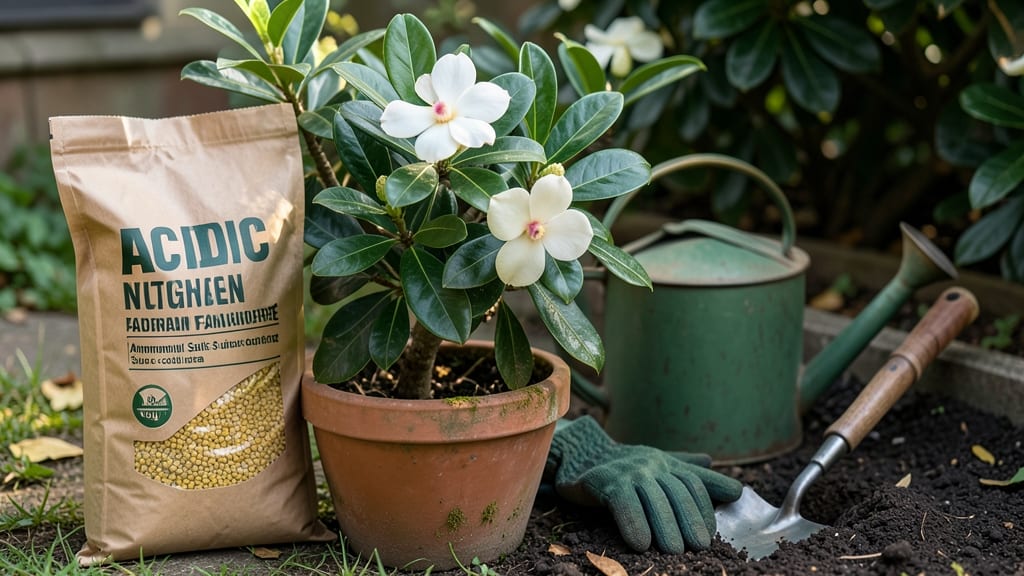
Using acidic nitrogen fertilizer for gardenias 🌸 is the game-changer behind those fragrant, glossy blooms you’ve been dreaming of.
Struggling to keep your gardenias blooming year after year? The secret lies in feeding them the right nutrients—specifically, an acidic nitrogen fertilizer tailored to their exact needs.
Gardenias thrive in acidic soil (pH 5.0–6.0), where nitrogen fuels lush foliage and vibrant flowers. But not all fertilizers work—some raise pH or burn roots, leaving your plant stressed. That’s why choosing the right type, like sulfur-coated urea or cottonseed meal, makes all the difference.
In this guide, I’ll walk you through when and how to apply acidic nitrogen fertilizer, how to spot over- or under-feeding, and the simple tweaks that turn lackluster plants into showstoppers.
Why acidic nitrogen fertilizer boosts gardenia blooms (and how to choose the right type)
Your gardenias crave more than just water—they need the right acidic nitrogen fertilizer to thrive. These tropical beauties rely on low pH soil (5.0–6.0) and nitrogen-rich food to produce those fragrant, creamy-white blooms.
Without it, you’ll see weak growth, sparse flowers, and yellowing leaves. The key? Understanding how acidic nitrogen fuels their growth while maintaining their ideal soil chemistry.
Nitrogen isn’t just any nutrient—it’s the building block for leafy growth and flower production. But gardenias need a special type: acidic nitrogen sources like ammonium sulfate or cottonseed meal.
Regular fertilizers with urea or nitrate nitrogen can raise soil pH too quickly, stressing your plants. The solution? A fertilizer designed to lower pH while delivering nitrogen efficiently.
Here’s the science: Gardenias absorb nitrogen best when it’s in an ammonium form (like in ammonium sulfate) rather than nitrate form. This form also helps lower soil pH naturally over time.
Pair that with organic matter like peat moss or pine bark, and you’ve got the perfect recipe for happy, blooming gardenias.
Now, let’s talk choices. Not all acidic nitrogen fertilizers are created equal. Some work faster, others last longer, and a few can even harm your plants if misused. Below, we’ve broken down the best options—chemical vs. organic—so you can pick what’s right for your garden.
For quick results, ammonium sulfate is my top pick. It dissolves fast, delivers nitrogen, and gently lowers pH. Mix 1 tablespoon per gallon of water and apply every 4–6 weeks during bloom season.
If you prefer organic options, cottonseed meal is a powerhouse—it’s high in nitrogen and slowly acidifies the soil as it breaks down.
Pro tip: Always test your soil pH before fertilizing. A simple DIY test kit (or lab test) will tell you if your gardenias need more acidity. If your soil is already at pH 5.0–6.0, you can focus on nitrogen alone.
But if it’s higher, pair your fertilizer with elemental sulfur (1 pound per 100 sq ft) to bring it down.
One mistake I see often? Using urea-based fertilizers like 46-0-0. These raise pH over time, making your soil less ideal for gardenias. Stick to ammonium or organic sources to keep those blooms coming.
And remember: less is more. Over-fertilizing leads to leaf burn and stunted growth, so always follow the recommended dosage.
Ready to transform your gardenias? Start with ammonium sulfate or cottonseed meal, monitor your soil pH, and watch those fragrant blooms multiply. Your gardenias will thank you with glossy leaves and abundant flowers all season long! 🌸
Step-by-step acidic nitrogen fertilizer schedule for maximum gardenia growth
Gardenias thrive when fed the right nutrients at the right time, and acidic nitrogen fertilizer is the key to lush foliage and abundant blooms. Unlike regular fertilizers, gardenias need a low-pH, nitrogen-rich feed to mimic their natural tropical soil conditions.
Timing matters—too early or too late can stress your plants, while the right schedule ensures year-round vitality. Let’s break down the perfect feeding plan tailored to your gardenia’s age and season.
Before diving into the schedule, test your soil’s acidity—gardenias prefer a pH of 5.0–6.0. A simple DIY test uses vinegar and baking soda: mix equal parts vinegar and water, pour into a cup of soil.
If it fizzes, your soil is alkaline (add sulfur). If no reaction, add peat moss or pine needles to lower pH. This step saves you from over- or under-fertilizing, which can burn roots or stunt growth.
🌿 Critical Timing Tips for Acidic Nitrogen Fertilizer
- 🌱 Spring (March–May): Start feeding after last frost when new growth appears. Use high-nitrogen fertilizer (e.g., 16-4-8) every 4–6 weeks to fuel blooming.
- ☀️ Summer (June–August): Continue feeding every 4–6 weeks during peak bloom season. Reduce to every 6–8 weeks if leaves yellow (sign of over-fertilization).
- 🍂 Fall (September–November): Switch to a low-nitrogen, high-phosphorus feed (e.g., 10-20-10) to encourage root growth before dormancy. Stop by late October.
- ❄️ Winter (December–February): No fertilization—gardenias rest. Focus on watering lightly and protecting from frost if indoors.
- 🌸 Dosage by Age:
- Young plants (1–2 years): ½ tsp fertilizer per application.
- Mature plants (3+ years): 1–2 tbsp per application, spread evenly around the root zone.
- ⚠️ Safety Tip: Always water soil thoroughly before and after applying fertilizer to prevent leaf burn.
For young gardenias (under 2 years old), start with a gentle approach. Use ½ teaspoon of acidic nitrogen fertilizer (like cottonseed meal or sulfur-coated urea) every 6–8 weeks in spring and summer.
Young plants are still establishing roots, so too much nitrogen can lead to leafy growth at the expense of blooms. Mix the fertilizer into the top 2 inches of soil or dissolve it in water for a foliar spray (dilute to half-strength).
Mature gardenias (3+ years old) can handle heavier feedings. Increase the dose to 1–2 tablespoons per plant, applied every 4–6 weeks from spring through early fall. Focus on the outer edges of the root zone—this encourages new root growth and prevents fertilizer burn near the trunk.
Pair this with a mulch layer of pine bark to maintain soil acidity and retain moisture.
Watch your gardenias respond within weeks—healthy plants will show darker green leaves, sturdier stems, and more buds. If you notice yellowing leaves or stunted growth, flush the soil with water for 30 minutes to leach excess nitrogen.
For potted gardenias, reduce fertilizer by half and repot with acidic potting mix every 2–3 years to refresh nutrients.
Pro tip: Rotate fertilizer types seasonally. Use organic options like cottonseed meal in spring for slow-release nitrogen, and switch to synthetic ammonium sulfate in summer for a quick bloom boost. Always follow label instructions, and remember—less is more when it comes to acid-loving plants like gardenias. 🌸