
Planting
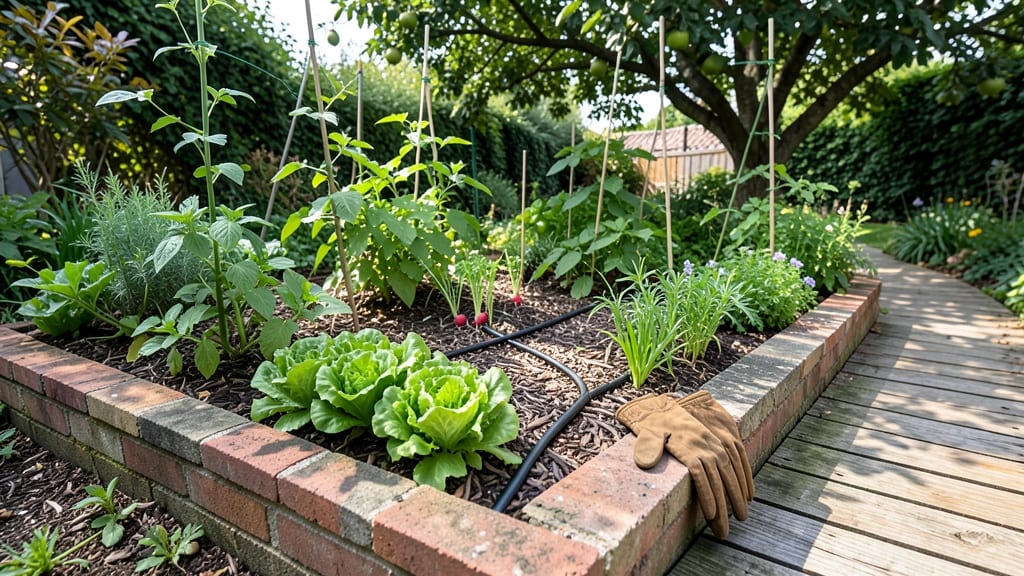
The best place to plant a garden needs at least 6-8 hours of sunlight daily, well-draining soil with a pH between 6.0 and 7.0, and enough space to accommodate plant growth while avoiding frost-prone or poorly drained areas. South-facing locations in the Northern Hemisphere provide optimal sun exposure.
The location you choose directly impacts your garden's success. 🌱 Most vegetables and flowers thrive with full sun exposure, while herbs like basil and parsley can tolerate partial shade.
I always test soil drainage by digging a hole and filling it with water—if it drains within an hour, it's ready for planting. For compact spaces, consider raised beds or vertical gardening to maximize sunlight and airflow.
Don't overlook microclimates in your yard—areas near walls or fences can receive different sunlight patterns than open spaces. Using a simple solar tracker (or even observing your yard at different times of day) helps identify the sunniest spots.
For example, tomatoes and peppers need full sun, while leafy greens can handle morning shade in hot climates.
💡 In This Article
- Sunlight Requirements for Different Garden Types
- Soil and Space Checklist for Optimal Garden Placement
Sunlight requirements for different garden types
Sunlight is the most critical factor for plant growth, but not all crops have the same needs. Vegetables like tomatoes, peppers, and cucumbers thrive with 6-8 hours of direct sunlight daily, while leafy greens such as lettuce and spinach can grow well with 4-6 hours.
Herbs like rosemary and thyme love full sun, but basil and parsley tolerate 3-4 hours of morning shade in hot climates. The key difference lies in photosynthesis efficiency—sun-loving plants have higher chlorophyll activity, converting sunlight into energy more aggressively.
Seasonal sun patterns also shift dramatically. In summer, the sun arcs higher in the sky, providing longer daylight hours, while winter days offer shorter, weaker sunlight. 🌞 This is why a south-facing garden in the Northern Hemisphere receives consistent sun exposure year-round.
For example, a spot that gets 8 hours of sun in June might only receive 4 hours in December due to lower sun angles. Using a simple solar tracker or observing your yard at 10 AM, noon, and 2 PM for a week helps map these variations accurately.
Shade-tolerant plants like hostas, ferns, and certain lettuce varieties can thrive in partial shade (3-6 hours of sun), but even they benefit from morning sunlight. The trick is understanding your plants' native habitats—tropical plants often prefer filtered light, while desert plants crave intense sun.
For instance, Swiss chard grows well in partial shade, but its stems may become leggy without enough light. This is why I always match plant varieties to their natural sunlight conditions.
Here's what's actually happening at a cellular level: Chloroplasts in plant leaves contain chlorophyll that absorbs sunlight, primarily in the blue and red spectra. Sun-loving plants have more chloroplasts and larger leaf surfaces to capture maximum energy.
In contrast, shade plants develop thinner leaves with fewer chloroplasts but higher efficiency in low-light conditions. This biological adaptation explains why moving a sun-loving plant to shade causes it to stretch toward light—a process called etiolation.
For practical assessment, divide your yard into zones based on sun exposure. Use stakes and string to mark boundaries, then observe how shadows move throughout the day. A 4-foot-tall stake helps determine how much shade nearby structures cast.
Remember, east-facing spots get morning sun (cooler, less intense), while west-facing areas receive hot afternoon rays that can scorch tender leaves. This spatial awareness prevents common mistakes like planting heat-sensitive crops in west-facing beds.
Pro tip: Create a "sun map" of your yard by marking sun exposure times in different areas. For example, your south-facing bed might get full sun from 10 AM to 4 PM, while an east-facing area receives only morning light.
This visual guide becomes your planting blueprint, ensuring each plant gets the perfect light conditions for optimal growth and yield. 🌱