Planting
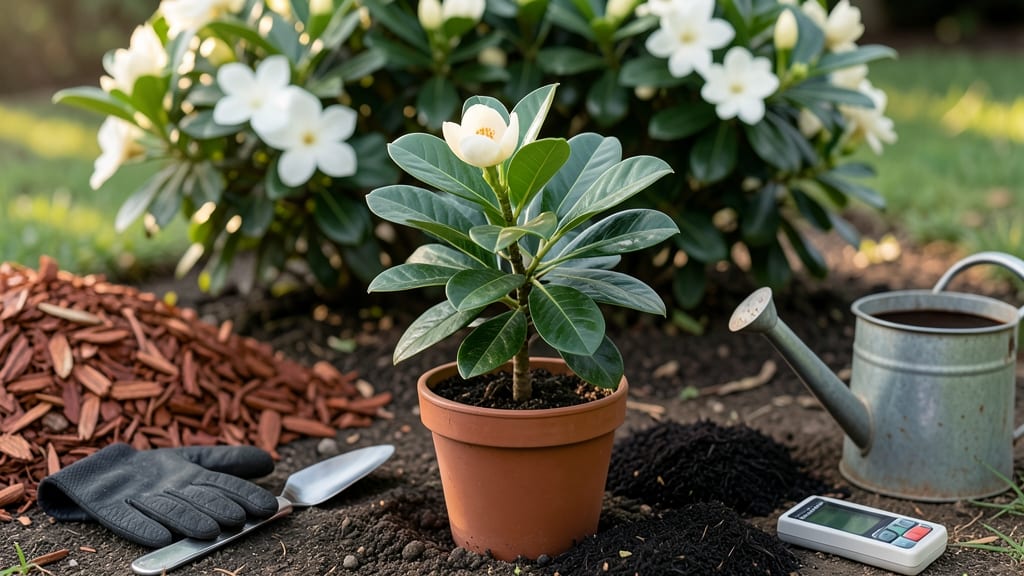
Planting gardenias at the right time ensures fragrant blooms and thrives all season long—here’s the exact window for your zone.
If you love fragrant, glossy gardenias 🌸 but struggle with their finicky planting schedule, you’re not alone. These Southern favorites demand precision: plant too early, and frost will kill them; too late, and they’ll never bloom.
The best time hinges on your last frost date, soil warmth, and even humidity—details most guides overlook.
In USDA Zone 6a, like much of the Midwest, aim for mid-April to early May after the ground thaws and nighttime temps stay above 50°F. But in warmer Zones 7-11, you’ve got a wider window—March to June—with coastal areas leaning toward earlier dates.
I’ll break down the exact month-by-zone timing, plus how to prep soil and avoid transplant shock.
You’ll also discover why morning watering beats afternoon soaking, how to spot ready-to-bloom buds, and the one pruning trick that doubles next year’s flowers. Let’s get those gardenias in the ground the right way.


Optimal planting months for gardenias by USDA hardiness Zones
Gardenias are heat-loving shrubs that despise cold—even a single light frost can kill young plants. That’s why timing your planting by your USDA zone is critical. In Zones 7-11, the ideal window shifts from spring to early summer, but soil temperature matters more than calendar dates.
Let’s break down the exact months for each zone, including frost risk and microclimate tweaks for Southern gardeners.
For Zones 7-9, gardenias need warm soil (60°F+) and frost-free nights. In Zones 10-11, you can plant year-round, but avoid summer heatwaves (above 90°F) which stress young roots.
Coastal areas may extend planting 1-2 months later due to moderate temperatures, while inland zones should plant earlier to beat summer dryness.
Pro Tip: Use a soil thermometer to confirm 60°F+ soil temps before planting—this is more reliable than guessing by month. Gardenias hate soggy roots, so well-draining, acidic soil (pH 5.0-6.5) is non-negotiable. If your zone’s native soil is alkaline, amend with peat moss or sulfur 4-6 weeks before planting.
In Zone 7, I’ve seen gardenias planted in May thrive when soil temps hit 65°F, but April plantings often struggle with late frosts. To hedge your bets, start with container-grown plants—they establish faster than bare-root seedlings.
For Zones 8-9, February plantings give roots time to acclimate before summer heat, while March is ideal for coastal areas with milder winters.
Container gardenias have a 2-4 week advantage over in-ground plantings because their roots aren’t disturbed by soil compaction. If you’re in Zone 10-11, fall planting (Sept-Oct) is my top recommendation—it lets roots establish before summer’s intensity. Avoid July-August plantings unless you’re in a high-elevation microclimate (e.g., mountain valleys with cooler temps).
One common mistake is planting gardenias too deep—the root flare (where roots meet the stem) should sit just above soil level. If buried too deep, root rot sets in quickly.
After planting, water deeply (1-2 gallons per plant) and mulch with pine bark to lock in moisture and lower soil pH naturally. In Zones 7-9, protect young plants with frost cloth until May 1.
Southern gardeners often ask: “Can I plant gardenias in summer?” The answer is yes, but with caution. If you must plant in June-July, choose shadier spots, water daily, and avoid fertilizing until September. Misting leaves with water in afternoon heat can reduce stress during establishment.
For Zones 10-11, summer plantings are riskier due to pests like spider mites—keep plants well-hyd
Signs your gardenia soil and climate are planting-ready
Before you dig that hole for your gardenia, your soil and climate must meet specific conditions to ensure success. These tropical beauties are sensitive to cold snaps and poor drainage, so checking these signs first saves you heartache later.
I’ve learned the hard way—skipping these checks can mean wilted leaves or no blooms for years.
Start by testing your soil temperature with a simple thermometer. Gardenias thrive when soil stays above 60°F (15°C)—any cooler, and root growth stalls. In USDA Zones 7-9, this usually means waiting until mid-April or later, while Zone 10 gardeners can plant as early as February.
Don’t rush—waiting a few weeks for warmer soil prevents transplant shock.
Next, check your local microclimate. Urban gardeners often face heat islands where pavement radiates heat, raising soil temps too high. If your area hits 90°F+ (32°C+) regularly, plant in partial shade and water deeply twice daily to protect roots.
Coastal gardeners? Watch for salt spray—rinse soil occasionally if you’re near the ocean.
Don’t overlook soil pH, either. Gardenias crave acidic soil (pH 5.0-6.5). Test your soil with a pH meter or send a sample to your local extension office.
If it’s too alkaline, mix in peat moss or sulfur before planting. I once planted mine in neutral soil—no blooms for two years until I fixed the pH!
Finally, observe your garden’s natural airflow. Gardenias hate stagnant air, which fuels fungal diseases like powdery mildew. If your yard has poor circulation, plant near a permeable fence or group gardenias with air-moving companions like dwarf bamboo.
In tight spaces, a small pedestal fan on low setting can help.
When all these signs check out—warm soil, frost-free dates, proper humidity, and good drainage—your gardenia is ready for its new home. Grab those gloves, and let’s get planting! The first whiff of those fragrant blooms will make every check worth it. 🌸