Planting
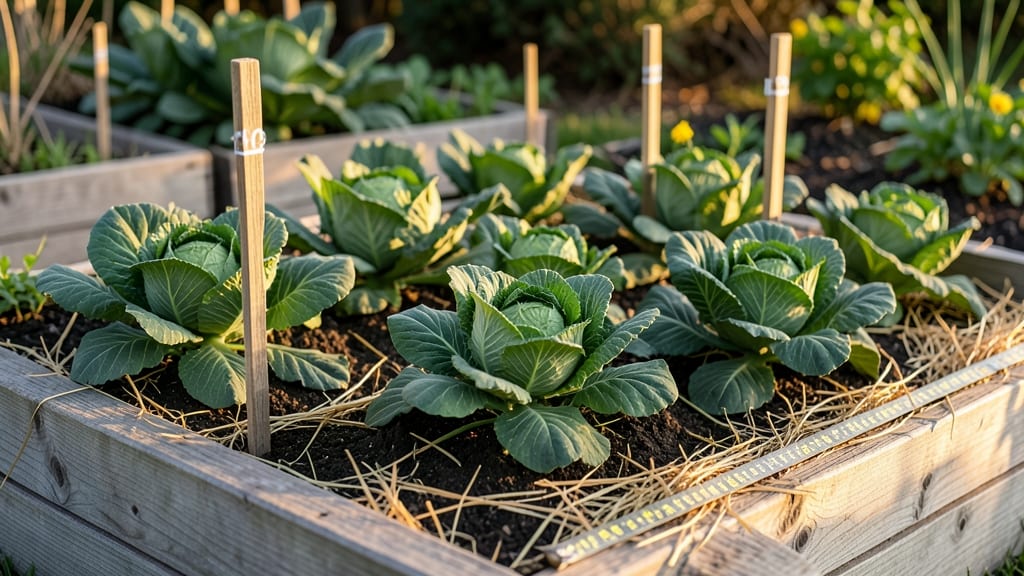
Cabbage garden spacing is the secret weapon for growing heads that are dense, disease-free, and ready to harvest—not the tiny, misshapen ones that bolt before their time.
Picture this: You’ve prepped the soil, planted your seeds at the right time, and even watered faithfully. But your cabbages 🥬 stay stunted, their leaves yellowing at the edges, or worse—split open before you can harvest.
The culprit? Too little space between plants. Without proper spacing, cabbages compete for nutrients, trap moisture (inviting fungal diseases), and never reach their full potential.
This isn’t just about throwing seeds in a row and hoping for the best. The right spacing—whether you’re growing heading cabbage, leafy varieties, or even dwarf types—directly impacts how big your harvest will be.
In Zone 6a, where spring and fall planting windows are tight, getting this right means the difference between a bountiful June harvest and a disappointing one.
Below, I’ll break down the exact row distances, plant placements, and adjustments for soil types and climates that guarantee bigger, healthier cabbages. You’ll learn how to space seedlings, when to thin, and even how to tweak your layout for container growing—so you can maximize every square foot of your garden.
Optimal cabbage plant spacing by variety and growth stage
Cabbage plants thrive when given the right amount of space to develop their signature compact heads and robust leaves. Unlike many vegetables, cabbage spacing directly impacts head size, air circulation, and disease prevention.
Overcrowding leads to stunted growth, while too much space wastes garden real estate. Let’s break down the exact spacing needs for each variety and growth stage to maximize your harvest.
Most gardeners focus on mature spacing, but seedling vs. transplant spacing also plays a critical role. Seedlings need less room initially, while mature plants require generous spacing to prevent competition. For example, bok choy and savoy cabbage have different spacing needs than green cabbage or Napa cabbage.
Understanding these differences ensures your cabbages grow to their full potential without crowding or disease risks.
Here’s a quick reference for optimal cabbage spacing by variety and stage. Use this as your guide before planting to avoid common mistakes that shrink heads or invite pests.
| Variety | Seedling Spacing | Mature Spacing | Row Spacing | Notes |
|---|---|---|---|---|
| Green Cabbage (e.g., Golden Acre, Early Jersey Wakefield) | 6-8 inches apart | 18-24 inches apart | 24-36 inches apart | Standard varieties; reduce to 12-18" for dwarf types. |
| Savoy Cabbage (e.g., Savoy King) | 8-10 inches apart | 20-24 inches apart | 30-36 inches apart | Frilly leaves need extra space for airflow. |
| Bok Choy (e.g., Toy Choy, Tatsoi) | 4-6 inches apart | 10-12 inches apart | 12-18 inches apart | Fast-growing; harvest young for tender leaves. |
| Napa Cabbage (e.g., Mei Qing Choy) | 6-8 inches apart | 16-20 inches apart | 24-30 inches apart | Large heads need more room to expand. |
| Dwarf Cabbage (e.g., Miniature White) | 4-6 inches apart | 12-16 inches apart | 18-24 inches apart |
How to adjust cabbage row distances for different soil and climate conditionsYour soil type and local climate can dramatically impact how much space your cabbage plants need. Heavy clay soil slows drainage, while sandy soil dries out faster—both require adjustments to standard spacing. Even humidity levels affect row orientation and companion planting strategies. Let’s break down how to tweak your cabbage garden layout for optimal results in any growing condition. First, consider row orientation. In high-humidity climates, plant rows in an east-west direction to maximize airflow and reduce fungal diseases. For dry, sandy soils, north-south rows help shade the soil and retain moisture longer. These small adjustments can mean the difference between thriving plants and stunted growth. Here’s how to balance spacing for different conditions: Adjustments for Soil & ClimateHeavy Clay Soil
Prevents root rot and compaction. Sandy Soil
Reduces water loss and erosion. High Humidity
Prevents fungal diseases like downy mildew. Seasonal TweaksSpring planting: Use 18" spacing for early maturity. Fall planting: Stretch to 24" spacing for larger heads before frost. Companion planting also plays a role. In high-humidity areas, avoid planting cabbage near potatoes or tomatoes, which compete for nutrients and increase disease risk. Instead, pair with onions or herbs like thyme to improve airflow and deter pests. These pairings can boost your yield by up to 20% in challenging climates. For spring vs. fall planting, adjust spacing based on your last frost date. In cooler spring conditions, use 18" spacing to encourage faster growth before pests arrive. For fall, increase to 24" to give plants time to develop larger heads before winter sets in. Always account for your local frost-free days when planning. Finally, monitor your plants and adjust as they grow. If leaves start touching, thin immediately to prevent disease. In sandy soils, water deeply every other day to compensate for wider spacing. With these adjustments, your cabbage will thrive regardless of your soil or climate challenges. |