
Flowers
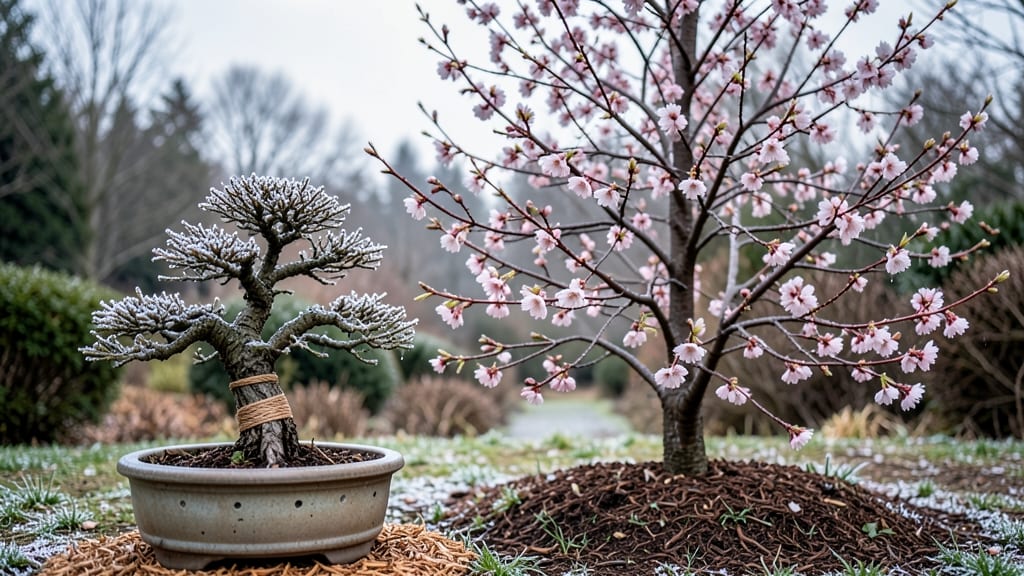
Yes, you can still grow cherry blossoms in your garden by selecting cold-hardy varieties like Prunus serrulata or Prunus avium, ensuring proper soil drainage, and providing full sun exposure with winter protection in colder climates.
Growing cherry blossoms in your garden is absolutely possible, even outside traditional growing zones. 🌸 Many people assume these trees only thrive in mild climates, but cold-resistant varieties like Autumn Breeze or Kwanzan can handle temperatures down to -10°F with proper care.
The key lies in choosing the right cultivar for your region—some bloom earlier in spring while others wait until late winter, giving you flexibility depending on your local frost dates.
What sets these trees apart is their adaptability to different soil types, though well-draining soil prevents root rot—a common issue in heavy clay. I've found that mulching in late fall provides extra insulation for young trees during their first few winters, which makes all the difference in survival rates.
The trade-off? These hardy varieties might produce slightly smaller blooms compared to their tropical cousins, but the trade-off is worth it for that iconic spring display.
💡 In This Article
- Best Cherry Blossom Varieties for Home Gardens
- Essential Care Tips for Healthy Cherry Blossom Trees
Best cherry blossom varieties for home gardens
Cherry blossom trees thrive in gardens when you select the right variety for your climate. The Yoshino cherry (Prunus × yedoensis) stands out for its abundant, double-pink blooms and cold tolerance down to -15°F.
This variety reaches 25-30 feet at maturity, making it ideal for larger yards, while its late spring blooming (April-May) avoids early frost damage. Another excellent choice is the Kwanzan cherry (Prunus serrulata 'Kwanzan'), which produces vibrant magenta flowers and tolerates -10°F temperatures.
The Autumn Breeze (Prunus × incam 'Autumn Breeze') is a standout for smaller gardens, growing only 15-20 feet tall with a compact spread. Its white flowers appear in late winter (February-March), providing early color when other trees are still dormant.
For urban settings, the Shirotae (Prunus serrulata 'Shirotae') offers pristine white blossoms and handles -20°F well, though it requires consistent moisture during its first two years to establish deep roots.
What most gardeners don't realize is how bloom timing affects success. Early-blooming varieties like Autumn Breeze risk frost damage in northern climates, while late bloomers like Yoshino wait until after the last frost.
The Stella Pink (Prunus serrulata 'Stella Pink') bridges this gap with its April-May blooming window and -15°F tolerance, making it a reliable mid-season performer. Each variety's unique flowering period lets you create a cascading effect throughout spring.
Size matters too—dwarf varieties like Snow Fountain (Prunus serrulata 'Snow Fountain') max out at 15 feet and thrive in containers, perfect for patios or small balconies. These compact trees produce 2-inch-wide white flowers and tolerate -25°F, though they require winter mulching in exposed areas.
For maximum impact, pair a large variety like Yoshino with a dwarf cultivar to create visual layers in your landscape.
Consider your region's hardiness zone when selecting. In Zones 5-6, Yoshino and Kwanzan excel, while Zone 7-8 gardeners can choose from a wider range including the Okame cherry (Prunus × incam 'Okame'), which blooms in late winter and handles -10°F beautifully.
The right variety transforms your garden into a seasonal spectacle without compromising on health or beauty.
Pro tip: Look for grafted trees from reputable nurseries—they establish faster than seed-grown specimens and maintain consistent flowering. 🌸