
Planting
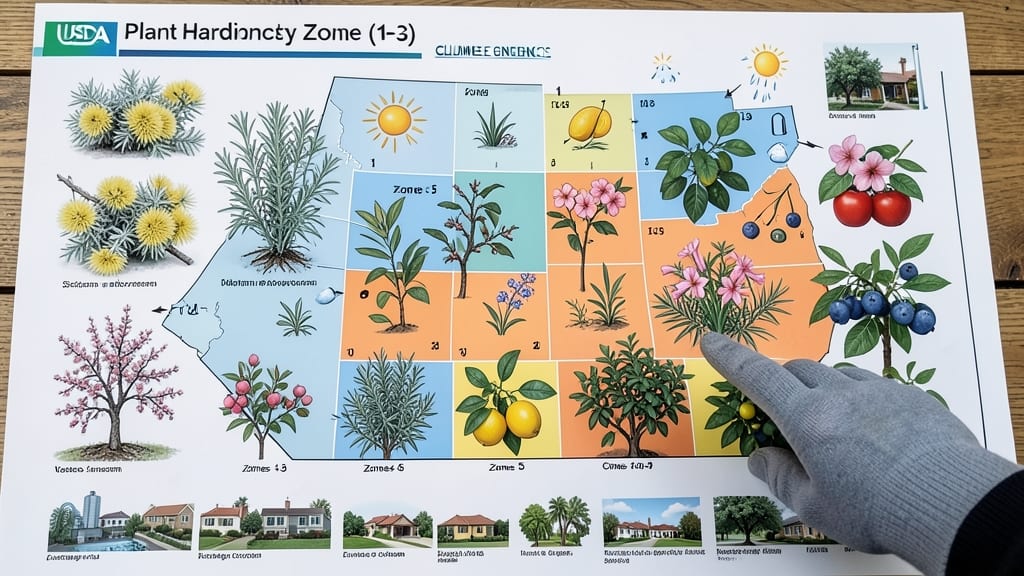
Understanding climate zones in gardening helps you grow plants that match your region's temperature ranges, frost patterns, and seasonal shifts. These zones—like USDA Hardiness Zones and Köppen classifications—act as a guidebook for selecting plants that will thrive without constant struggle.
Climate zones act like a gardener's GPS, mapping out where plants can survive based on temperature extremes, frost dates, and rainfall patterns. 🌱 For example, a Zone 5 garden (common in the Midwest) can handle winters down to -20°F, while Zone 10 (like Southern California) rarely sees frost.
The USDA system focuses on cold tolerance, while Köppen classifications also factor in precipitation—critical for drought-prone areas. Knowing your zone saves time and money by avoiding plants that'll wilt or freeze in your conditions.
Beyond just temperature, these zones reveal growing seasons. Plants in Zone 8 might bloom twice a year, while Zone 3 gardens have shorter windows. Native plants often need no extra care because they've evolved with local climate patterns.
For instance, lavender thrives in hot, dry Zone 9, while rhododendrons prefer cooler Zone 6 humidity. Always check both the zone and microclimates (like sunny south-facing walls) for the best matches.
💡 In This Article
- How USDA Hardiness Zones Define Plant Survival
- Choosing Plants for Your Climate Zone: A Practical Guide
How USDA hardiness zones define plant survival
The USDA Hardiness Zone Map divides North America into 13 zones (1-13) based on the average annual minimum winter temperature. Each zone represents a 10°F range, with Zone 1 enduring -50°F to -60°F (Alaska) and Zone 13 facing no frost (60°F+ year-round, like Hawaii).
These thresholds determine whether a plant's cells can survive freezing—cold-hardy species like winter wheat (Zone 3) have proteins that prevent ice crystal formation in their tissues, while tender plants like citrus (Zone 9-11) lack these adaptations.
Frost-free days are equally critical. A Zone 5 garden might have only 150 frost-free days annually, limiting warm-season crops like tomatoes (which need 90+ days of heat). Meanwhile, Zone 10 areas enjoy 300+ frost-free days, allowing year-round gardening.
The map also accounts for microclimates—south-facing slopes in Zone 6 can mimic Zone 7 conditions, while low-lying areas may experience earlier frosts. This explains why a Zone 6 garden's back corner (shaded and cool) might struggle with the same plants that thrive in its sunny front yard.
Plant dormancy is another key factor. Deciduous trees like oaks enter dormancy when temperatures drop below 40°F, conserving energy until spring. Evergreens in Zone 8 (e.g., holly) have waxy needles that resist freezing, but those in Zone 4 may need winter mulch to survive -30°F temperatures.
The USDA system simplifies this by grouping plants into categories like "hardy to Zone 5," meaning they tolerate -20°F winters—a critical detail when selecting perennials or shrubs.
Comparing USDA zones to the Köppen classification reveals different focuses: USDA prioritizes cold tolerance, while Köppen includes precipitation (e.g., "dry-summer subtropical" climates like Zone 9b in Southern California).
This matters because drought-resistant plants (e.g., lavender) thrive in Köppen's "arid" zones but may still face winter dieback in Zone 5. For example, a Zone 7 gardener in Atlanta (humid subtropical) would choose different plants than one in Zone 7 Phoenix (arid)—even though their USDA zones match.
Microclimates add another layer. A Zone 6 garden's north side might behave like Zone 5, while a south-facing bed could push plants into Zone 7 territory. This is why gardeners in transitional zones (e.g., Zone 7b) often use row covers or cold frames to extend growing seasons.
The science here involves heat island effects (urban areas being 2-10°F warmer than rural zones) and wind exposure—all factors that modify a plant's actual growing conditions.
For practical application, always check a plant's hardiness range and compare it to your zone. A Zone 5 gardener might successfully grow peonies (hardy to Zone 3) but struggle with bougainvillea (hardy only to Zone 9).
The USDA map is a starting point—local nurseries and plant tags provide finer details, including notes on heat tolerance (e.g., Zone 9 plants may still need afternoon shade in Zone 10).