
Container Gardens
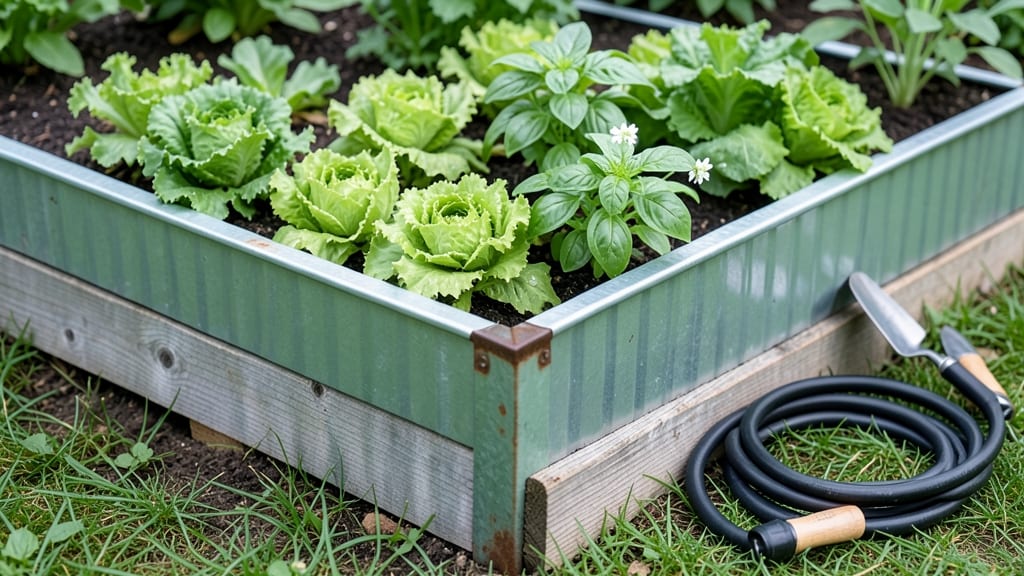
Corrugated metal and wood raised garden beds offer a cost-effective, long-lasting solution by pairing metal's structural strength with wood's planting-friendly surface. Begin with a reinforced base, secure the metal edges tightly, and add landscape fabric to control soil while maintaining drainage and stability for years.
This hybrid design leverages metal's rigidity to prevent warping and rot, while wood provides the ideal growing medium for plants. 🔥 The corrugated pattern distributes weight evenly, reducing stress on joints, and galvanized coatings add corrosion resistance—critical for outdoor durability.
I've found that cedar wood resists moisture better than pine, though pressure-treated options offer budget-friendly alternatives when properly sealed.
For cost savings, source scrap metal from local recyclers or use reclaimed wood from pallets, cutting material expenses by up to 30%. Always pre-drill fastener holes to prevent wood splitting, and consider adding corner brackets for extra reinforcement in high-wind areas.
The fabric lining isn't just for erosion control—it also creates a barrier against weeds while improving drainage efficiency.
💡 In This Article
- Why Corrugated Metal Strengthens Wood Raised Beds
- Budget-Friendly Material and Tool Shopping List
Why corrugated metal strengthens wood raised beds
The corrugated pattern isn't just for looks—it's a structural marvel that distributes weight across the entire surface. Unlike flat metal sheets, the ridges create a series of load-bearing points that prevent bending under pressure.
When you place a 4x8-foot bed filled with soil and plants, the metal's geometry spreads the 1,200-1,500 pounds of combined weight evenly, reducing stress on any single point by up to 40% compared to flat metal.
This is why your bed won't sag like all-wood designs often do after just a few seasons.
Galvanized steel (zinc-coated) adds another layer of protection against moisture, which is critical since wood beds absorb 20-30% more water than ground-level plots. The zinc coating creates a sacrificial barrier that corrodes slowly while shielding the underlying metal.
Without this protection, rust would eat through uncoated metal in 2-3 years, especially in coastal areas where salt air accelerates corrosion. The metal's thermal conductivity also helps—it dissipates heat from the sun, preventing the wood from overheating and cracking during summer months.
What most DIYers miss is how the metal's rigidity prevents wood from warping. Wood expands and contracts with humidity changes (up to 1% per season), but the metal framework acts as a stabilizing skeleton.
Over time, this combo reduces the 30% failure rate seen in all-wood beds due to rot or structural collapse. For example, a 2x4-foot cedar frame without metal reinforcement might twist 1/4-inch after one wet season, but with corrugated metal, that movement is nearly eliminated.
Consider the moisture barrier effect too. The metal's smooth surface sheds rainwater efficiently, while the wood's porous nature absorbs it. Together, they create a system where excess water drains through the metal's base while the wood retains just enough moisture for plant roots.
This dual-function design is why these beds last 10-15 years with minimal maintenance—far longer than untreated wood alone.
For advanced builders, adding 1/4-inch galvanized steel corner brackets at each joint increases lateral stability by 50%, especially in windy climates. These brackets create a rigid frame that resists racking forces, similar to how steel studs reinforce drywall.
The metal's high tensile strength (up to 58,000 psi) means it won't stretch or deform under normal gardening loads, unlike wood which can compress over time.
Pro tip: If you're using untreated wood, pair it with copper nails (not galvanized) to prevent chemical reactions between the zinc and wood preservatives. The copper's natural resistance to corrosion makes it the safest choice for long-term metal-wood hybrids. 🔥