
Size
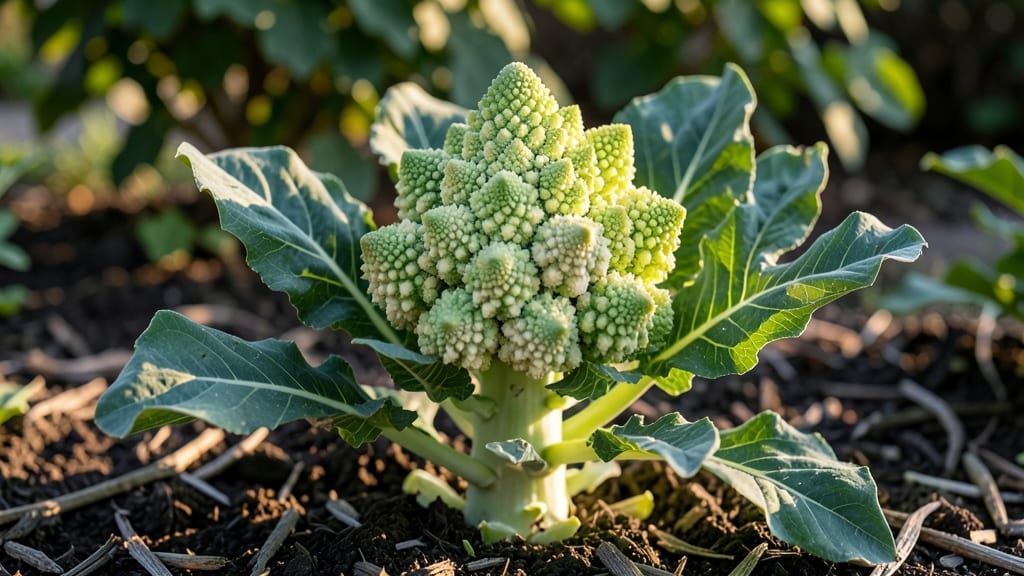
Romanesco does not grow back its main head in a garden after harvest, since it's a biennial plant that produces its signature fractal crown just once before dying back. However, the plant's sturdy base can still generate smaller side shoots or secondary heads if properly cared for after cutting.
This biennial nature means romanesco focuses all its energy on producing that one stunning head during its first year, then shifts to seed development before dying. 🌱 Unlike perennial vegetables like broccoli, it won't keep producing year after year from the same plant.
The good news is that if you leave the base intact after harvest, you might still get 2-3 smaller heads from side shoots over the next few weeks, especially with proper watering and nutrient-rich soil.
What makes this interesting is how the plant's energy allocation works—once that main head forms, the plant has essentially "decided" it's done with vegetative growth.
That's why gardeners often cut the stalk just below where the head was attached, giving the plant a chance to redirect its resources to those potential side shoots.
💡 In This Article
- Romanesco’s Biennial Growth Cycle Explained
- Maximizing Romanesco’s Side Shoot Yield After Harvest
Romanesco’s biennial growth cycle explained
Romanesco follows a strict biennial growth pattern, meaning it completes its life cycle in two years. During its first year, the plant focuses all its energy on developing that iconic fractal-shaped head—a process that takes approximately 90-120 days from transplanting to maturity.
This head contains the plant's reproductive structures, signaling the shift from vegetative growth to seed production. Unlike perennial vegetables like broccoli or kale, romanesco doesn't have the biological capacity to regenerate its main head after harvest.
The plant's energy allocation becomes clear when you examine its stem structure. The main stalk contains a single apical meristem (growth point) that produces the primary head.
Once harvested, this growth point is permanently removed, leaving no biological mechanism for the plant to regenerate that exact structure. 🌱 What remains is the plant's root system and lower stem, which still contain dormant side buds capable of producing smaller shoots under the right conditions.
This is why you might see secondary growth—but it's fundamentally different from the original head.
What makes romanesco unique among brassicas is its complete life cycle commitment. After producing its head, the plant enters its second year focused entirely on seed development. You'll often see tall flowering stalks emerge from the center of the harvested base, reaching heights of 3-5 feet.
These flowers contain the plant's reproductive energy, and once seeds are produced, the entire plant dies back—there's no perennial regrowth mechanism like you'd find in asparagus or rhubarb.
This biennial nature explains why gardeners often treat romanesco differently than other vegetables. The plant's entire first year is dedicated to building that one spectacular head, with no energy reserves left for additional harvests.
Even when side shoots appear, they're typically 20-30% smaller than the original and have less complex fractal patterns. The plant's biology simply isn't designed for repeated harvests—it's all about that single, dramatic first performance.
Comparing romanesco to its close relatives like broccoli highlights this difference.
Broccoli is a cool-season annual that can produce multiple side shoots after harvesting the main head, while romanesco's growth pattern is more similar to cabbage or Brussels sprouts—plants that also focus their energy on a single primary harvest before shifting to reproduction.
This fundamental biological difference is why you won't see romanesco regrowing its main head, even with careful garden care.
Understanding this growth cycle helps explain why romanesco is often considered a specialty crop. Gardeners who want to maximize their harvest treat it as a one-time investment, focusing on creating ideal growing conditions during its first year to produce that perfect head.
The potential for side shoots becomes a bonus rather than the main expectation—something to be nurtured rather than relied upon for consistent production.