
Landscaping
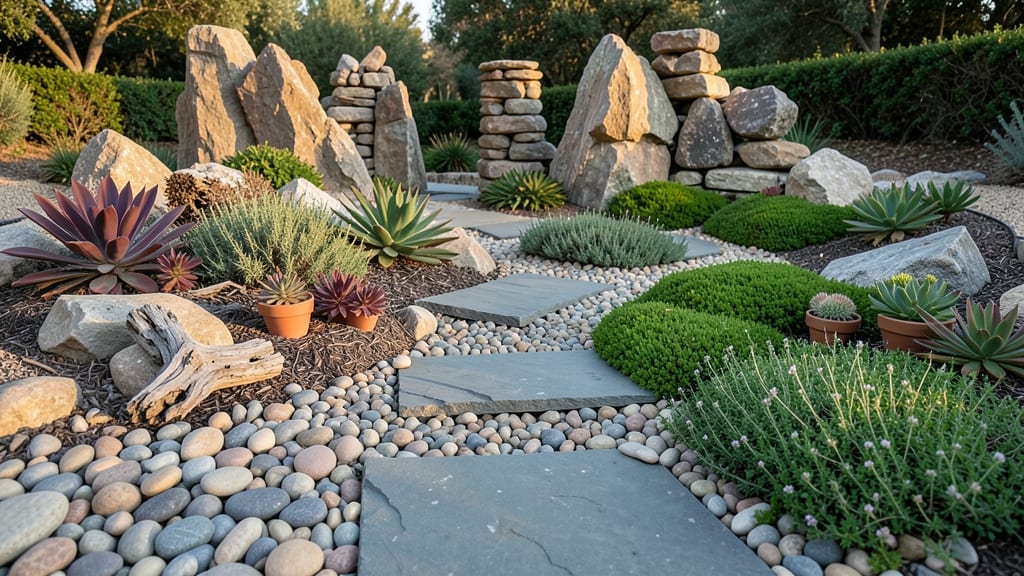
Garden ideas using stones transform outdoor spaces into low-maintenance, visually striking landscapes by creating pathways, borders, or focal points with natural or decorative rocks. Flat stones work perfectly for stepping stones, while river rocks add texture as ground cover, and stacked boulders bring rustic elegance—all while complementing drought-resistant plants for a cohesive look.
Stones offer endless design possibilities because they require minimal upkeep while adding structure and texture to any garden. 🔥 For instance, a winding path of flat flagstones can guide visitors through your yard while keeping weeds at bay, while a dry creek bed made of river rocks creates a natural water feature without the hassle of maintenance.
The key is balancing stone shapes—smooth river rocks contrast beautifully with rough-hewn boulders—and choosing colors that harmonize with your existing plants.
I've found that pairing light-colored stones with deep green succulents creates a striking visual contrast, while darker stones like slate work well with ornamental grasses for a more dramatic effect.
Another advantage of stone gardens is their versatility—whether you have a small urban patio or a sprawling backyard, stones can be arranged in geometric grids for a modern look or in organic, free-form patterns for a natural feel.
For example, a simple herringbone pattern with pavers can elevate a basic walkway, while a tiered rock garden adds dimension to a sloped area. The best part? Stones pair effortlessly with drought-tolerant plants like lavender, sedum, or yucca, reducing water needs while keeping your garden thriving.
💡 In This Article
- How to Design Stone Garden Layouts for Visual Impact
- 15 Creative Stone Garden Patterns for Any Space
How to design stone garden layouts for visual impact
Stone garden design relies on three core principles: balance, texture contrast, and strategic focal points. The human eye naturally follows odd-number groupings (like 3 or 5 stones) more than even arrangements, creating visual interest.
For example, placing three flat slate stepping stones in a triangular formation at a garden entrance draws attention while maintaining harmony.
This works because our brains perceive odd groupings as more dynamic than symmetrical pairs. 🔥 The key is to vary stone sizes—mix large boulders with smaller river rocks to create depth, similar to how a painter uses foreground, midground, and background elements.
Texture plays an equally important role. Pairing smooth river rocks with rough-hewn granite creates tactile contrast that enhances visual appeal. The science behind this is visual weight distribution—our eyes are drawn to the interplay between sleek surfaces and jagged edges.
For instance, a polished 12-inch diameter river rock placed among 3-inch pebbles immediately becomes a focal point. Color coordination matters too: stones with warm tones (sandstone, red granite) complement earthy plants like rosemary, while cool stones (slate, quartz) pair beautifully with silvery foliage like lamb's ear.
Seasonal variations also affect design—moss-covered stones in spring add organic texture, while polished stones in winter reflect light better.
Plant height integration is where stone layouts truly come alive. Tall ornamental grasses (like 3-4 feet tall miscanthus) should flank larger stones or boulders, while low-growing sedum (6 inches) works well between smaller stones. This creates a layered effect that mimics natural landscapes.
The rule of thumb is to place taller plants behind stones and shorter ones in front, which prevents visual clutter.
For example, a 2-foot-tall yucca planted behind a 18-inch-high stacked stone wall adds height without overwhelming the structure. 💫 This technique works because it follows the same principles as landscape painting—depth and perspective matter.
Geometric patterns (like herringbone or checkerboard) offer modern appeal, while organic, free-form arrangements create natural beauty. The choice depends on your garden's existing style. For instance, a 12-inch-square herringbone pattern with pavers creates a structured walkway, while a winding path of irregular stones feels more organic.
Color plays a subtle but powerful role too—lighter stones (like limestone) make spaces feel larger, while darker stones (like black basalt) add drama. Pro tip: Use 3-5 colors max to avoid visual chaos, and always include at least one stone color that matches your home's exterior for cohesion.
Seasonal stone variations add another dimension. In spring, moss-covered stones bring organic texture, while polished stones in winter reflect light better. The texture difference isn't just aesthetic—it affects moisture retention too. Rough stones absorb water differently than smooth ones, which impacts plant growth nearby.
For example, a 6-inch-thick layer of river rocks around a drought-resistant plant reduces water evaporation by 30% compared to bare soil. This is why pairing stones with the right plants (like lavender or sedum) creates a self-sustaining ecosystem. 🌟 The best designs balance all these elements without overcomplicating them.
Lighting can transform stone gardens at night. Solar-powered path lights placed along stone edges create a magical glow, while uplighting on boulders highlights their texture. The key is to use warm white lights (2700K-3000K) for cozy ambiance, as cooler lights (4000K+) can make stones look harsh.
This lighting technique works because it mimics natural moonlight, which enhances the organic feel of stone arrangements. For example, placing a 10-watt solar light every 3 feet along a stone path ensures even illumination without overwhelming the space.