
Tools
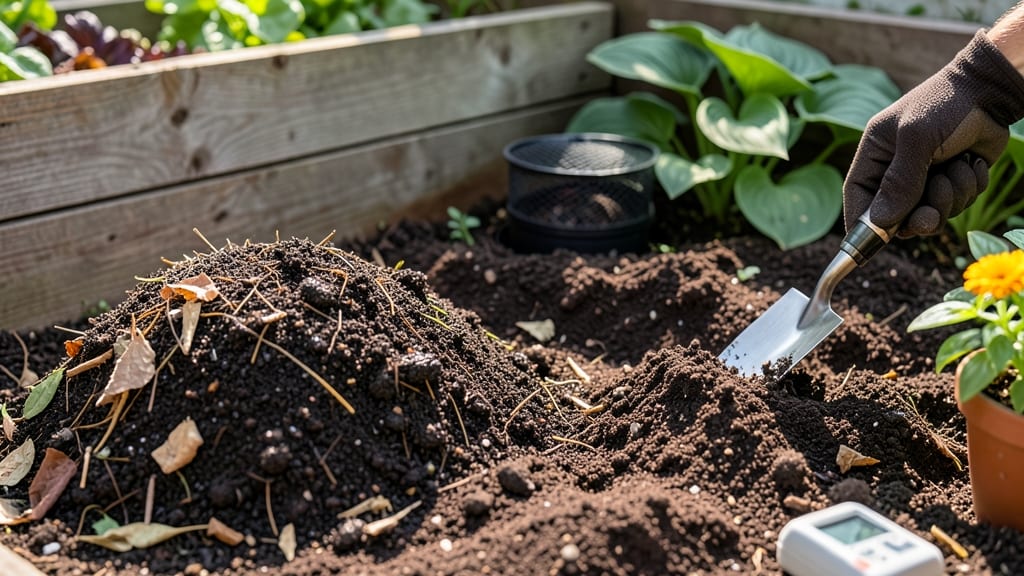
Combining garden soil with compost transforms your planting mix into a nutrient-rich foundation that supports strong root development and vibrant growth. For most plants, I recommend blending 60-70% soil with 30-40% compost, though heavy clay soils may need more compost for better aeration, while sandy soils benefit from extra compost to retain moisture. Always mix thoroughly to ensure even distribution of nutrients.
This blend works because compost acts like a soil supercharger—it introduces beneficial microbes, improves water retention, and adds essential nutrients like nitrogen and phosphorus. 🌱 The right ratio prevents compaction while giving roots the stability they need to thrive.
For example, leafy greens like lettuce love this mix, but heavy feeders like tomatoes might need a slightly higher compost ratio to sustain their growth.
I always test my soil first with a simple squeeze: if it crumbles easily, it's ready; if it sticks together, it needs more compost to loosen up.
When mixing, I start by spreading a 2-inch layer of compost over the soil, then use a shovel to turn the top 6-8 inches of soil, incorporating the compost evenly. For containers, I mix the ratio directly in the pot to ensure consistency.
The key is patience—rushing can leave pockets of pure compost that may burn tender roots. If your mix smells sour or looks slimy, it's overloaded with compost; in that case, add more soil to balance it out.
💡 In This Article
- The Science Behind Soil-Compost Ratios for Healthy Plants
- Step-by-Step Guide to Mixing Soil and Compost Like a Pro
The science behind soil-compost ratios for healthy plants
Compost acts as a biological catalyst in your garden soil, transforming it from a simple growing medium into a thriving ecosystem. The ideal 60-70% soil to 30-40% compost ratio creates what soil scientists call "optimal pore space"—about 40-60% air and 30-50% water by volume.
This balance prevents compaction while allowing roots to access both oxygen and moisture efficiently. For instance, clay soils (which naturally compact) need up to 50% compost to create air pockets, while sandy soils (which drain too quickly) benefit from 35-40% compost to improve water retention. 🌱
The magic happens at the microbial level. Compost introduces billions of beneficial bacteria and fungi that break down organic matter into plant-available nutrients like nitrogen, phosphorus, and potassium.
These microbes also produce glomalin, a sticky glycoprotein that binds soil particles into stable aggregates—think of it as nature's superglue for soil structure. Without compost, garden soil often lacks this microbial diversity, leading to poor nutrient cycling and plant stress.
For example, a study from the University of Massachusetts found that compost-amended soil had 30% more microbial activity than untreated soil after just 8 weeks.
Different plants have unique needs that influence the perfect ratio. Leafy greens like lettuce and spinach thrive with 30% compost because they're light feeders, while heavy producers like tomatoes and peppers often need 40-50% compost to support their rapid growth.
Perennials and shrubs typically prefer 25-30% compost since they develop deep root systems that can access nutrients over years. The key is matching the compost level to the plant's growth rate—too much compost can create "nutrient hotspots" that burn tender roots, while too little leaves plants starving for essential elements.
Water dynamics play a crucial role too. Pure compost can hold 4-5 times its weight in water, while garden soil typically holds only 1-2 times its weight. This explains why compost-amended soil stays moist longer after watering—a 30% compost mix can retain 25% more water than plain soil.
For container gardening, this means watering every 5-7 days instead of daily. The right ratio also prevents waterlogging, where excess compost creates anaerobic conditions that suffocate roots and promote fungal diseases like root rot.
Don't overlook the physical texture changes either. Pure garden soil often feels dense and gritty, while compost adds a spongy, crumbly quality that improves root penetration.
When mixed properly, the ideal blend should resemble dark, moist chocolate cake batter—light enough to crumble between fingers but cohesive enough to hold shape. This texture supports both root expansion and earthworm activity, which are nature's best soil aerators.
For heavy clay soils, adding wood chips or perlite alongside compost can further improve drainage.
What most gardeners miss is how compost affects soil temperature. Dark compost absorbs and retains heat, creating a 2-3°F warmer microclimate in the root zone—critical for seed germination and early growth. This explains why spring plantings in compost-amended soil often sprout 3-5 days faster than in untreated soil.
The warmer temperature also accelerates microbial activity, which in turn speeds up nutrient release. For cold climates, this early warmth can mean the difference between successful and failed early season plantings.