Watering
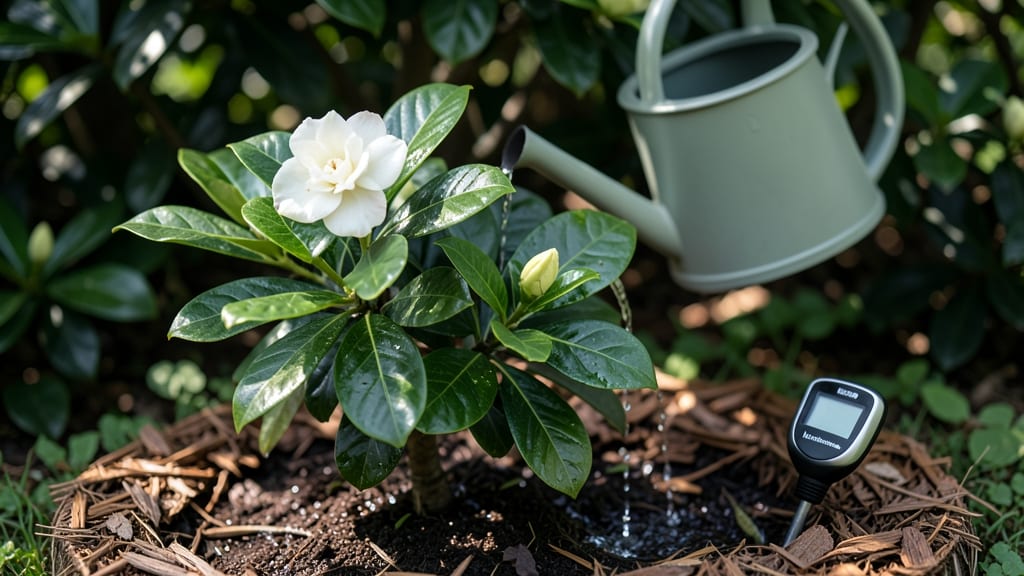
Your gardenia’s water requirements are the secret to those intoxicating blooms 🌸 — but get it wrong, and you’ll watch its leaves yellow or its buds drop before they even open.
Picture this: You’ve just pruned your gardenia, and it’s thriving—until the heat of summer hits. Suddenly, the soil feels like a sponge, and your plant starts begging for moisture.
Or maybe it’s winter, and you’re overcompensating because you think it needs more. Both mistakes can kill your gardenia faster than you’d expect.
Here’s the truth: gardenias crave consistency. Too little water, and the roots dry out; too much, and they suffocate.
The key lies in knowing when to water (morning, always), how much (deep soaks, not light sips), and how to read your plant’s signals—wilting, crispy edges, or even a sudden drop in blooms.
In this guide, I’ll break down the exact watering schedule for your gardenia, whether it’s in a pot or planted in the ground, and how to adjust for your climate.
You’ll learn the three signs of overwatering most gardeners miss, plus the one trick that keeps your soil moist without drowning the roots. Let’s get those blooms back—and keep them there.


How often to water gardenias based on season and climate
Watering your gardenia correctly is the secret to those fragrant white blooms you adore. Since gardenias are tropical plants, they thrive on consistent moisture but despise soggy roots. The key lies in adjusting your watering schedule based on seasonal changes and your local climate zone.
In humid climates, you’ll water less frequently than in arid regions, while summer demands more attention than winter dormancy. Let’s break it down so you never guess again!
Before diving into schedules, always check the top 2 inches of soil. Stick your finger in—if it feels dry, it’s time to water.
For potted gardenias, the soil dries out faster than in-ground plants, so containers need more frequent watering. Mulching with organic material (like pine bark) helps retain moisture and mimics their natural tropical habitat. This simple step can cut your watering needs by up to 30% during hot months.
In spring, gardenias wake up from dormancy and need a steady increase in water. If you’re in a humid climate, wait until the top 2 inches of soil feel dry before watering—usually every 5–7 days.
Look for new growth as a sign they’re thriving. In arid zones, water more frequently (every 3–4 days) because the soil dries out faster. A quick check for curled leaves tells you it’s time to hydrate.
Summer is the most critical season for gardenias, especially in hot, dry climates. Water deeply in the early morning to prevent evaporation and fungal issues. In-ground plants may need water every 2–3 days, while potted gardenias might require daily watering during heatwaves.
Watch for drooping leaves by midday—a classic sign they’re thirsty. If you see yellowing edges, you’re likely overwatering or using tap water that’s too alkaline.
As fall arrives, reduce watering gradually. Gardenias in temperate climates can go 7–10 days between waterings, but always check for bud formation. This is when they’re preparing for next year’s blooms, so keep the soil slightly moist but not soggy.
If buds appear but don’t open, low humidity or inconsistent watering could be the culprit. A humidity tray or misting can help.
Winter slows everything down, so cut back dramatically. Gardenias in USDA Zone 9b or warmer may still need water every 2–3 weeks, but let the top 3–4 inches of soil dry out completely.
If your gardenia is dormant (leaves yellowing and dropping), water just enough to prevent the roots from drying out entirely. Overwatering in winter
Signs of overwatering vs. underwatering in gardenias (and how to fix it)
Gardenias are finicky about water—too much or too little can turn their glossy leaves yellow or cause buds to drop before blooming. The key is finding that sweet spot where the soil stays moist but not soggy.
I’ve learned the hard way that yellowing leaves and drooping stems are often the first red flags.
Start by checking the soil moisture with your finger. Stick it about 1–2 inches deep—if it feels damp, hold off on watering. If it’s bone-dry, your gardenia is thirsty. But here’s the catch: container gardenias dry out faster than in-ground plants, so they need more frequent checks.
Gardenia Water Requirements: Pros & Cons
- Vibrant blooms (white, fragrant flowers)
- Glossy, green leaves (healthy foliage)
- Strong root growth (stable plant structure)
- Pest resistance (avoids fungal issues)
- Bud drop (flowers fall before opening)
- Yellow leaves (chlorosis from over/under-watering)
- Root rot (soggy soil kills roots)
- Wilting (leaves curl or droop)
If your gardenia’s leaves turn yellow with brown edges, it’s likely overwatered. The roots suffocate in soggy soil, leading to root rot. To fix this, stop watering immediately and let the soil dry out.
If the pot feels light, it’s a good sign. For severe cases, repot in well-draining soil with perlite or sand.
On the flip side, crispy brown leaves or wilting stems mean your gardenia is thirsty. Water deeply until it drains from the bottom of the pot. Mulch around the base to retain moisture, but avoid letting water pool.
In extreme heat, I water mine twice daily—once in the morning and once in the late afternoon.
Don’t forget to check the drainage holes in containers. If water sits at the bottom for more than an hour, your gardenia is at risk. Elevate pots slightly or add gravel at the base to improve airflow.
And always water at the base of the plant, not the leaves, to prevent fungal diseases.
Seasonal adjustments are key: summer watering needs more frequency, while winter dormancy means cutting back to every 10–14 days. I’ve seen gardenias recover from both over- and underwatering with patience—just watch for those early warning signs and act fast!