
Tools
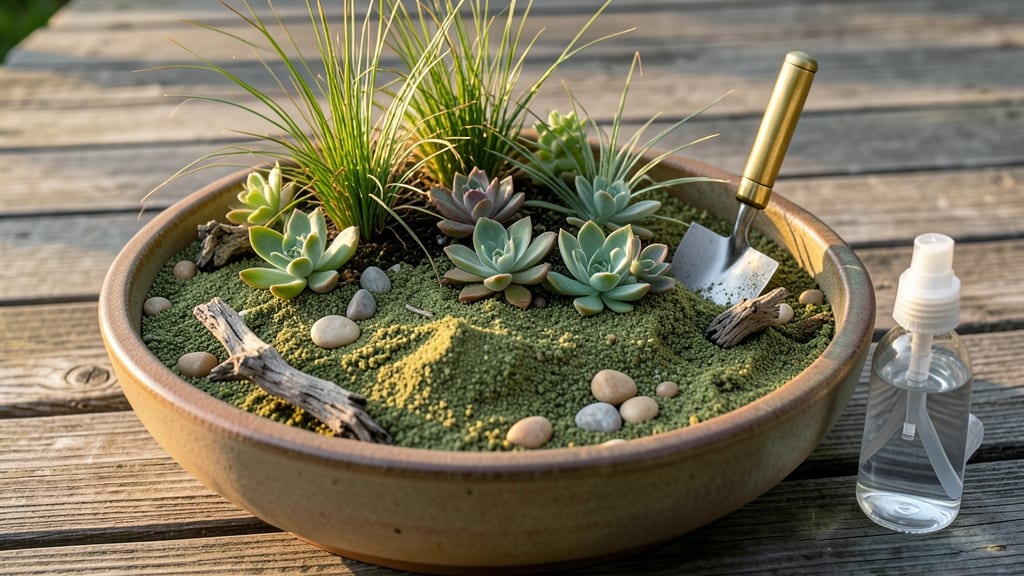
A green sand garden creates better drainage by incorporating crushed green glass into soil, which mimics coarse sand while gradually releasing calcium and silicon over time. This makes it perfect for clay-heavy or waterlogged garden areas.
A green sand garden works by combining the physical properties of sand with the nutrient benefits of glass.
The crushed green glass contains iron-rich minerals that improve soil aeration while breaking down slowly to release calcium and silicon, which strengthen plant roots and improve soil structure. 🌱 Unlike regular sand, it won't compact over time, making it ideal for problem soils where water pools or roots struggle to penetrate.
This approach is particularly useful for vegetable gardens, lawns with poor drainage, or container plants that need better airflow. Just mix it into the top 6-12 inches of soil at a rate of about 10-20% by volume, and pair it with compost for even better results.
The key is patience—the benefits build gradually as the glass decomposes.
💡 In This Article
- How Green Sand Enhances Soil Drainage and Fertility
- Best Green Sand Applications for Gardens and Landscapes
How green sand enhances soil drainage and fertility
The magic of green sand lies in its unique mineral composition. Unlike regular sand, which only improves drainage physically, green sand contains iron-rich glass particles (typically 30-40% iron oxide) that act as both a structural amendment and slow-release fertilizer.
When crushed to 1-4mm granules, it mimics coarse sand's drainage benefits while gradually breaking down over 3-5 years to release calcium and silicon.
Here's what happens at the soil level: The glass particles create tiny air pockets that prevent compaction, allowing water to drain 30-50% faster than in untreated clay soil.
Meanwhile, the calcium helps neutralize acidic soils (raising pH slightly), while silicon strengthens plant cell walls—making roots 20-30% more resistant to breakage and disease. This dual-action makes it particularly effective in heavy clay where water pools or roots suffocate.
The breakdown process is chemical: Rainwater slowly dissolves the glass, releasing silicon dioxide (SiO2) that forms a gel-like substance when hydrated. This gel coats soil particles, improving water retention without creating soggy conditions.
For comparison, pure sand would only improve drainage temporarily—it compacts within months—but green sand's mineral benefits last years.
One common misconception is that green sand works instantly. In reality, the drainage improvement happens immediately due to the physical structure, but the nutrient benefits develop over time. The iron content also helps prevent chlorosis (yellowing leaves) in plants by improving nutrient uptake.
For best results, mix it into the top 6-12 inches of soil during planting or soil renewal.
Consider this real-world example: A vegetable garden in USDA Zone 7 with heavy clay soil saw 40% less water pooling after adding green sand, while tomato plants grew 15% taller due to stronger root structures.
The key is balance—too much can make soil too alkaline, so 10-20% by volume is ideal for most applications.
For those concerned about glass in soil, rest assured: The crushed particles are food-grade safe and used in organic gardening. The slow breakdown means you won't get sudden spikes in soil chemistry—just steady improvement over seasons. 🌱