
Tools
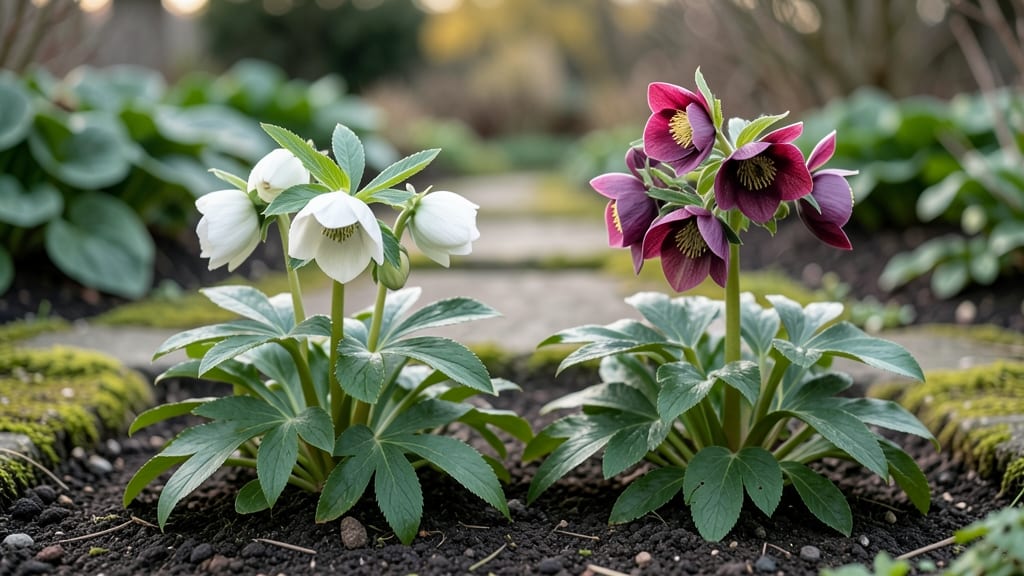
Hellebores in garden thrive as low-maintenance perennials with striking winter-to-spring blooms, preferring partial shade, moist but well-drained soil, and minimal pruning after flowering. Their evergreen foliage adds texture year-round, while deer often avoid them naturally.
Hellebores are the unsung heroes of shade-loving gardens, offering vibrant blooms when most plants are dormant. 🌱 Their secret lies in their unique ability to photosynthesize efficiently in low light, thanks to specialized leaf structures that capture even dim sunlight.
Unlike many perennials that struggle in shady spots, hellebores not only survive but thrive, making them perfect for under trees or along north-facing walls. Plus, their deer-resistant nature means you won't need extra fencing to protect them from garden pests.
What sets hellebores apart is their adaptability—they bloom in late winter or early spring, often before snow has fully melted, providing a splash of color when gardens are otherwise bare. Their evergreen leaves also create year-round interest, while their deep roots help prevent soil erosion.
For gardeners looking to create layered woodland gardens, hellebores serve as excellent mid-height plants that bridge the gap between low ground covers and taller shrubs.
💡 In This Article
- Why Hellebores Excel in Shady Gardens
- Seasonal Hellebore Care Calendar for Gardeners
Why hellebores excel in shady gardens
Hellebores thrive in shade thanks to their unique chlorophyll structure that maximizes light absorption. Their leaves contain a higher concentration of chlorophyll compared to sun-loving plants, allowing them to photosynthesize efficiently even in 20-50% sunlight conditions.
This adaptation gives them an edge over many perennials that wilt in low-light areas. 🌿 The key lies in their thick, leathery foliage that reduces water loss while maintaining energy production in dim environments.
Their deep root systems—extending 12-18 inches below soil—tap into moisture reserves that many shallow-rooted plants can't access. This explains why hellebores often outperform hostas or ferns in shady spots where soil stays damp.
The roots also anchor them firmly, preventing wind damage common in exposed garden areas. Their natural habitat in woodland understories further proves their adaptability to dappled shade patterns.
In layered woodland gardens, hellebores act as the perfect mid-height plant, typically reaching 12-24 inches mature height. They bridge the gap between low ground covers like ajuga and taller shrubs such as hydrangeas.
Their evergreen leaves provide winter interest, while their early spring blooms (often in January-March) create visual contrast against still-dormant perennials. This seasonal timing makes them invaluable for gardeners seeking year-round structure.
What's fascinating is how their flower color evolution works—darker blooms often indicate deeper shade tolerance. For example, deep purple varieties like 'HGC Purple' thrive in 30% light conditions, while lighter pinks may need slightly more brightness.
This color-light relationship helps gardeners strategically place plants based on their specific shade requirements. 🌸 The flowers also contain nectar that attracts early pollinators when few other plants are blooming.
Botanically, hellebores belong to the Ranunculaceae family, sharing traits with other shade-tolerant plants like lungwort and Japanese anemone. Their ability to produce flowers in cool temperatures (as low as 35°F) while other plants remain dormant is particularly remarkable.
This cold tolerance, combined with their shade adaptation, explains why they're often called "Lenten roses"—blooming just as winter gives way to spring.
For gardeners struggling with shady spots, hellebores offer a solution that combines beauty with resilience. Their low-maintenance nature means less watering and fewer pest issues compared to sun-loving alternatives.
The deer resistance stems from their toxic alkaloid content, which makes them unappealing to herbivores while posing no threat to humans or pets when handled properly. This natural protection adds another layer to their appeal for busy gardeners.