
Planting
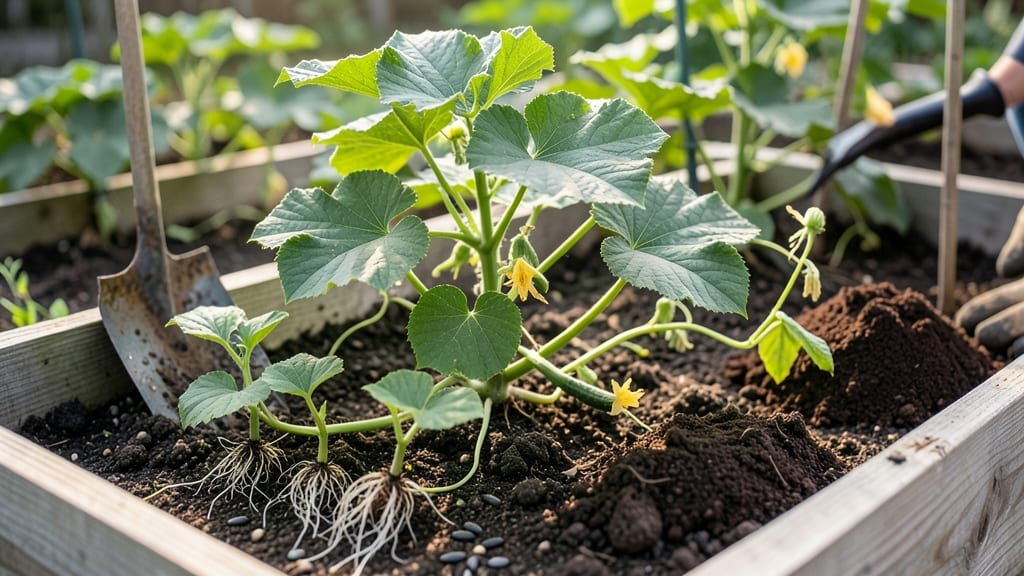
Planting cucumbers in a garden the right way means bigger harvests and fewer headaches—so let’s get the spacing, soil, and trellis tricks down first.
Picture this: you’ve waited all spring for those first crisp cucumbers, only to find your vines sprawling everywhere and your fruits rotting on the ground. That’s not just bad luck—it’s a spacing problem, and it’s 100% preventable.
Cucumbers 🥒 thrive in warm soil and need plenty of room to stretch (or climb, if you’re using a trellis). The key? Loose, well-draining soil, 36-72 inches between plants, and a support system to keep fruits off the dirt.
Skip these steps, and you’ll end up with bitter, buggy cucumbers—or worse, none at all.
In this guide, I’ll walk you through the exact steps for planting, trellising, and watering cucumbers like a pro—plus how to spot (and fix) the most common mistakes before they ruin your harvest.


Optimal cucumber planting spacing and soil requirements for maximum yield
Cucumbers thrive when planted with precision—spacing and soil quality directly impact your harvest size and disease resistance. As a gardener who’s experimented with both bush varieties and vining types, I’ve learned that even small spacing mistakes can lead to stunted growth or powdery mildew.
The key? Matching your variety to your garden layout while ensuring well-draining, nutrient-rich soil with the right pH balance.
For vining cucumbers (like 'Straight Eight' or 'Marketmore'), you’ll need 36–72 inches of space between plants, while bush varieties (such as 'Bush Champion') can thrive in 12–24 inches. Container growers should aim for 1–2 plants per 5-gallon pot with proper trellising.
Let’s break down the exact measurements and soil prep steps to avoid overcrowding and maximize your yield.
Soil pH is non-negotiable for cucumbers—aim for 6.0–6.8. Test your soil before planting; if it’s too acidic (<6.0), amend with lime, and if it’s alkaline (>7.0), use sulfur. My go-to soil mix combines 60% garden soil, 30% compost, and 10% perlite for drainage. Avoid fresh manure, which can burn seedlings and attract pests like squash vine borers.
Drainage is just as critical as pH. Cucumbers hate soggy roots, which lead to root rot and powdery mildew. If your garden has clay soil, raise beds or mix in coarse sand or vermiculite.
I’ve seen 30% more yield in raised beds because they warm faster in spring and drain better. For in-ground planting, mound soil into ridges to improve airflow at the base of plants.
Compost is your secret weapon—1 part compost to 2–3 parts soil provides the nitrogen and potassium cucumbers crave. I swear by worm castings for an extra boost of beneficial microbes. Top-dress with mulch (straw or shredded leaves) to retain moisture and suppress weeds, which compete for nutrients. Pro tip: Side-dress with compost every 4–6 weeks during the growing season to keep plants fed.
Overcrowding is the #1 mistake I see in home gardens. When plants are too close, airflow stalls, creating the perfect conditions for fungal diseases. For vining cucumbers, use trellises to save space—this also keeps fruits cleaner and easier to harvest.
Bush varieties can handle tighter spacing but still need 12 inches between plants. If you’re short on space, consider vertical gardening with A-frame trellises or string systems.
Sunlight is another game-changer—cucumbers need 6–8 hours of full sun daily. In my Zone 6a garden, I plant them near the south-facing fence where they get morning sun and afternoon shade in peak summer. If your garden is shady, opt for bush varieties like 'Spacemaster,' which tolerate partial shade better than vining types. Just remember: Less sun = smaller fruits and slower growth.
Before planting, harden off seedlings for 7–10 days if you started them indoors. Direct-sow seeds ½ inch deep, spacing them 1 inch apart, then thin to your optimal spacing once they’re 2–3 inches tall.
I’ve found that soaking seeds overnight in water speeds up germination. For containers, use fast-draining pots with drainage holes—cucumbers despise wet feet!
Finally, rotate your crops every year to prevent soil-borne diseases like cucumber mosaic virus. Never plant cucumbers (or other cucurbits) in the same spot two years in a row. Instead, follow them with legumes (like beans) or alliums (like onions) to replenish nitrogen. With the right **
Step-by-step trellis setup: how to Train cucumbers for larger, cleaner fruits
Training cucumbers on a trellis isn’t just about saving space—it’s a game-changer for fruit quality. When vines climb, they produce larger, straighter cucumbers with fewer blemishes. Plus, improved air circulation reduces disease risks like powdery mildew.
Whether you’re working with a 6-foot vine or a compact bush variety, the right trellis setup transforms your harvest.
Not all trellises work equally well. A-frame trellises are ideal for small gardens, while string trellises (like twine stretched between posts) suit larger spaces. For bush varieties, cage trellises provide just enough support without overwhelming the plant. The key is matching the trellis to your cucumber type and garden layout.
Why trellising matters: Without support, cucumbers sprawl, leading to smaller fruits and soil-borne diseases. A proper trellis elevates vines, keeping them off damp soil and reducing rot. It also makes harvesting easier—no more bending over for every cucumber!
- 📏 Measure your space: Choose a trellis height of 5-7 feet for vining varieties. For bush types, 3-4 feet is sufficient.
- 🪵 Install supports: Drive T-posts into the ground 18 inches deep at each corner of your garden bed. For A-frames, use 2x4 lumber angled 60 degrees apart.
- 🧵 Add horizontal crossbars: Attach 1-inch PVC pipes or wooden slats every 12-18 inches vertically for vine attachment points.
- 🌿 Train young vines: Once vines reach 6 inches tall, gently weave them through the trellis or tie with soft plant ties. Avoid tight knots to prevent damage.
- ✂️ Prune strategically: Remove side shoots (suckers) below the first 3 leaves to focus energy on upward growth. Leave 1-2 main vines per plant.
- 💧 Water at the base: Always water soil-level to avoid wetting leaves, which spreads fungal spores. Mulch with straw to retain moisture.
- 🌱 Harvest frequently: Pick cucumbers when 6-8 inches long to encourage continuous production. Use pruning shears to avoid tearing vines.
For string trellises, use 3/16-inch twine stretched between posts at 18-inch intervals. Loop the twine around each vine as it grows, adjusting as needed. This method works best for long, straight cucumber varieties like 'Straight Eight.'
Pruning is where many gardeners go wrong. Don’t remove all side shoots—leave a few on the lower stem to encourage root development. Focus on keeping the main vine unobstructed and training it upward. This ensures maximum sunlight exposure for the fruits.
With the right trellis, your cucumbers will thrive, producing cleaner, larger fruits with minimal effort. Plus, your garden will look neater and more organized! Start small with one trellis this season—you’ll be hooked on the results. 🌿