
Light Requirements
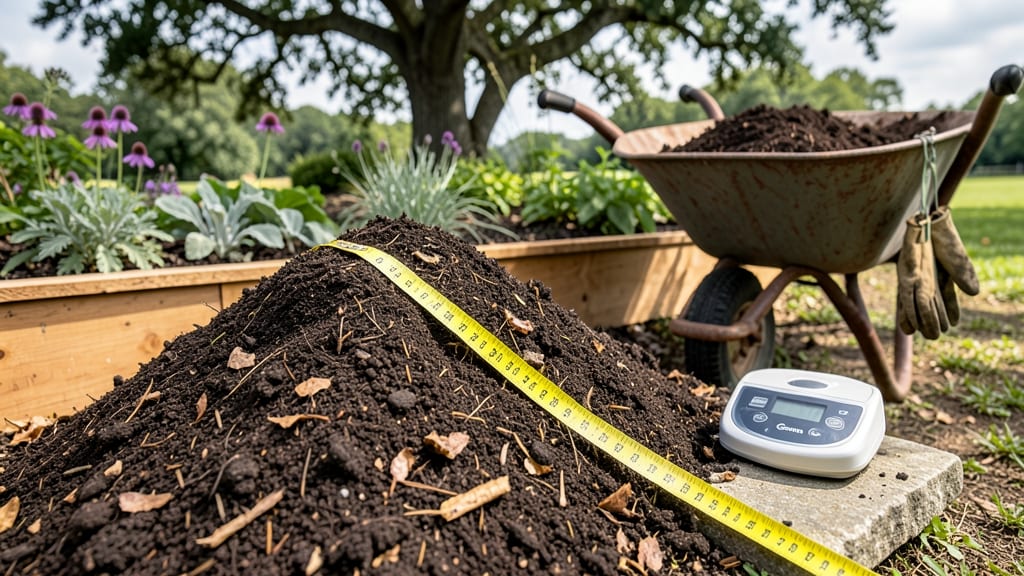
A yard of garden soil typically weighs between 1,800 to 2,200 pounds, though this varies based on moisture content, organic matter, and compaction—dry, sandy soil is lighter, while wet, clay-heavy soil can exceed 2,500 pounds per cubic yard.
A yard of garden soil's weight shifts dramatically depending on its composition. 🌱 Sandy soils, which drain quickly, often weigh closer to 1,500 pounds when dry, while clay soils—dense and moisture-retentive—can approach 2,500 pounds when saturated.
Organic matter, like decomposed leaves or compost, adds bulk without significant weight gain, while moisture alone can increase the total by up to 500 pounds in heavy rainfall conditions. Understanding these variables helps landscapers plan equipment needs and avoid overloading wheelbarrows or soil delivery trucks.
For example, a 10x10-foot garden bed (about 0.3 cubic yards) filled with average soil would weigh roughly 540 to 660 pounds—enough to strain a standard wheelbarrow if overloaded.
Always test your soil's moisture level by squeezing a handful: if it holds shape but crumbles when pressed, it's at an ideal balance for accurate weight estimates.
💡 In This Article
- Factors Affecting Garden Soil Weight per Cubic Yard
- Practical Tips for Estimating Soil Weight in Landscaping Projects
Factors affecting garden soil weight per cubic yard
Soil weight varies primarily due to its moisture content, which can account for up to 50% of the total weight in saturated conditions. Dry soil particles themselves are relatively light—sand weighs about 100 pounds per cubic foot, while clay particles, though dense, pack tightly, increasing overall weight.
The key difference lies in how these particles bind with water: clay soils absorb 3-5 times their dry weight in water, while sandy soils only hold 10-20% of their weight in moisture.
Organic matter plays a secondary but critical role. Compost or decomposed plant material adds bulk without significant weight—think of it as adding 10-20% more volume for roughly 5-10% of the total weight.
For example, a cubic yard of pure clay might weigh 2,400 pounds when dry, but adding 30% organic compost could reduce the effective weight to 2,100 pounds while improving drainage and nutrient content. This is why gardeners often blend soils to achieve the ideal balance of weight and fertility.
Particle density and compaction create another layer of variation. Loam—the ideal garden soil mix of 40% sand, 40% silt, and 20% clay—typically weighs 1,800-2,000 pounds per cubic yard when moist.
However, heavy machinery or foot traffic can compress this soil by 10-20%, increasing its weight per cubic yard by 200-400 pounds due to reduced air pockets.
Imagine trying to lift a 2,400-pound bag of soil versus the same volume at 1,800 pounds—the difference is dramatic and directly impacts how you handle it.
Seasonal changes further complicate weight estimates. After a heavy rain, clay soils can swell and double in weight, while sandy soils remain relatively unchanged. In winter, frozen soils become even denser, making them heavier to move.
This seasonal fluctuation is why professional landscapers always test soil moisture before estimating weights—simply pressing a handful of soil between your fingers can reveal whether it's at its optimal working weight or dangerously heavy.
For a hands-on approach, consider this simple test: Fill a 1-gallon bucket (0.013 cubic yards) with your garden soil. Weigh it—if it's under 20 pounds, your soil is likely sandy; if it's over 30 pounds, it's clay-heavy.
Multiply this by 77 (the number of gallons in a cubic yard) to estimate your soil's weight per yard. This method gives you a practical, on-the-ground measurement without relying on guesswork.
Understanding these factors isn't just academic—it directly impacts your gardening success. Heavy clay soils may require lighter amendments like perlite to reduce weight and improve aeration, while sandy soils benefit from organic matter to increase moisture retention.
The right balance ensures your plants thrive without overwhelming your physical effort or equipment.