
Light Requirements
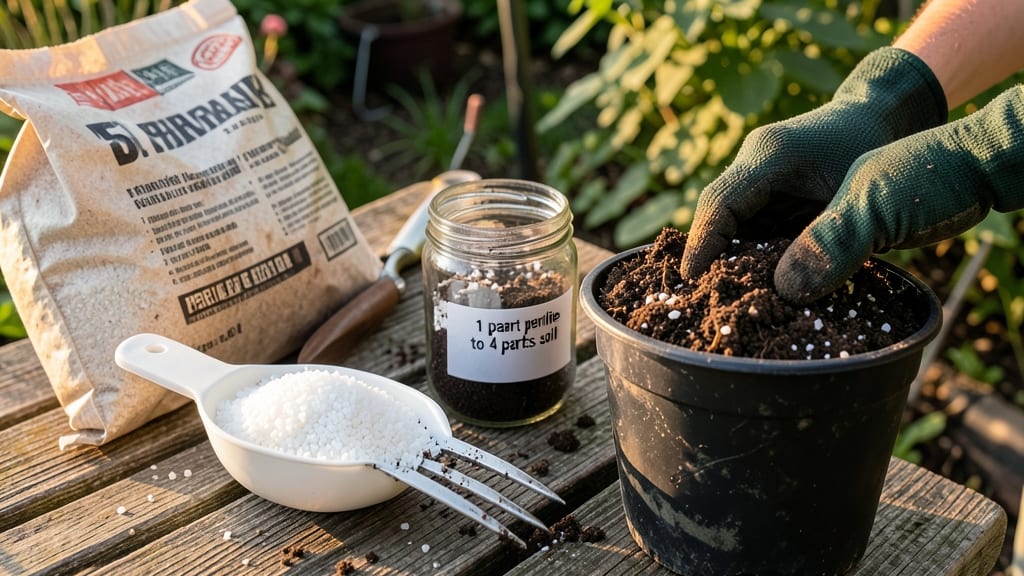
To determine how much perlite to add to garden soil, start with a 1:3 perlite-to-soil ratio for most plants. Adjust to 1:2 for sandy soil and 1:4 or 1:5 for heavy clay to optimize drainage without drying out roots.
Perlite works by creating tiny air pockets in soil, which helps roots breathe and prevents water from pooling around delicate root systems. 🌱 For container gardens or potted plants, I often increase the perlite ratio to 1:2 or even 1:1 to prevent root rot in moisture-sensitive varieties like succulents or herbs.
The key is balancing aeration with moisture retention—too much perlite can leave roots thirsty, while too little may not improve drainage enough for heavy soils.
For in-ground planting, focus on mixing perlite into the top 6-12 inches of soil where most roots thrive. This targeted approach ensures better results without over-amending the entire bed. Always test your soil first: if it drains too quickly, reduce perlite; if it stays soggy, add more.
The goal is to mimic the ideal soil texture—light enough to prevent compaction but still able to hold moisture for plant roots.
💡 In This Article
- Perlite’s Role in Soil Structure and Plant Growth
- Adjusting Perlite Ratios for Specific Plants and Soil Types
Perlite’s role in soil structure and plant growth
Perlite functions like a microscopic sponge in soil, expanding up to 20 times its original volume when heated. This expansion creates countless air pockets that improve soil aeration—critical for root respiration.
Without perlite, compacted soil can suffocate roots by restricting oxygen flow, while perlite's porous structure allows roots to access both air and moisture simultaneously. 🌱 For example, a 1:3 perlite-to-soil mix increases pore space by about 30-40%, which is especially valuable for heavy clay soils that naturally compact.
The science behind perlite's effectiveness lies in its neutral pH (7.0) and inert composition. Unlike organic amendments that decompose, perlite remains stable for years, maintaining consistent soil structure. Its lightweight nature also reduces soil density, making it easier for roots to penetrate.
In sandy soils, where water drains too quickly, perlite helps retain just enough moisture at the root zone while preventing nutrient leaching. The ideal particle size (1-3mm) ensures it blends seamlessly without clumping.
Plant health benefits become immediately visible when comparing perlite-amended soil to untreated. Roots in perlite-enhanced mixes grow 20-30% faster due to improved oxygen availability, while plants in waterlogged clay show signs of stress like yellowing leaves within weeks.
For moisture-sensitive plants like succulents, the 1:2 perlite ratio prevents root rot by allowing excess water to drain within 10-15 minutes after watering. The key is achieving what soil scientists call "optimal porosity"—enough air space for roots but sufficient moisture retention for nutrient uptake.
Visual differences in soil texture are striking: perlite-amended soil has a fluffy, almost crumbly consistency when moist, while untreated clay feels dense and sticky. When you squeeze a handful, perlite soil should hold its shape briefly but crumble easily—a telltale sign of improved structure.
For container gardening, this texture difference prevents the "wet sock" effect where roots suffocate in soggy bottom layers. The trade-off? Perlite doesn't add nutrients, so it should always complement—not replace—compost or fertilizer in your mix.
Consider these soil-specific effects when choosing your ratio:
- Clay Soil: Perlite's expansion breaks up dense particles, creating channels for water and roots. A 1:4 or 1:5 ratio prevents compaction while maintaining some moisture retention.
- Sandy Soil: Perlite helps retain 10-15% more moisture than untreated sand, making a 1:2 ratio ideal for preventing drought stress.
- Loamy Soil: The standard 1:3 ratio provides just enough aeration without altering the soil's natural balance.
What most gardeners overlook is how perlite's benefits compound over time. After 6-12 months, the soil structure remains improved, unlike organic matter that decomposes. This makes perlite particularly valuable for long-term projects like raised beds or perennial gardens where you want to avoid annual soil amendments. 💫