
Watering
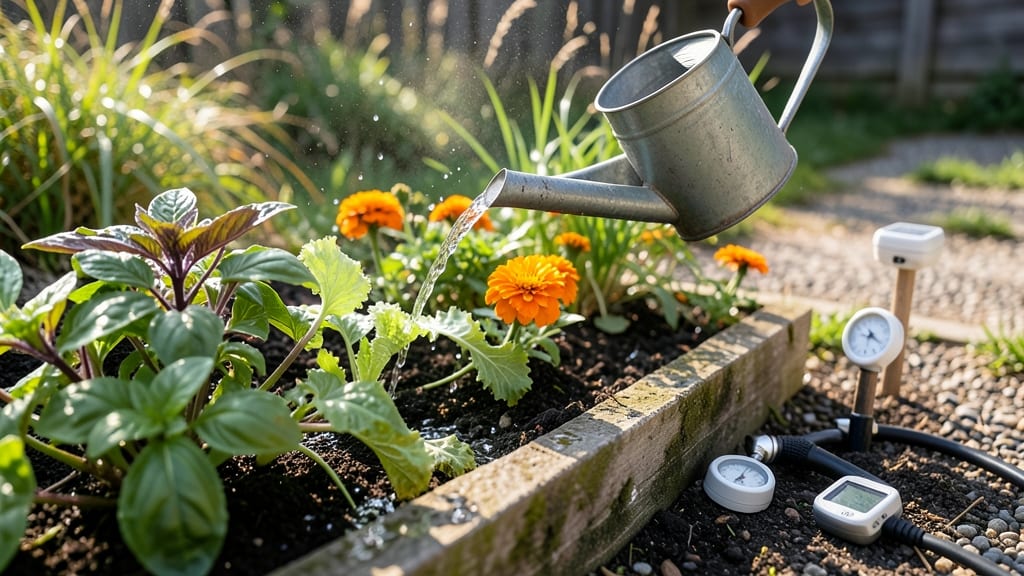
Watering your garden the right amount keeps your plants thriving—not drowning or gasping for moisture—and the key is knowing exactly how much each type needs.
Overwatering or underwatering your garden can turn lush greenery into a sad, wilted mess—yet most gardeners struggle to get the balance right. The secret lies in understanding exact watering schedules tailored to each plant type, not just guessing with a hose.
Too much water suffocates roots, while too little stresses plants and invites pests. But here’s the good news: once you learn the right techniques, you’ll save time, water, and frustration.
Below, I break down how much to water by plant type, soil conditions, and season—plus tools to check moisture so you never second-guess again.


Watering schedules by plant type: exact times for healthy growth
Mastering your garden's watering schedule is like learning a plant's secret language—each type communicates its needs differently. Vegetables like tomatoes and peppers crave consistent moisture, while drought-tolerant succulents thrive on neglect.
The key? Understanding root depth, soil type, and growth stages to deliver water exactly when and where it matters most.
For most plants, morning watering between 6-10 AM is ideal—it reduces evaporation and fungal diseases. But herbs like basil wilt faster in heat, needing afternoon top-ups, while shrubs like boxwood prefer deep, infrequent drinks. Let's break down the precise schedules your garden craves for thriving results.
📌 Pro Tip: Always water at the base of plants, not overhead, to prevent leaf diseases and waste. Use a soaker hose or drip irrigation for precision.
| Plant Type | Water Frequency | Depth (inches) | Best Time | Notes |
|---|---|---|---|---|
| Vegetables (Tomatoes, Peppers, Cucumbers) | Daily (summer), Every 2-3 days (spring/fall) | 1.5–2 inches | Morning (6-8 AM) | Keep soil consistently moist, not soggy. |
| Herbs (Basil, Cilantro, Parsley) | Every 1-2 days (summer), Every 3 days (spring/fall) | 1 inch | Morning or late afternoon | Drought-sensitive—wilts quickly in heat. |
| Flowers (Marigolds, Petunias, Zinnias) | Every 2-3 days (summer), Weekly (spring/fall) | 1 inch | Morning | Bright colors need even moisture. |
| Shrubs (Boxwood, Hydrangeas, Lavender) | Weekly (deep water), Bi-weekly (established) | 2–3 inches | Early morning | Drought-tolerant once established. |
| Succulents & Cacti (Aloe, Jade, Snake Plant) | Every 2-4 weeks (spring/fall), Monthly (summer) | 0.5 inch | Mid-morning | Overwatering kills—let soil dry completely. |
| Lawn (Cool-Season Grasses) | 2-3 times per week (summer), Weekly (spring/fall) | 1–1.5 inches | Early morning | Deep and infrequent encourages roots. |
Your tomatoes and peppers need the most attention—watering them daily in summer prevents blossom end rot and cracked fruits. Aim for 1.5–2 inches of water per week, delivered directly to the soil. For herbs like basil, shallow but frequent watering keeps leaves tender and flavorful.
Flowers like marigolds and petunias strike a balance—water every 2–3 days in summer to keep blooms vibrant, but reduce to weekly in cooler months. Shrubs such as boxwood and hydrangeas are surprisingly low-maintenance once established; deep watering once a week in summer keeps them thriving.
For succulents and cacti, the golden rule is "soak and dry". Water every 2–4 weeks in spring/fall, letting the soil dry completely between sessions.
Overwatering is their #1 enemy—these plants store water in their leaves, not roots. A quick finger test (stick your finger 1 inch into the soil) tells
How to adjust watering based on soil, weather, and season
Your garden’s watering needs change constantly—what works in summer heat fails in winter chill, and clay soil holds moisture differently than sandy soil. The key is adapting your routine to match these conditions.
Start by testing your soil: stick your finger 1-2 inches deep—if it’s dry, water; if damp, wait. This simple check saves plants from root rot or wilting stress.
Seasonal shifts demand the most attention. In spring and fall, when temperatures moderate, most plants thrive on 1-1.5 inches of water per week. But during summer droughts, even drought-tolerant plants like lavender may need daily deep watering to keep roots hydrated.
Conversely, winter watering should drop to bi-weekly or pause entirely in freezing climates.
⚠️ callout warning ⚠️
- Clay soil → Water less frequently (holds moisture 3x longer than sand)
- Sandy soil → Water daily in summer (drains in hours)
- Rainy days → Pause watering; soggy soil suffocates roots
- Hot winds → Increase water by 50% to prevent evaporation
Weather plays a sneaky role. After a heavy rain, skip your scheduled watering for 3-5 days—unless your soil drains like a sieve (like sandy loam). Humidity also matters: in sticky summer air, plants lose water faster, so water early morning to reduce evaporation.
Conversely, winter’s low humidity means less frequent watering, but never let soil dry out completely for evergreens like boxwood.
Soil type dictates your entire routine. Clay soil acts like a sponge, staying wet for days, while sandy soil dries out faster than a summer sidewalk. Amend heavy clay with compost to improve drainage, or add peat moss to sandy soil to retain moisture.
For container gardens, cactus mix drains quickly—water every 2-3 days in summer—while african violets need bottom-watering to avoid root rot.
Create a simple seasonal watering checklist to stay on track: ☑️ Spring: 1-1.5" weekly; focus on new transplants ☑️ Summer: Deep water every 2 days; mulch to lock in moisture ☑️ Fall: Reduce to 1" weekly as temps drop ☑️ Winter: Water only if soil is bone-dry (check with gloved finger)
Pro tip: Group plants by water needs—place thirsty tomatoes near the spigot and succulents in dry corners. Use drip irrigation on vegetable beds to deliver consistent moisture, and soaker hoses for flower borders.
Adjust as you go: if your roses droop by noon, they need more water; if mushrooms pop up under your hostas, you’re overdoing it.