Watering
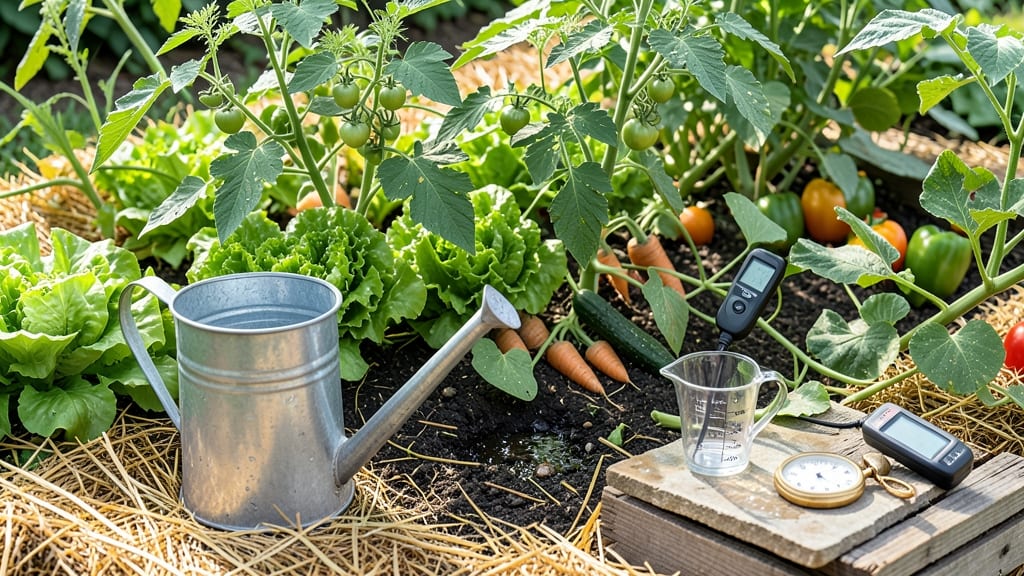
A vegetable garden 🥬 needs 1 to 2 inches of water weekly, but the how and when make all the difference between a bountiful harvest and a sad, wilted mess.
Overwatering or underwatering your vegetable garden can mean the difference between a thriving harvest and wasted seeds—so knowing the exact water needs for each plant type is non-negotiable.
Leafy greens like lettuce and spinach demand consistent moisture, while root crops such as carrots and potatoes prefer deeper, less frequent watering. Throw in the heat of summer or the chill of spring, and you’ve got a recipe for confusion if you’re not careful.
Below, I break down the seasonal rules by plant type, smart watering systems to save time, and the telltale signs your garden is either drowning or thirsty—so you can finally stop guessing and start growing.


Water requirements for vegetable gardens by plant type (seasonal breakdown)
Watering your vegetable garden isn't a one-size-fits-all task—each plant type has unique needs that change with the seasons. Leafy greens like lettuce and spinach need consistent moisture, while root vegetables such as carrots prefer deeper, less frequent watering.
Understanding these differences ensures your tomatoes, peppers, and herbs thrive without wasted water or stunted growth.
Seasonal shifts also play a critical role. Spring showers often mean less supplemental watering, but summer heat can dry out soil in just 24 hours. Fall brings cooler temps and reduced evaporation, while winter may require minimal watering unless you're growing winter-hardy crops like kale or Brussels sprouts.
Let's break down the exact watering rules for each plant category and how to adjust for the season.
For leafy greens, the key is maintaining consistent soil moisture. These plants have shallow roots and bolt (go to seed) quickly if stressed by dry soil. In spring, aim for 1-1.5 inches of water weekly, increasing to daily watering in summer if temperatures exceed 85°F.
Always water at the base to avoid fungal diseases like powdery mildew, which thrives in damp foliage.
Root vegetables like carrots and potatoes need a different approach—deep, infrequent watering encourages straight, tender roots. In summer, provide 2 inches of water every 2-3 days, focusing on the soil rather than the leaves.
Overhead watering can cause cracked potatoes or misshapen carrots, so use a soaker hose or drip irrigation for precision.
Fruiting plants such as tomatoes and peppers are the most demanding when it comes to water. Uneven moisture leads to blossom end rot or cracked fruits, so aim for 1.5-2 inches of water weekly, with daily watering in peak summer. Mulching with straw or shredded leaves helps retain moisture and keeps roots cool. In fall, reduce watering slightly as plants prepare for dormancy.
Herbs often get overlooked, but they too have specific needs. Basil and cilantro
Signs your vegetable garden is overwatered or underwatered (and how to fix it)
Even with the best intentions, watering mistakes can silently sabotage your vegetable garden. Too much water drowns roots, while too little stunts growth—both lead to wasted effort and lost harvests. The key is recognizing the subtle (and not-so-subtle) signs of water stress before it’s too late.
I’ve seen wilting leaves that scream for help and moldy soil that signals overwatering. These symptoms aren’t just annoying—they’re red flags that demand immediate action. Let’s decode what your plants are really telling you and how to fix it fast.
⚠️ How Much Water Does a Vegetable Garden Need?
Rule of thumb: Aim for 1-2 inches of water per week, delivered deeply at the soil level. Most vegetables prefer morning watering to reduce evaporation and fungal risks. Adjust based on:
- Soil type: Sandy soil drains fast (water more often), clay holds moisture (water less)
- Plant type: Leafy greens (like lettuce) need consistent moisture; root veggies (like carrots) prefer drier soil
- Weather: Double watering during 90°F+ heat or after strong winds
💧 Pro tip: Stick a screwdriver into the soil—if it slides in easily, you’re overwatering. If it pops out dry, it’s time to water.
Yellowing leaves are the most common symptom of water stress, but they don’t always mean the same thing. Overwatered plants often show yellow lower leaves with a mushy stem, while underwatered plants develop crispy, yellowing edges.
The difference? Overwatered soil smells sour or rotten, while underwatered soil is bone-dry and pulls away from the pot.
Another dead giveaway: mold or fungus on soil or leaves. If you spot white, fuzzy growth (like powdery mildew) or slimy patches, your garden is drowning. Pull affected plants immediately and let the soil dry out for 24 hours before watering again.
For underwatered plants, the fix is simpler: water deeply until it runs out the drainage holes, then mulch to retain moisture.
Don’t ignore stunted growth or drooping stems, either. These are your plants’ last-resort signals. If your tomatoes or peppers refuse to grow despite sunlight and fertilizer, check the roots. Overwatered roots turn brown and mushy, while underwatered roots shrink and pull away from the soil.
Both scenarios require a reset: adjust your watering schedule and improve drainage with compost or perlite.
For leafy greens like spinach or kale, underwatering causes leaves to curl inward, while overwatering leads to a sad, limp appearance with yellow spots. Root vegetables like carrots or beets need the opposite: too much water causes them to split, while too little results in woody, bitter roots.
The solution? Consistency is key—stick to a watering routine and monitor soil moisture with your finger.
When in doubt, less is more. Most vegetable gardens thrive with deep, infrequent watering rather than daily shallow drinks. Use a moisture meter or the screwdriver test to check soil conditions, and always water at the base of plants to avoid wetting leaves (which spreads disease).
With these fixes, your garden will bounce back faster than you think—promise! 🌱