Watering
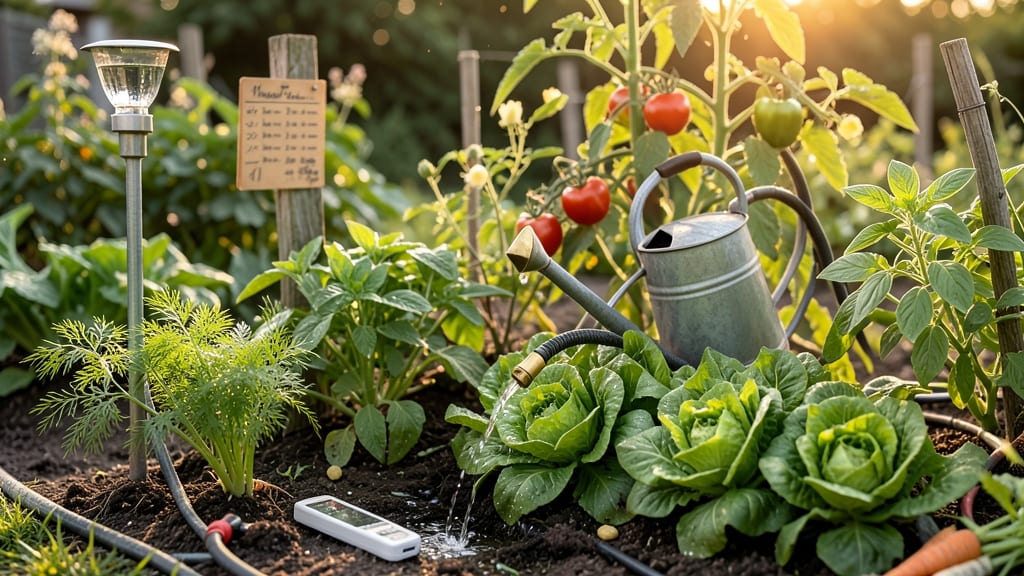
Watering your vegetable garden the right amount keeps your 🥬 thriving and your harvest bountiful—but most gardeners either drown their plants or leave them parched.
Overwatering or underwatering your vegetable garden can mean the difference between a bumper harvest and wilted disappointment—but how do you know when to reach for the hose? The answer depends on soil depth, plant type, and climate, not just a one-size-fits-all rule.
Deep watering once a week is better than light sprinkles daily, but some plants like tomatoes need 1-2 inches of water weekly, while leafy greens prefer consistent moisture. Soil type plays a role too: sandy soil drains fast, while clay holds moisture longer.
In this guide, I’ll break down how much to water by plant type, seasonal adjustments, and the simple tricks to avoid common mistakes—so you can grow a garden that’s lush, productive, and stress-free.


How deep to water vegetable plants by root type (science-backed rules)
Watering your vegetable garden isn’t just about how often you use the hose—it’s about how deep the water penetrates. Plants with shallow roots like lettuce need only 1-2 inches of moisture, while deep-rooted crops like tomatoes require water to reach 12-18 inches below soil.
Understanding root depth ensures water reaches where it’s needed most, not just the surface.
Most gardeners make the mistake of watering lightly every day, which encourages shallow roots and weak plants. Instead, aim for deep, infrequent watering to mimic natural rainfall. This method strengthens roots, improves drought resistance, and prevents fungal diseases caused by damp foliage.
Think of it like giving your plants a long drink instead of a quick sip.
To determine watering depth, start by identifying your plants’ root types. Leafy greens and herbs have shallow roots (0-6 inches), while root vegetables like carrots and beets grow roots 6-12 inches deep. Vining plants such as cucumbers and squash can extend roots 18-24 inches or more.
Knowing these differences helps you tailor your watering approach.
Here’s a science-backed rule: Water until moisture reaches the depth of your plant’s mature roots. For example, if your tomatoes have roots at 12 inches, keep watering until the soil at that depth feels damp.
Use a soil probe or your finger to check—this simple tool ensures you’re not over- or underwatering.
The finger test is your best free tool for checking soil moisture. Stick your index finger 1-2 inches deep for shallow-rooted plants or 4-6 inches for deep-rooted ones. If the soil feels dry, it’s time to water.
For a more precise read, invest in a moisture meter—these gadgets save time and prevent guesswork, especially in sandy soils that dry out quickly.
Soil type plays a huge role in watering depth. Clay soil holds moisture longer, so you’ll need to water less frequently but deeper. Sandy soil, on the other hand, drains quickly, requiring more frequent, shallow watering.
Amend your soil with compost to improve water retention and root penetration, making your watering job easier in the long run.
Seasonal adjustments are key. In summer heat, deep watering every 2-3 days may be necessary, while spring and fall often require watering every 3-5 days. Always water in the early morning to reduce evaporation and fungal risks. Avoid evening watering, as damp leaves overnight invite diseases like powdery mildew.
Signs of proper watering include turgid leaves (firm and upright) and steady growth. Yellowing leaves or wilting can signal underwatering, while m
Watering schedule for common vegetables: frequency vs. volume by season
Getting your vegetable garden's watering schedule right is like hitting a moving target—it changes with the season, plant type, and even the weather forecast. In summer heatwaves, your tomatoes might beg for daily hydration, while leafy greens in spring can handle a gentler touch.
The key is balancing frequency (how often) and volume (how much), ensuring roots get deep, consistent moisture without drowning.
Most vegetables thrive with 1-2 inches of water per week, but that’s a baseline. Root vegetables like carrots need steady moisture to prevent cracking, while peppers can handle slightly drier soil once established.
The trick? Water deeply—1 inch at a time—to encourage roots to grow downward, not just skim the surface. Mulching with straw or wood chips helps retain moisture and keeps soil temps stable.
📊 Comparison Table: Seasonal Watering for Common Vegetables
| Vegetable | Spring (Planting) | Summer (Heatwave) | Fall (Harvest) | Overwatering Signs |
|---|---|---|---|---|
| Tomatoes | 3x/week, 1 inch | Daily, 1.5 inches | 2x/week, 1 inch | Yellow leaves, cracked fruit |
| Peppers | 2x/week, 1 inch | Every other day, 1 inch | Weekly, 0.75 inch | Blossom end rot, wilting |
| Leafy Greens (Lettuce, Spinach) | Daily, 0.5 inch | Every other day, 0.75 inch | 3x/week, 0.5 inch | Bitter taste, bolting |
| Root Vegetables (Carrots, Radishes) | 2x/week, 1 inch | Daily, 1 inch (keep soil moist) | Weekly, 0.75 inch | Forked roots, soft texture |
In spring, focus on establishing roots—water tomatoes and peppers 2-3 times per week, but leafy greens need more frequent, lighter watering to prevent bolting. Use a soaker hose or drip irrigation to deliver water directly to the soil, minimizing evaporation.
Early mornings are ideal to let foliage dry before evening, reducing fungal risks like blight.
When summer heatwaves roll in, increase frequency but keep sessions short. Tomatoes and peppers may need daily watering, but avoid wetting leaves to prevent disease. Root crops like carrots and beets require consistent moisture—let the top inch of soil dry between waterings to avoid cracking.
Mulch heavily with straw to lock in moisture and cool roots. Check soil moisture with your finger: if the top 2 inches feel dry, it’s time to water.
As fall harvests approach, dial back watering. Leafy greens and root vegetables can handle less frequent watering, but tomatoes still need regular hydration until they ripen. Watch for overwatering signs like yellowing leaves or wilting, which can signal root rot in cool, damp soil.
Adjust based on rainfall—if you’ve had 1 inch of rain, skip a watering session to avoid soggy soil.
Pro tip: Group plants with similar water needs together in your garden layout. For example, tomatoes and peppers can share a bed, while lettuce and spinach get their own zone.
Use a rain gauge to track weekly totals and adjust accordingly. With this seasonal rhythm, your vegetable garden will stay lush, productive, and resilient—no wilted disappointments in sight! 🌱