
How To
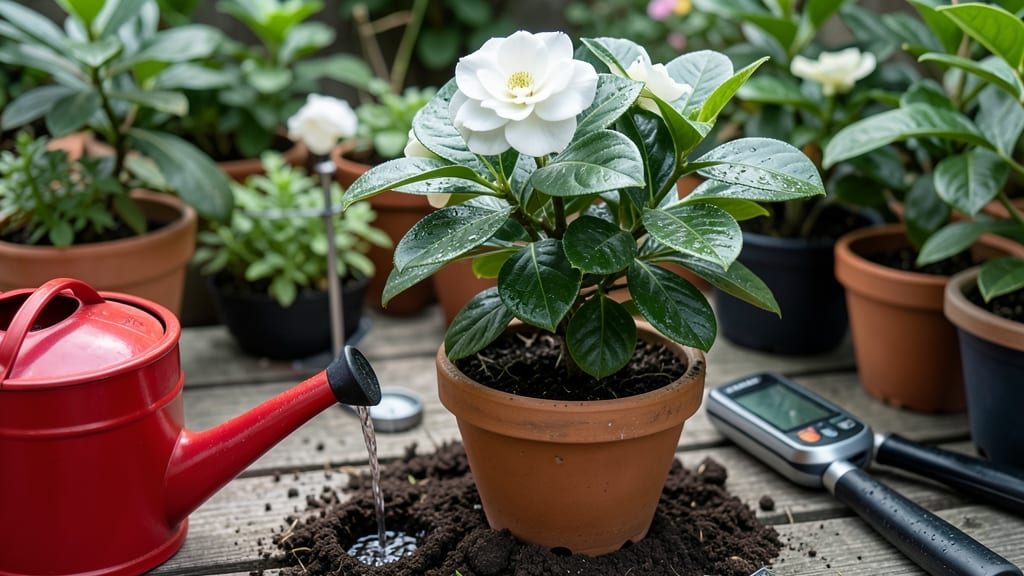
Watering gardenias the right way is all about consistency—too much or too little can turn those lush blooms into sad, wilted leaves.
Struggling to keep your gardenia 🌸 blooming? Overwatering or underwatering are the silent killers of these fragrant favorites—and the wrong watering schedule can leave you with wilted leaves instead of showstopping flowers.
Most gardeners guess when to water, but the secret is checking soil moisture first. Stick your finger an inch deep—if it feels dry, it’s time. If it’s damp, wait another day. This simple test saves your plant from root rot or thirst.
Below, I’ll break down the exact watering schedule for your climate, pot size, and season—so you can finally get those blooms back without the guesswork.
The ideal watering schedule for gardenias based on season and climate
Mastering the watering schedule for gardenias is the secret to those glossy leaves and heavy blooms you dream about. Gardenias are thirsty but sensitive—too much water causes root rot, while too little triggers bud drop.
The key lies in understanding how seasonal changes and local climate shift their needs. Whether you're in a humid Southern garden or a dry Western landscape, adapting your routine keeps your gardenia thriving year-round.
Gardenias prefer consistently moist soil, but they hate soggy conditions. In container gardens, water evaporates faster, while in-ground plants benefit from natural moisture retention. Rainfall also plays a role—after a heavy downpour, skip your scheduled watering to avoid over-saturating the roots.
Let’s break down the science-backed watering schedule tailored to your climate and season so you can enjoy blooms all year.
🌸 Comparison Table: Watering Gardenias by Season & Climate
In spring, your gardenia is waking up from dormancy and needs frequent watering to encourage new growth. If you're in a humid climate, like the Southeast, water every 4-5 days for in-ground plants, but container gardenias dry out faster—so water every 2-3 days.
After a heavy rain, pause watering until the top 1-2 inches of soil feel dry to the touch. This prevents root suffocation and fungal diseases like botrytis.
Summer is the peak blooming season for gardenias, but it’s also when they transpire the most. In dry climates, like Arizona or California, water daily in containers and every 2 days in-ground. Always water in the
How to perform the perfect soil-moisture test for gardenias (without a moisture meter)
Gardenias thrive on consistent moisture, but their roots despise soggy soil. The key to perfect watering lies in your soil-moisture test—a simple, hands-on method that tells you exactly when to water.
Unlike moisture meters, this tactile approach lets you feel the soil's true condition, preventing both overwatering and underwatering that can stunt blooms.
Start by clearing a 2-inch radius around your gardenia's base. Use a clean hand or small trowel to gently poke the soil to a depth of 1-2 inches for potted plants or 2-3 inches for in-ground gardenias.
This depth mirrors where the roots actively seek moisture, giving you the most accurate reading.
⚠️ Watering Warning: The Gardenia Drowning Zone
Watering gardenias every 2-3 days in summer can drown roots if soil doesn't drain well. Test soil moisture before watering—if soil feels damp at 2 inches down, wait 1-2 days. Overwatering causes yellow leaves and bud drop, while underwatering leads to crispy edges and stunted growth. Adjust your schedule based on seasonal heat and rainfall.
When you insert your finger, pay attention to three key textures. Ideal soil should feel like a slightly damp sponge—moist but not sticky. If it crumbles easily, your gardenia needs water.
Conversely, if it feels clay-like or gluey, you've overwatered and must hold off until it dries slightly.
For potted gardenias, lift the container to check weight. A dry pot feels light as a feather, while a properly hydrated one has noticeable heft.
Pair this with your finger test for the most reliable results. Compacted soil (common in clay pots) can fool you—if moisture lingers at the surface but roots stay dry, consider amending with perlite.
Signs of overwatering include yellowing leaves, mushy stems, or white fungal growth on soil. Underwatered gardenias show wilted, crispy leaf edges and dropping buds.
If you spot these, adjust your watering immediately: reduce frequency for overwatering or water deeply for underwatering, then test soil again in 48 hours.
Pro tip: Morning is prime testing time. Soil moisture levels drop overnight, giving you a clearer picture of the plant's true needs. Avoid testing after rain or heavy watering—wait until the top inch dries to get an accurate baseline.
With practice, this simple method will help you master gardenia watering like a pro. 🌸