Watering
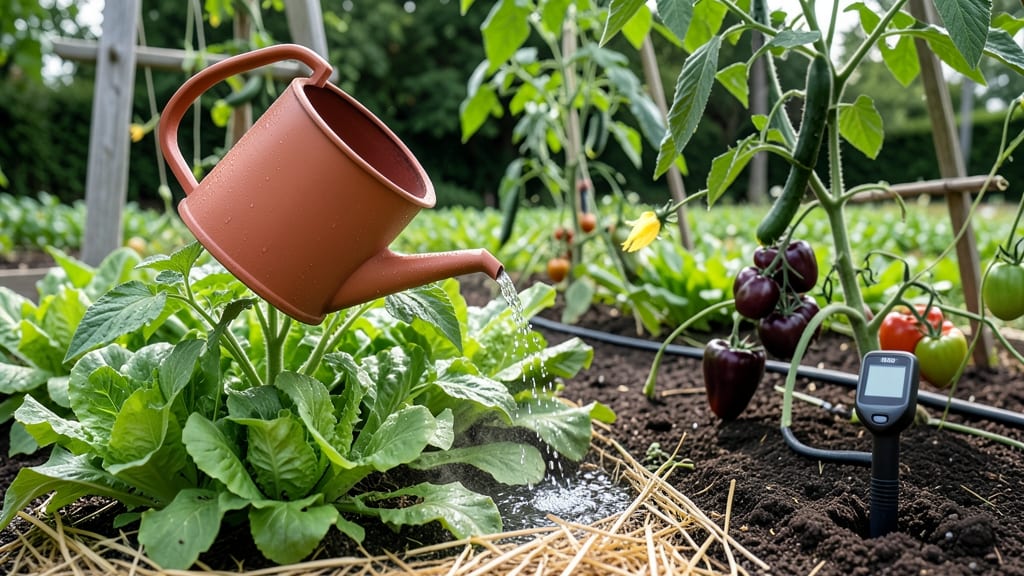
To water a veg garden properly, aim for 1-2 inches of water per week—but the real trick is timing and soil type, not just the numbers on the calendar.
Overwatering or underwatering your 🥬 vegetable garden can mean the difference between a thriving harvest and wilted disappointment—so how do you strike the perfect balance?
Most gardeners guess, but the right approach depends on whether your soil is sandy (dries fast) or clay-heavy (holds moisture like a sponge). Even the weather shifts the schedule: summer heat demands daily checks, while spring showers might mean skipping a week.
Below, I break down exact watering schedules by soil, season, and plant type—plus the telltale signs your veggies are thirsty (or drowning) so you can adjust before it’s too late.
Watering frequency by soil type: sand vs clay vs loam explained
Your vegetable garden's soil type is the foundation of its watering needs. Sandy soil drains too quickly, clay soil holds water like a sponge, and loamy soil strikes the perfect balance.
Understanding these differences means the difference between lush, productive plants and struggling seedlings. Let's break down how each soil type behaves and how to adjust your watering schedule accordingly.
I've spent years experimenting with different soil types in my own garden, and the results are undeniable. Sandy soils often leave me reaching for the hose every day during summer, while clay-heavy plots can drown roots if I'm not careful.
The key is matching your watering routine to your soil's natural tendencies, not guessing based on what works for your neighbor's garden.
Here's the science behind it: Sandy soil has large particles with lots of air space, so water runs right through. Clay soil has tiny particles that pack tightly, trapping water and limiting oxygen. Loam combines the best of both—equal parts sand, silt, and clay—for ideal moisture retention and drainage.
For sandy soil gardens, I've found that shallow, frequent watering mimics natural rainfall patterns. My tomatoes and peppers thrive when I water them twice daily during summer—once in the morning and once in the late afternoon.
The key is keeping the top 1-2 inches of soil consistently moist without letting it dry out completely between waterings.
When working with clay soil, I've learned to water less often but more deeply. The challenge is avoiding waterlogging, which can suffocate roots. I use a soil moisture meter to check before watering—if the top 3 inches are damp, I wait.
For heavy clay areas, I've even installed French drains to improve overall drainage during rainy seasons.
My loamy soil garden is the easiest to manage because it holds moisture without becoming waterlogged. During summer, I water deeply every other day, while in cooler months, I extend the interval to every 3-4 days.
The secret here is maintaining consistent moisture levels—never letting the soil dry out completely or become soggy.
Don't forget that mulching makes a world of difference across all soil types. For sandy soils, organic mulch like straw helps retain moisture, while clay soils benefit from gravel mulch that improves drainage.
Loam soils can handle almost any mulch type, but I prefer shredded leaves for their additional nutrient benefits as they decompose.
One common mistake I see is assuming all vegetable plants have the same water needs. Leafy greens like lettuce and spinach actually prefer more frequent, shallow watering, while root vegetables like carrots and potatoes need deep, infrequent watering to develop properly.
Always adjust your approach based on both your soil type and the specific plants you're growing.
To test your soil's moisture level like a pro, simply stick your finger about 1-2 inches into the soil. If it feels dry, it's time to water. For sandy soils, you'll often find dryness at this depth within 24 hours of watering, while clay soils may stay moist for days.
This simple test has saved me countless hours of overwatering or underwatering guesswork.
Remember that soil isn't static—it changes with weather, organic matter additions, and seasonal temperature shifts. What works in summer may need adjustment in spring or fall. The more you observe your garden's specific conditions, the better you'll become at tailoring your watering routine to your unique soil type.
🌱
Seasonal watering adjustments for veg gardens: spring, summer, and fall guidelines
As the seasons shift, your vegetable garden's watering needs change dramatically. Spring brings gentle rains and warming soil, while summer demands deep hydration to combat heat stress. Even fall requires careful moisture management as plants prepare for dormancy. Understanding these seasonal rhythms helps you avoid both drought and waterlogged roots.
I’ve learned through trial and error that temperature, humidity, and daylight hours are the key factors dictating how often you should water. For example, my tomatoes wilted last summer when I stuck to a spring schedule—until I adjusted for the 90°F heat.
Let’s break down the seasonal watering adjustments you need to make for a thriving veg garden.
- 1. Spring: Water every 2-3 days (soil warms, roots establish). Use 1 inch per week as a baseline.
- 2. Summer: Increase to daily or every other day (deep watering at soil level). Early morning is best to prevent evaporation.
- 3. Fall: Reduce to every 3-5 days as temps drop. Focus on root crops (carrots, beets) needing consistent moisture.
- 4. Drought-Proofing: Mulch with straw or wood chips to retain 1-2 inches of moisture and reduce watering frequency by 30%.
- 5. Rainy Seasons: Adjust for humidity—skip watering if 1 inch of rain falls in 24 hours. Use a rain gauge to track accumulation.
In spring, focus on establishing roots rather than rapid growth. Young seedlings need frequent, shallow watering to encourage root spread. I start with a light soak every 2-3 days, increasing to 1 inch per week as temperatures rise.
Use a moisture meter to check soil depth—if the top 2 inches are dry, it’s time to water.
Summer is the most critical season for watering. Deep watering at the base of plants (not overhead) prevents fungal diseases like blight and ensures roots grow deeper. My peppers thrive when watered at soil level every other day during heatwaves.
If your garden feels dry by 10 AM, it’s a sign to water immediately. Pair this with mulching to lock in moisture.
Fall watering shifts to maintenance mode as plants prepare for dormancy. Reduce frequency to every 3-5 days, focusing on root vegetables like carrots and potatoes. Overwatering now can lead to rot, so monitor soil moisture closely.
I’ve found that drip irrigation on a timer works best—it delivers consistent moisture without excess.
Don’t forget to adjust for rainfall! If your area gets 1 inch of rain in 24 hours, skip scheduled watering. Use a simple rain gauge (a clear bottle buried in the soil) to track accumulation.
In humid climates, morning watering is key—it reduces fungal spores that thrive in damp evening air. For drought-prone areas, consider drought-tolerant varieties like zucchini or swiss chard.
Pro tip: Group plants with similar water needs together. Leafy greens (spinach, lettuce) need more frequent watering, while tomatoes and peppers prefer deeper, less frequent soaks.
This zoning saves time and ensures no plant is neglected. With these seasonal adjustments, your veg garden will stay lush and productive year-round. 🌱💧☀️