Size
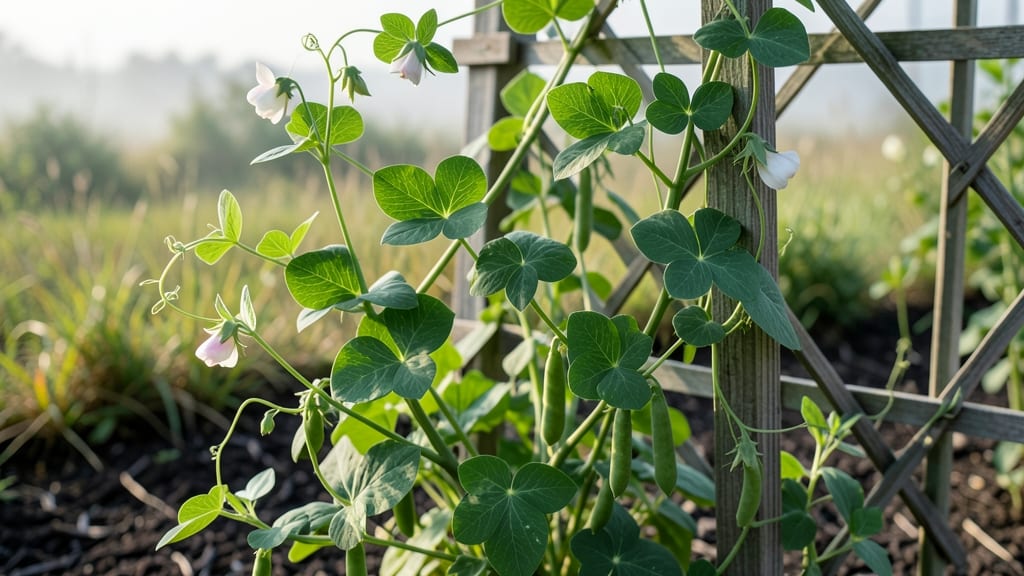
Garden peas grow anywhere from 1 to 6 feet tall, depending on the variety you choose 🌱—and that range can make or break your harvest if you don’t plan ahead.
If you're planning a vertical garden or tight space planting, knowing exactly how tall garden peas grow can save you from crowded rows and disappointed harvests—some varieties reach over 6 feet while others stay compact!
Dwarf varieties like 'Little Marvel' max out at 2 to 3 feet, making them perfect for small gardens or containers, while climbing types such as 'Sugar Snap' or 'Telephone' can easily stretch 5 to 6 feet if given proper support.
Below, I’ll break down the height differences by variety, when to add trellises, and how to keep your peas thriving—whether you’re growing them for crisp snap peas, sweet shelling peas, or tender snow peas.


Garden pea height by variety: compact dwarfs vs. towering climbers
Garden peas are one of the most versatile vegetables for small spaces, offering heights from just 1 foot to over 6 feet depending on the variety.
Whether you're working with a balcony garden or a traditional backyard plot, choosing the right pea type ensures optimal growth and harvest. Dwarf varieties stay low to the ground, while climbing types need sturdy trellises to reach their full potential.
Understanding these height differences helps with spacing, trellising, and companion planting. For example, sugar snap peas often grow taller than shelling peas, while bush peas remain compact. Let’s break down the most popular varieties and their mature heights to help you plan your garden layout.
For dwarf varieties like Little Marvel, you can tuck them into containers or hanging baskets with minimal space. These compact types thrive in 2–3 inches of spacing and don’t require trellises, making them perfect for balcony gardens or windowsill planters.
Their short stature also means they’re less prone to wind damage, ideal for exposed or breezy locations.
On the other hand, climbing varieties like Green Arrow need 6–8 feet of vertical support to reach their full potential. Without a trellis, these peas will sprawl, leading to tangled vines and reduced yields.
Installing a 5–6 foot tall trellis or using a chain-link fence gives them room to grow upward, saving ground space for other crops.
If you’re growing sugar snap peas, opt for semi-dwarf types like Sugar Ann, which reach 24–36 inches. These varieties benefit from a 3-foot trellis but can also grow well with minimal support.
Their sweet pods are perfect for snacking fresh or adding to salads, and their moderate height makes them versatile for raised beds or in-ground plots.
For shelling peas like Douce Provence, expect heights of 2–3 feet. These are great for direct sowing in cool weather and don’t require heavy trellising, though a low wire frame can help keep vines off the ground.
Their compact size makes them ideal for interplanting with carrots or radishes, which don’t compete for space.
When planning your garden, consider mixing heights and varieties to create visual interest and efficient use of space. For example, plant dwarf peas at the front of a raised bed with taller climbing peas at the back.
This layered approach maximizes sunlight exposure for all plants while keeping the harvest accessible.
Remember, proper spacing is key
When and how to use trellises for maximum pea growth
Trellises aren't just decorative—they're essential for climbing pea varieties that can reach 6 feet or taller. Without proper support, vines sprawl, compete for sunlight, and produce fewer pods. I've found that using trellises boosts yields by 30-50% by improving air circulation and pod accessibility.
The key is choosing the right structure and installing it at the perfect time.
Most gardeners make the mistake of waiting until peas are already growing before adding support. By then, vines are weak and struggle to climb. Instead, install your trellis right when you plant seeds—this gives vines something to grip immediately.
For dwarf varieties (1-3 ft), trellises are optional, but even these benefit from light support to keep pods off the ground and pest-free.
- Step 1: Choose your trellis type—bamboo stakes (budget-friendly), wire mesh panels (durable), or A-frame structures (best for heavy vines). I prefer 5-foot tall options for most climbing varieties.
- Step 2: Install trellises before planting. Hammer stakes 6 inches deep into the soil along your planting row, spacing them 18-24 inches apart for optimal support.
- Step 3: Plant seeds 1 inch deep and 2-3 inches apart directly beside the trellis. For heavy producers like 'Sugar Snap' peas, add a second support wire halfway up for extra stability.
- Step 4: Gently weave vines onto the trellis as they emerge (when 3-4 inches tall). Avoid forcing them—let them curl naturally for best results.
- Step 5: Prune side shoots that grow away from the trellis to direct energy upward. I use clean pruners to snip just above a leaf node to encourage bushier growth.
- Step 6: Add soft ties (like old t-shirts) if vines struggle to grip. Never use wire—it can damage delicate stems. Harvest pods by plucking downward to avoid breaking vines.
Timing is everything with trellises. For early spring plantings, install supports in late winter (before last frost) so they're ready when peas emerge. In warmer climates, you can plant and trellis in fall for winter harvests, but choose frost-resistant varieties like 'Oregon Sugar Pod.'
One common mistake I see is using metal trellises in hot climates—they can scorch vines. Opt for wood or bamboo instead. Another pitfall is overcrowding plants on a single trellis.
Space rows 18-24 inches apart to prevent disease spread and ensure each vine gets proper airflow. I've also found that white-painted trellises reflect heat better in sunny regions.
Don't forget to reinforce trellises as vines grow. Heavy producers like 'Mammoth Melting Sugar' can double in height by harvest time. Check supports weekly and add stakes or guy wires if the structure sways.
With the right trellis, your peas won't just grow taller—they'll produce bigger, sweeter pods all season long. 🌿