
Size
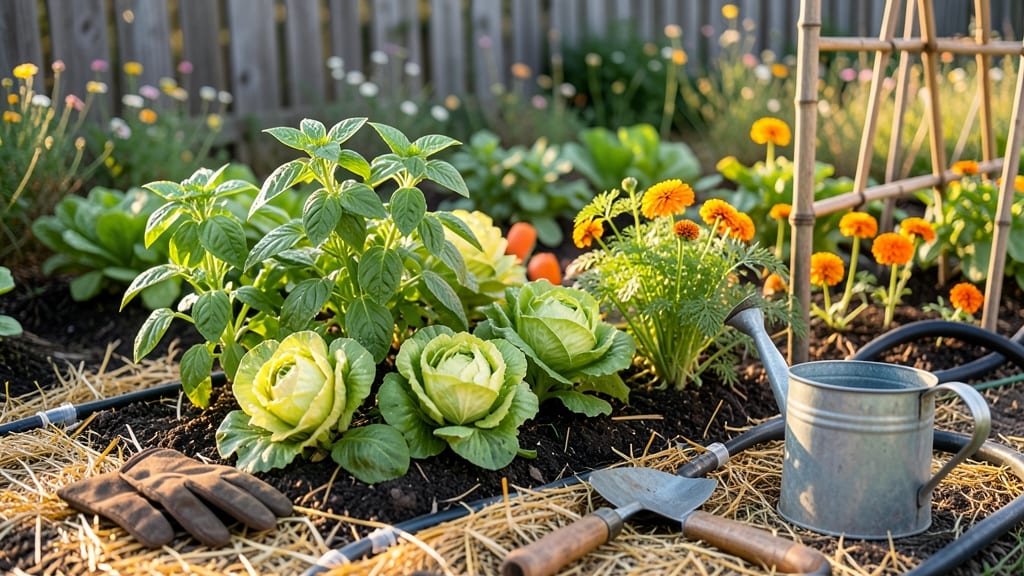
To grow plants in a garden successfully, begin by preparing nutrient-rich soil with proper drainage, then match your plants to their ideal sunlight conditions. Follow your region's planting seasons, water regularly, and use mulch to preserve moisture while keeping an eye out for pests and nutrient needs.
Starting a garden is all about creating the perfect conditions for your plants to thrive.
The foundation begins with soil—most plants need well-draining, fertile soil with a pH level between 6.0 and 7.0. 🌱 If your soil is heavy clay or sandy, amending it with compost or organic matter can make a world of difference.
Sunlight is equally critical: leafy greens like lettuce prefer partial shade, while tomatoes and peppers demand full sun exposure of at least 6-8 hours daily. Timing matters too; planting too early or late can stunt growth or attract pests.
For example, cool-season crops like spinach should go in the ground 4-6 weeks before the last frost, while warm-season favorites like basil thrive after temperatures consistently stay above 50°F.
Once your garden is planted, consistency is key. Water deeply 1-2 times per week, depending on rainfall, and always check soil moisture before watering—overwatering can suffocate roots. Mulching with straw or wood chips helps retain moisture and suppresses weeds, saving you time and effort.
Keep an eye out for common pests like aphids or slugs, and address them early with organic sprays or barriers. With these basics in place, your garden will reward you with lush, healthy plants all season long.
💡 In This Article
- Choosing Soil and Sunlight for Optimal Plant Growth
- Seasonal Planting Calendar for Beginners
Choosing soil and sunlight for optimal plant growth
Soil isn't just dirt—it's a living ecosystem where roots breathe, microbes feast, and nutrients dissolve. The right mix should crumble easily when dry and hold moisture without becoming soggy, a texture called "loamy."
Sandy soil drains too quickly (like water running through fingers), while clay holds water like a sponge but suffocates roots. Most vegetables thrive in soil with 5-10% organic matter, which you can test by squeezing a handful: if it forms a loose ball that crumbles, it's ideal. 🌱
Sunlight is equally critical because plants convert light into energy through photosynthesis, but too much or too little disrupts this process. Leafy greens like spinach need only 3-6 hours of sunlight daily (partial shade), while tomatoes require 8+ hours of full sun to produce fruit.
Observe your garden's sun patterns: mark areas with morning sun (cooler, gentler) versus afternoon sun (hotter, more intense). A simple trick is to place a white board in your garden for a week—measure the shaded areas to determine light exposure zones.
Amending poor soil starts with a soil test kit (available at garden centers for $15-$25), which reveals pH levels and nutrient deficiencies. Most plants prefer slightly acidic to neutral soil (6.0-7.0 pH).
If your soil is too alkaline (above 7.0), add sulfur or peat moss; if too acidic (below 6.0), use lime. For drainage issues, mix in 2-3 inches of compost or coconut coir into the top 12 inches of soil.
This creates air pockets that roots love while retaining essential moisture.
Sunlight intensity also varies by plant type. For example, herbs like basil and oregano crave full sun but can scorch in afternoon heat—plant them where they get morning sun and afternoon shade.
Conversely, shade-loving plants like hostas or ferns will bolt (produce flowers prematurely) if exposed to too much light. Always check seed packets for sunlight recommendations, as even slight variations can mean the difference between thriving and struggling plants. 🌿
One often-overlooked factor is soil temperature. Seeds need warm soil (60-70°F) to germinate, while cool-season crops like broccoli grow best in 55-65°F soil. Use a soil thermometer to monitor temperatures, especially in early spring or late fall.
If your soil is too cold, cover it with black plastic or straw to absorb heat from the sun. This small adjustment can mean the difference between a garden that blooms and one that barely sprouts.
Finally, consider your garden's microclimates—the small variations in sunlight, wind, and temperature that exist even within a few feet. A south-facing wall, for example, can create a 5-10°F warmer zone than the rest of your yard, perfect for heat-loving plants like peppers.
By mapping these zones, you can place the right plants in the right spots, maximizing their growth potential and minimizing stress.