
Tools
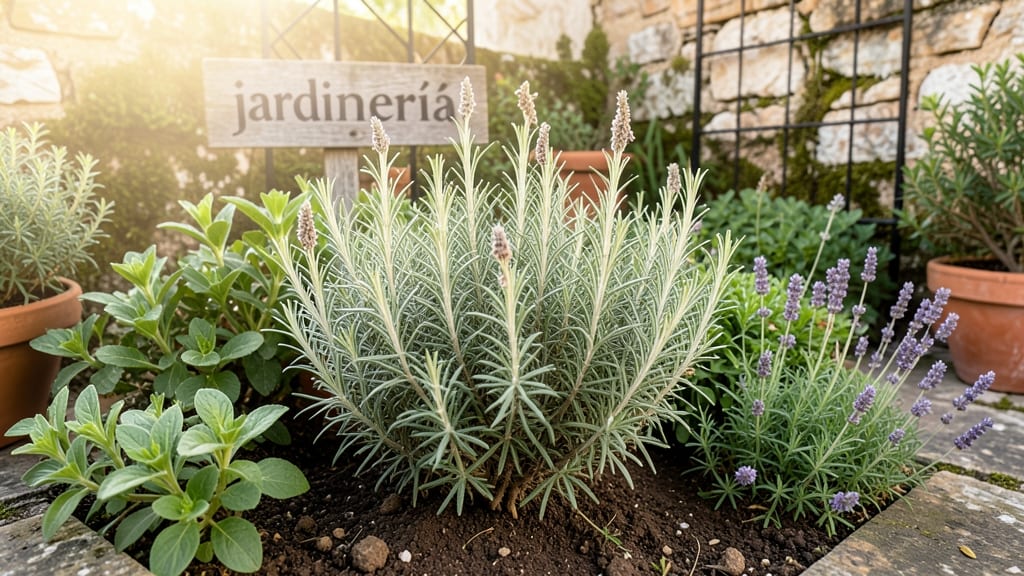
To say 'gardening' in Spanish, use jardineria (pronounced 'har-dee-nee-ah'), which comes from jardin (garden). This term covers all plant cultivation activities, while cultivar plantas (to grow plants) and huerto (vegetable garden) offer more specific alternatives.
Spanish gardening terms often reflect the language's rich agricultural history. 🌱 The word jardineria traces back to Latin hortus, showing how horticulture vocabulary has evolved across Romance languages. For example, riego (irrigation) and poda (pruning) are essential verbs that appear in every gardener's Spanish vocabulary.
What's fascinating is how regional dialects can change these terms—Mexican Spanish might use maceta for plant pot, while European Spanish prefers florero.
Beyond the basics, understanding these terms opens doors to Spanish gardening literature and community resources. Whether you're reading care instructions for orquídeas (orchids) or asking about abono (fertilizer) at a local nursery, knowing these words makes your gardening experience more immersive.
I've found that learning these terms also helps when communicating with Spanish-speaking gardeners online, where compartir semillas (sharing seeds) is a common practice.
💡 In This Article
- Spanish Gardening Vocabulary Breakdown
- Essential Spanish Terms for Gardeners
Spanish gardening vocabulary breakdown
The term jardineria stems from the Old French jardin, which entered Spanish through medieval trade and cultural exchanges. Linguistically, it's a compound of jardin (garden) plus the suffix -eria, which transforms nouns into professions or activities—similar to how panaderia means "bakery" or carpinteria means "carpentry".
This suffix pattern appears in over 500 Spanish words, making jardineria a perfect example of the language's productive morphology. 🌿 The pronunciation of -eria follows strict rules: the r is rolled (like a soft growl) and the -ia ending is pronounced "ee-ah", so jardineria becomes "har-dee-nee-ah" with the stress on the third syllable.
Spanish phonetics create some common pronunciation pitfalls for English speakers. The double r in riego (irrigation) is pronounced with a strong trill, almost like a motor revving, while the ll in poda (pruning) sounds like a soft "y" (like the English "million").
Regional dialects add another layer: in Mexican Spanish, maceta (plant pot) is pronounced with a softer c, while in European Spanish, the c before e often sounds like an "s".
These variations can change how native speakers recognize terms—what you call a florero (flower pot) in Spain might be a maceta in Mexico, but both refer to the same container.
Understanding these linguistic nuances becomes especially useful when reading Spanish gardening manuals or watching videos. For instance, the word abono (fertilizer) has two distinct meanings: organic matter (abono organico) or mineral supplements (abono quimico).
This duality reflects how Spanish gardening terminology adapts to both traditional and modern practices. The verb cultivar (to cultivate) also carries historical weight—it comes from Latin cultivare, meaning "to till the soil," and remains the most precise term for plant cultivation across all Spanish-speaking regions.
What most learners overlook is how gardening terms often share roots with other Spanish words. Take riego (irrigation): it's related to regar (to water), which comes from the same Latin rigare. Similarly, poda (pruning) connects to podar (to trim), showing how Spanish vocabulary builds logical word families.
This interconnectedness makes the language more intuitive once you grasp these patterns. For example, knowing hoja (leaf) helps you understand hojarasca (leaf litter) or hojaldre (puff pastry), where the leaf-like layers give the pastry its name.
Regional variations extend beyond pronunciation to vocabulary itself. In Spain, you might hear tierra (soil) paired with abono verde (green manure), while in Latin America, compost is often called compostaje or simply humus.
Even the word for "garden" can differ: jardin in Spain becomes jardin in most places, but in some Andean regions, huerta (vegetable garden) takes precedence over jardin.
These regional differences reflect both historical agricultural practices and climate adaptations—what grows well in Andalusia's Mediterranean climate differs from what thrives in Mexico's tropical zones.
To master these terms, focus on high-frequency verbs first: plantar (to plant), regar (to water), podar (to prune), and cosechar (to harvest). These form the backbone of any gardening conversation.
For example, instead of saying "I do gardening," a native speaker would say "Yo hago jardineria" or more naturally, "Yo cultivo plantas." This verb-based approach mirrors how Spanish speakers think about gardening—it's an active process of cultivation rather than a passive hobby. 🌱