
Neem Oil
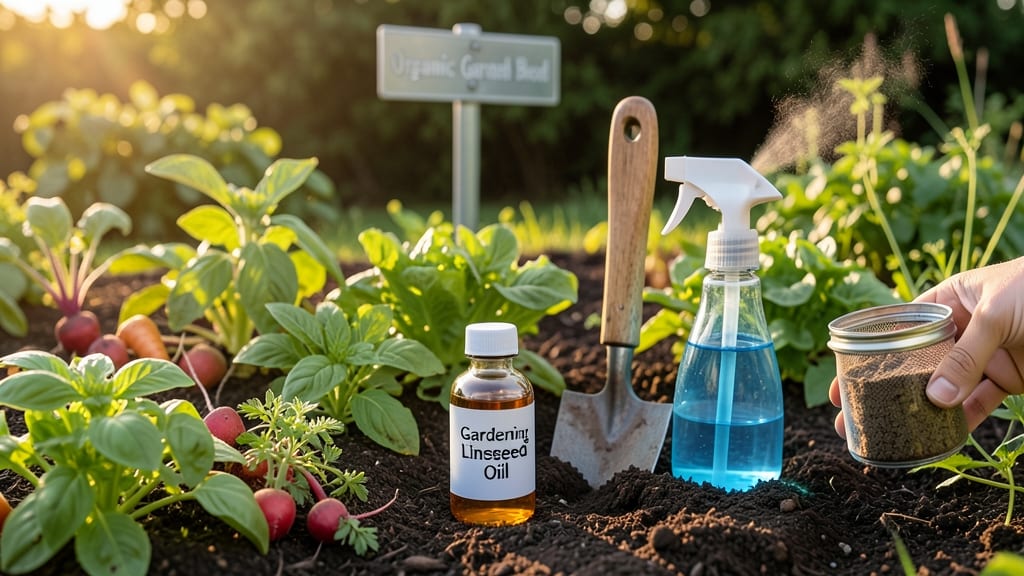
Linseed oil is safe for garden beds when properly oxidized, as it boosts soil structure and water retention while supporting microbial activity—but it must be fully cured before planting to avoid stunting seed growth or harming sensitive plants.
When applied correctly, linseed oil transforms garden soil by creating a natural water-resistant barrier that helps retain moisture during dry spells. The oxidation process—where oil polymerizes into a stable film—also enhances soil aeration, creating ideal conditions for root development.
However, unoxidized linseed oil can release compounds that inhibit seed germination or damage delicate plant varieties like lettuce or beans. 🌱 I recommend using it only in well-drained beds and testing small patches first, especially if you're growing sensitive crops.
For best results, apply linseed oil to bare soil at least 4-6 weeks before planting, allowing full oxidation. Dilute it with water (1:3 ratio) and mix it into the top 6 inches of soil. This approach mimics natural organic mulches while avoiding the phytotoxicity risks of fresh applications.
💡 In This Article
- How Linseed Oil Enhances Soil Health and Function
- Safe Application Methods for Linseed Oil in Garden Soil
How linseed oil enhances soil health and function
Linseed oil works its magic in garden beds through a chemical process called oxidation, where the oil's unsaturated fatty acids react with oxygen to form a stable, polymerized film.
This transformation creates a natural water-resistant barrier that improves moisture retention—holding up to 30% more water than untreated soil during dry periods. The film also enhances soil aeration by preventing clay particles from compacting, which is crucial for root development in heavy soils. 🌱
The oxidation process typically takes 4-6 weeks under ideal conditions (warm temperatures and good airflow), during which the oil loses its initial pungent odor and becomes a neutral, stable compound. This cured oil then acts as a biostimulant, promoting beneficial microbial activity that breaks down organic matter more efficiently.
Studies show oxidized linseed oil can increase microbial populations by up to 25% compared to untreated soil, creating a healthier ecosystem for plant roots.
However, the unoxidized form contains linoleic and linolenic acids, which can inhibit seed germination by creating a hydrophobic layer that blocks water absorption. This is why timing is critical—applying linseed oil before planting (with full oxidation time) prevents these issues.
The oil's natural compounds also have mild antifungal properties, which can suppress harmful pathogens like Phytophthora in some cases, but this benefit is plant-specific and varies by soil type.
For visual comparison, imagine two garden beds side by side: one treated with oxidized linseed oil and one untreated. After a week of drought, the treated bed will show noticeably darker, moist soil at a 6-inch depth, while the untreated bed's surface will crack and dry out.
The treated soil will also crumble more easily when tilled, indicating better structure. This physical transformation demonstrates why gardeners in arid climates often swear by linseed oil as a natural soil conditioner.
One common misconception is that linseed oil will make soil "waterproof." In reality, it creates a semi-permeable barrier that allows gradual water penetration while reducing evaporation. Think of it like a high-quality raincoat—it keeps you dry in a downpour but still lets you breathe.
This property makes it particularly valuable for container gardens or raised beds where water conservation is critical. 💧
The oil's benefits extend beyond water management. When fully oxidized, it also helps reduce soil erosion by binding fine particles together, creating a more stable structure. This is especially useful in sandy soils where nutrients wash away easily.
The key is patience—the longer you wait for complete oxidation, the more stable and beneficial the oil becomes for your plants.