
Tools
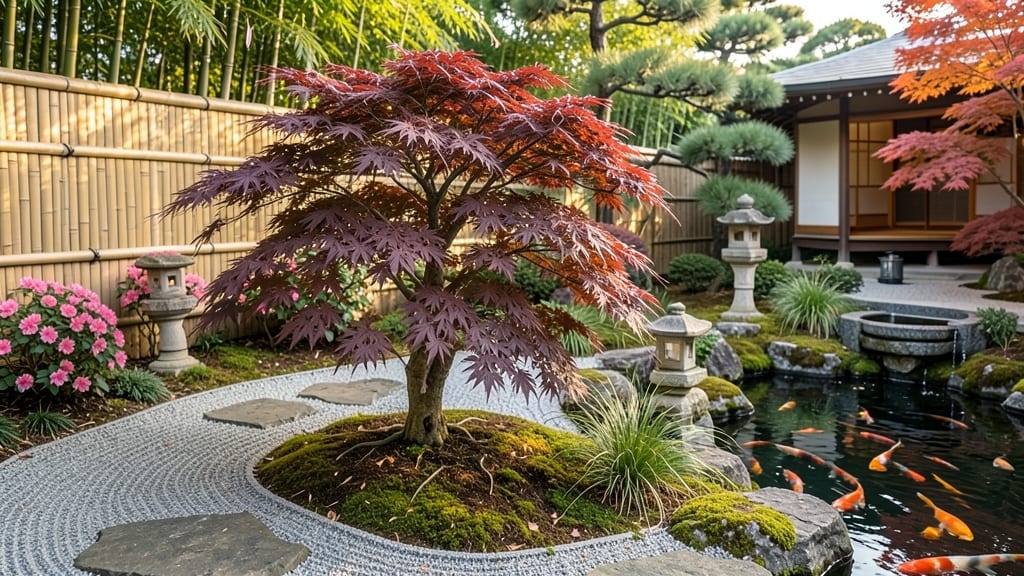
A Japanese garden in Los Angeles creates tranquil spaces that harmonize classic Japanese landscaping with Southern California's unique climate, showcasing koi-filled ponds, vibrant maple trees, and ever-blooming camellias and azaleas. These serene spots range from public parks to private estates rich in cultural heritage.
Los Angeles's Japanese gardens stand out by adapting traditional elements like zen rock arrangements and moon-viewing bridges to thrive in dry climates. 🌿 Many feature drought-resistant plants such as native California grasses alongside iconic Japanese maples, creating a seamless blend of cultures.
The city's earliest Japanese immigrants in the early 1900s laid the foundation for these spaces, which now serve as both cultural landmarks and peaceful retreats from urban life.
What makes these gardens particularly special is their ability to offer seasonal beauty year-round. Unlike traditional Japanese gardens in colder climates, LA's versions incorporate plants that bloom continuously, ensuring visitors always find something stunning.
For example, the Japanese Friendship Garden's cherry blossoms in spring contrast beautifully with Descanso Gardens' fiery autumn maple leaves. These spaces often include cultural amenities like tea houses and guided tours, making them perfect for both quiet reflection and immersive cultural experiences.
💡 In This Article
- Design Principles Behind LA’s Japanese Gardens
- Top Los Angeles Japanese Gardens to Visit by Season
Design principles behind LA’s Japanese gardens
Los Angeles's Japanese gardens masterfully blend centuries-old Japanese aesthetics with California's arid environment. Traditional elements like zen rock gardens (karesansui) and moon-viewing bridges (tsukimi-bashi) are adapted using drought-tolerant materials such as decomposed granite instead of traditional sand.
This adaptation preserves the meditative essence while ensuring sustainability in a climate where rainfall averages just 12 inches annually.
The plant selection tells the story of cultural fusion. Iconic Japanese maples (Acer palmatum) with their fiery autumn foliage are paired with native California grasses like Deer Grass (Muhlenbergia rigens), which thrives in 90-100°F summers. The result?
A garden that maintains traditional beauty while requiring 30-50% less water than conventional Japanese gardens. 🌿 These spaces often incorporate koi ponds with water depths of 3-5 feet, creating microclimates that support aquatic life despite the dry surroundings.
Historical influences from early 20th-century Japanese immigrants are visible in every detail. The first Japanese garden in LA was created in 1913 by Japanese-American farmers who adapted their homeland's gardening techniques to local conditions.
This early innovation led to the development of sunken gardens (sunken stone basins) that collect precious rainwater, a technique still used today. The use of lanterns with solar-powered LEDs in modern gardens also reflects this adaptive tradition, maintaining nighttime ambiance without electricity costs.
What makes these gardens particularly innovative is their use of seasonal color theory adapted to LA's mild winters.
While traditional Japanese gardens rely on seasonal changes for visual interest, LA gardens incorporate ever-blooming plants like camellias (Camellia japonica) that flower from fall to spring, and azaleas (Rhododendron) that bloom in vibrant shades of pink and red during the city's cooler months.
This adaptation ensures visual appeal year-round, a feature that sets them apart from their East Asian counterparts.
The spatial arrangement follows wabi-sabi principles—embracing imperfection and transience—while incorporating modern accessibility features. Many gardens now include ADA-compliant pathways and sensory gardens with textured plants like fuki (Phellodendron amurense), whose aromatic bark provides tactile engagement.
The careful placement of stone lanterns (tōrō) along pathways creates natural focal points that guide visitors through the space while maintaining the garden's meditative flow.
One fascinating adaptation is the use of drip irrigation systems disguised as natural water features. These systems deliver water directly to plant roots while creating the illusion of traditional Japanese water channels.
This dual-purpose design not only conserves water but also enhances the garden's authenticity. 💧 The result is a space that feels both timeless and perfectly suited to its Southern California home.