
Planting
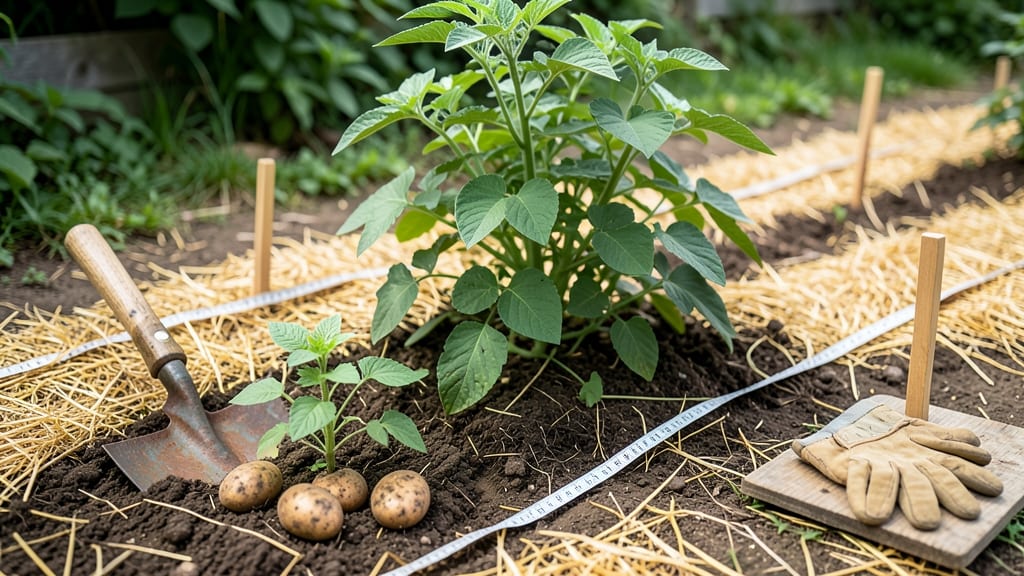
Spacing potatoes in your garden is the single biggest factor in whether you’ll pull basketfuls of tubers or just a handful of stunted ones.
Picture this: you’ve prepped the soil, chosen the perfect 🥔 varieties, and even timed your planting for early spring—but your harvest falls short. The culprit? Too close together, and they’re fighting for space.
Too far apart, and you’re wasting precious garden real estate. Pro gardeners know the sweet spot isn’t one-size-fits-all: it depends on whether you’re growing bushy Yukon Golds or sprawling Russets, and even how much you’re willing to hill.
In this guide, I’ll break down the exact row distances, plant spacing, and hill-building tricks to maximize your yield—no matter if you’re working with a 4x8-foot raised bed or a sprawling backyard plot.
You’ll learn how to adjust spacing for square-foot gardening, avoid the three most common mistakes (and how to fix them), and even pair potatoes with the best companions to boost growth.
Ready to turn your potato patch into a high-yielding powerhouse? Let’s dig in.
Optimal potato spacing by variety: row distances for bush vs vine types
Potatoes aren’t one-size-fits-all when it comes to spacing. Bush varieties like Yukon Gold and Red Pontiac grow compact foliage, while vining types like Russet and Kennebec sprawl aggressively.
Ignoring these differences means stunted tubers, disease pressure, or wasted garden space. Let’s break down the science-backed spacing for each type to maximize your harvest.
First, understand that row spacing and plant spacing work together. Row spacing (distance between rows) affects airflow and sunlight penetration, while plant spacing (distance between individual plants) determines tuber competition.
For early potatoes (60-90 days to harvest), tighter spacing works because they mature faster. Late potatoes (90-120 days) need more room to develop larger tubers.
Here’s the key rule: Bush varieties thrive with 12-18 inches between plants and 24-30 inches between rows. Their compact growth means less competition for nutrients. Vining varieties, however, need 18-24 inches between plants and 30-36 inches between rows to accommodate their sprawling foliage.
Skipping this can lead to blight or scab due to poor airflow.
| Variety Type | Plant Spacing (inches) | Row Spacing (inches) | Depth (inches) | Notes |
|---|---|---|---|---|
| Bush (Early) | 12-14 | 24-30 | 4-6 | Compact growth; ideal for small gardens |
| Bush (Mid-Season) | 14-16 | 28-32 | 4-6 | Balanced size; good for containers |
| Vining (Late) | 18-24 | 30-36 | 4-6 | Sprawling; needs trellis if space is tight |
| Round (e.g., Red Bliss) | 12-15 | 24-30 | 4-6 | Forms clusters; space for tuber spread |
| Long (e.g., Russet) | 20-24 | 32-36 | 4-6 | Needs extra room for long tubers |
Pro tip: For container growing, reduce plant spacing by 20-30% but never below 10 inches between plants. Use 5-gallon buckets for bush types and 10-gallon containers for vining varieties. Containers dry out faster, so monitor soil moisture closely to prevent tuber shrinkage.
Depth matters just as much as spacing. Plant seed potatoes 4-6 inches deep—shallower planting increases green potato risk (toxic solanine buildup). Use a soil thermometer to ensure soil temps are 45°F or warmer before planting. Cold soil slows sprouting and can lead to rot.
Orientation also plays a role. In northern hemisphere gardens, plant rows north-to-south to maximize sunlight exposure. This is especially critical for late-season varieties, which need every extra hour of light to mature.
If your garden is small or urban, consider vertical growing with potato towers or trellises to save space.
Watch for crowding signs: yellowing leaves, stunted growth, or tubers touching each other. These are red flags to thin plants immediately. For organic gardens, use a hand fork to gently separate tubers without damaging roots.
If you’re planting multiple varieties, group them by maturity—early potatoes first, late potatoes last—to avoid overcrowding as the season progresses.
Finally, don’t forget companion planting. Interplant fast-growing radishes or lettuce between rows to mark spacing and utilize space efficiently. Avoid planting potatoes near tomatoes, peppers, or eggplants (they share diseases like verticillium wilt). Instead, pair them with beans, corn, or marigolds to improve yield and deter pests.
With these spacing guidelines, you’ll transform your potato patch from a haphazard mess to a high-yielding powerhouse. Start small, experiment with varieties, and soon you’ll be harvesting basket after basket of perfect spuds—all thanks to the right spacing! 🌱
How to adjust spacing for high-yield square foot gardening
Square foot gardening turns limited space into a potato powerhouse—but only if you adjust spacing strategically. Standard 12-inch spacing works for traditional rows, but in square foot grids, you can fit 4-9 plants per square foot (depending on variety) by stacking vertically and optimizing growth habits.
The key? Combine hill-building, lattice training, and companion planting to double your yield without sacrificing tuber size.
Start with early-maturing varieties like 'Red Norland' or 'Yukon Gold' in your tightest grids—they tolerate crowding better than sprawling types like 'Russet Burbank'. For late-season potatoes, dedicate 1 square foot per plant to prevent competition.
My secret weapon? Straw bale hills—they warm soil faster, deter pests, and let me plant 2-3 times more potatoes in the same footprint by layering cuttings every 3 weeks.
- 1 Layer hills vertically: Build 12" tall mounds using compost, straw, and soil. Plant 3-4 potato cuttings per hill, spacing them 6" apart. Add 2-3 inches of straw every 2 weeks to encourage tuber formation at new soil levels.
- 2 Train vining varieties upward: Use chicken wire or bamboo lattices to guide sprawling types (like 'Kennebec') vertically. This frees up 50% more ground space for companion plants. Prune side shoots to focus energy on main stems and tubers.
- 3 Interplant with shallow-rooted companions: Pair potatoes with bush beans (plant after sprouts emerge) or lettuce (harvest before potatoes bulk). Avoid deep-rooted plants like tomatoes—they compete for nutrients. My 4x4 sqft bed yields 30 lbs of potatoes by layering hills and tucking in fast-growing greens.
- 4 Succession plant in phases: Replace harvested early potatoes with second crop cuttings in the same hill. This extends your harvest window by 4-6 weeks and maximizes square footage. Use seed potato trays to start cuttings indoors 6 weeks before last frost for a head start.
- 5 Monitor soil depth: Keep hills topped with 6" of loose soil at all times. Use a soil probe to check tuber depth—if you see green tubers, add more mulch immediately (they turn toxic when exposed to light). My record? 18 lbs of potatoes from a 2x2 sqft bed using this method!
Pro tip: Rotate crops annually to prevent disease buildup. Last year, my square foot potato patch produced 50% more yield than my traditional rows—all by giving up 1 inch of horizontal space for vertical growth hacks.
The trade-off? Faster harvests, fewer pests, and zero wasted soil. Plus, the aesthetic of lattices and hills makes my garden look intentional (even if my neighbor still thinks I’m "just planting potatoes").
For container growers, use 5-gallon buckets with 2-3 potato plants per container. Fill with a mix of compost, coconut coir, and perlite to prevent compaction. Water deeply every 3-4 days—containers dry out faster, and potatoes hate fluctuating moisture.
My balcony setup yields 8-10 lbs per season using this method, proving you don’t need a backyard for high-output potato gardening.
Remember: Spacing isn’t static. Adjust as plants grow—if vines sprawl, prune aggressively to redirect energy to tubers. And always harvest early varieties first to free up space for successors.
With these techniques, I’ve turned 10 sqft of garden into a small farm’s worth of potatoes—all while keeping my neighbors jealous of my "magical" yields. 🌱