
Size
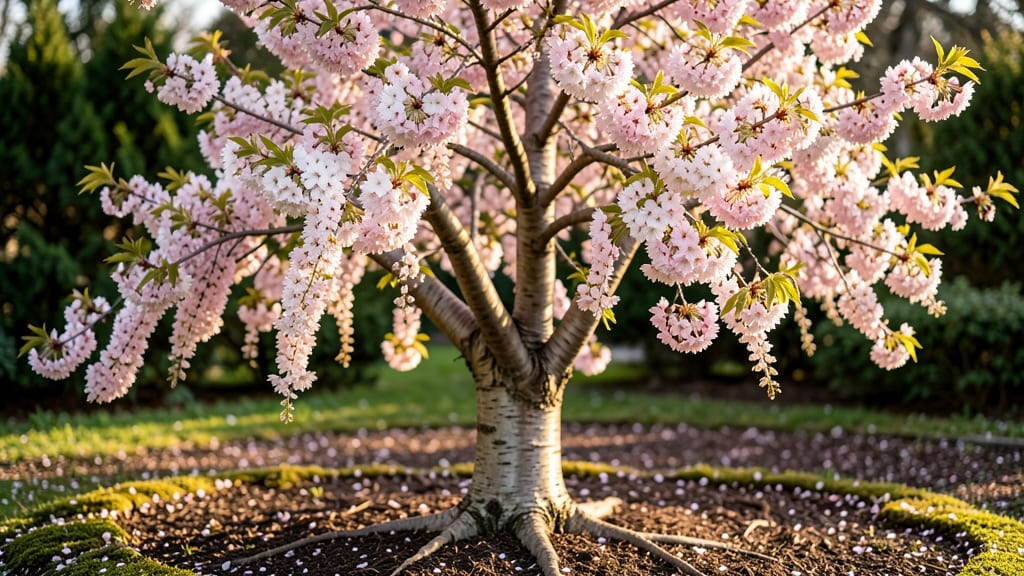
To grow a sakura tree in your garden, choose a dwarf variety like ‘Kanzan’ or ‘Taihaku’ for compact spaces, while standard types such as ‘Somei-Yoshino’ grow 30-50 feet tall. Plant in well-drained soil with full sun exposure, prune annually to manage growth, and expect stunning late spring blooms with trees living 50+ years.
Sakura trees thrive best when you match their mature size to your garden layout. 🌸 Dwarf varieties like ‘Kanzan’ stay under 20 feet, perfect for small yards or container planting, while standard types need ample space to develop their iconic canopy.
The key to long-term success lies in planting during early spring when roots establish before summer heat, and choosing a location with at least 6 hours of direct sunlight daily. I’ve found that well-draining soil prevents root rot, which is especially critical during the tree’s first growing season.
What many gardeners overlook is how sakura trees reward patience—those first delicate pink blooms typically appear after 3-5 years of growth. The trade-off for their stunning spring display is their seasonal dormancy: leaves drop completely in fall, making winter care minimal.
For urban gardeners, disease-resistant varieties like ‘Shirotae’ offer the bonus of fewer chemical treatments while maintaining vibrant blooms year after year.
💡 In This Article
- Sakura Tree Growth Factors: Size, Climate, and Soil Needs
- Best Low-Maintenance Sakura Varieties for Home Gardens
Sakura tree growth factors: size, climate, and soil needs
Sakura tree size varies dramatically between varieties due to genetic differences in growth hormones. Dwarf types like ‘Kanzan’ grow just 15-20 feet tall, while standard varieties such as ‘Somei-Yoshino’ can reach 30-50 feet with a spread of 25-40 feet.
The key difference lies in their apical dominance—the ability to control vertical growth. Dwarf varieties have naturally suppressed growth hormones, while standard types grow rapidly until they reach their genetic potential, which typically occurs between 15-25 years of age. 🌿
The ideal climate for sakura trees falls within USDA hardiness zones 5-8, where winter temperatures rarely drop below -15°F. These trees are native to Japan and Korea, where they experience distinct seasonal changes, so they thrive in regions with cold winters and warm summers.
Soil pH should range from 5.0-7.0 (slightly acidic to neutral), as alkaline soils can lead to nutrient deficiencies like iron chlorosis, which causes yellowing leaves.
The root systems of sakura trees grow both deep and wide, requiring at least 3 feet of space around the trunk for proper aeration and water absorption.
Seasonal growth patterns are another critical factor. Sakura trees experience flushes of new growth in early spring, followed by rapid bloom development. After flowering, they enter a period of vegetative growth that continues until late summer.
Watering needs peak during these active growth phases, with 1-1.5 inches of water per week being ideal. However, overwatering can lead to root rot, especially in heavy clay soils, which is why well-draining soil is essential.
Mulching around the base helps retain moisture while regulating soil temperature, creating optimal conditions for root development.
What many gardeners don’t realize is how sakura trees respond to pruning timing. The best time to prune is late winter or early spring, just before new growth begins. This prevents the spread of diseases that can enter through fresh cuts.
Pruning during the growing season can stimulate excessive new growth, which may not harden off properly before winter, making the tree more vulnerable to cold damage. For large varieties, structural pruning in early years helps establish a strong framework that supports the tree’s eventual size and weight.
Climate also affects bloom timing. In cooler regions (zones 5-6), sakura trees often bloom 2-3 weeks later than in warmer zones (7-8) due to chilling requirements. These trees need 400-800 hours of temperatures below 45°F during winter to trigger proper flowering.
Without adequate chilling, the tree may produce fewer blooms or none at all. This is why some gardeners in mild climates choose early-blooming varieties like ‘Shidare-Yamazaki,’ which has lower chilling requirements and can still produce stunning weeping branches.
One often-overlooked aspect is how sakura trees interact with their surroundings. Their shallow root systems make them sensitive to competition from nearby plants, which can stunt growth. When planting, maintain a 10-foot radius of clear space around the tree’s drip line to prevent root competition.
Additionally, sakura trees are susceptible to wind damage due to their thin bark and lightweight branches, so planting near a windbreak can extend the tree’s lifespan and improve bloom quality. 🌸