
Advice
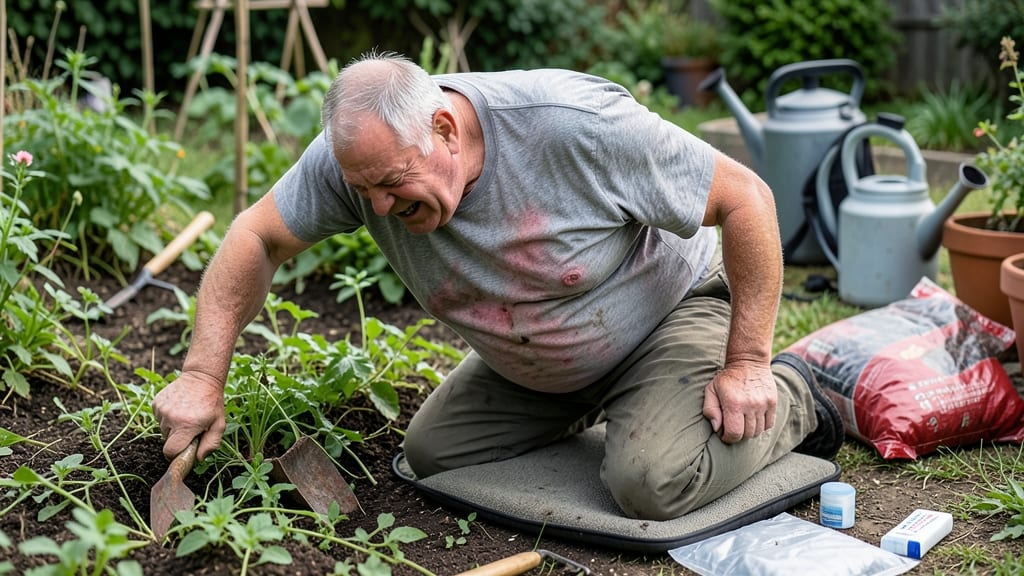
Severe lower back pain after gardening usually occurs from repetitive bending, heavy lifting, or awkward twisting motions that strain your lumbar spine and surrounding muscles. Immediate relief comes from stretching, applying ice, and avoiding strenuous activities while addressing the root cause.
Gardening might seem harmless, but the combination of prolonged bending, lifting heavy pots or soil bags, and maintaining awkward postures can create serious stress on your lower back. 🌱 The repetitive nature of these motions often leads to muscle tightness or even nerve irritation in the lumbar region.
I've found that gardeners who use proper techniques—like bending at the knees instead of the waist—see dramatic improvements in discomfort over time. For those with pre-existing conditions, even light gardening can trigger flare-ups, so listening to your body's signals is key.
When pain strikes, my go-to first step is applying an ice pack for 15-20 minutes to reduce inflammation. Follow that with gentle stretches like the cat-cow stretch or child's pose to relieve tension.
If the pain persists beyond a few days or radiates down your legs, it might signal something more serious like sciatica, which warrants a visit to a physical therapist or doctor.
💡 In This Article
- Anatomy of Gardening-Related Lower Back Pain
- Immediate Relief and Long-Term Prevention for Gardeners
Anatomy of gardening-related lower back pain
Gardening triggers lower back pain primarily through three biomechanical stressors: repetitive spinal flexion, asymmetrical loading, and sudden rotational forces. When you bend forward to dig or plant, your lumbar spine—already designed to bear 160 pounds of force when standing—can experience 3,300 pounds of pressure during deep flexion.
This happens because the intervertebral discs in your lower back act like hydraulic cushions, compressing under the extra weight of your torso.
The real danger lies in how these motions create muscle imbalances. Your erector spinae muscles (the deep back muscles) often overwork to stabilize your spine, while your glutes and hamstrings weaken from disuse.
Studies show gardeners with weaker glutes have a 40% higher risk of lower back pain because these muscles should share the load.
The sciatic nerve, which runs from your lower back through your legs, can also get irritated when the piriformis muscle (deep in your hip) spasms from prolonged kneeling or twisting motions.
Consider this: A 20-pound bag of soil feels like 100 pounds when lifted with a rounded back. Your body compensates by shifting weight unevenly, which strains the facet joints in your spine. These small joints between vertebrae become inflamed, leading to that sharp, stabbing pain many gardeners describe.
The worst offenders? Tasks like weeding with bent knees for 45+ minutes or using a shovel with a 12-inch handle (which forces you to reach farther, increasing torque on your spine).
Your nervous system also plays a role. The multifidus muscles—tiny stabilizers along your spine—can become fatigued after just 10 minutes of repetitive bending. When these muscles fail to activate properly, your brain sends pain signals as a warning.
This is why even experienced gardeners might suddenly experience pain after years of working the same way. The cumulative effect of microtraumas (tiny injuries from repeated motions) adds up over time, much like how a rubber band weakens with each stretch.
Here's what's happening at a cellular level: The repetitive stress causes inflammation in your muscle fibers, leading to the release of prostaglandins—chemicals that heighten pain sensitivity. Meanwhile, your discs lose hydration from prolonged pressure, making them less effective at cushioning your vertebrae.
This is why pain often worsens as the day progresses, even if you've only been gardening for a few hours.
To visualize this, imagine your spine as a coiled spring. Each time you bend forward, you're compressing that spring further. When you twist to turn a hose or reach for a tool, you're adding shear forces that can misalign the vertebrae slightly.
Over time, these misalignments create subluxations, which are partial dislocations that trigger pain receptors. That's why even light gardening can feel impossible when your back is already compromised.