
Tools
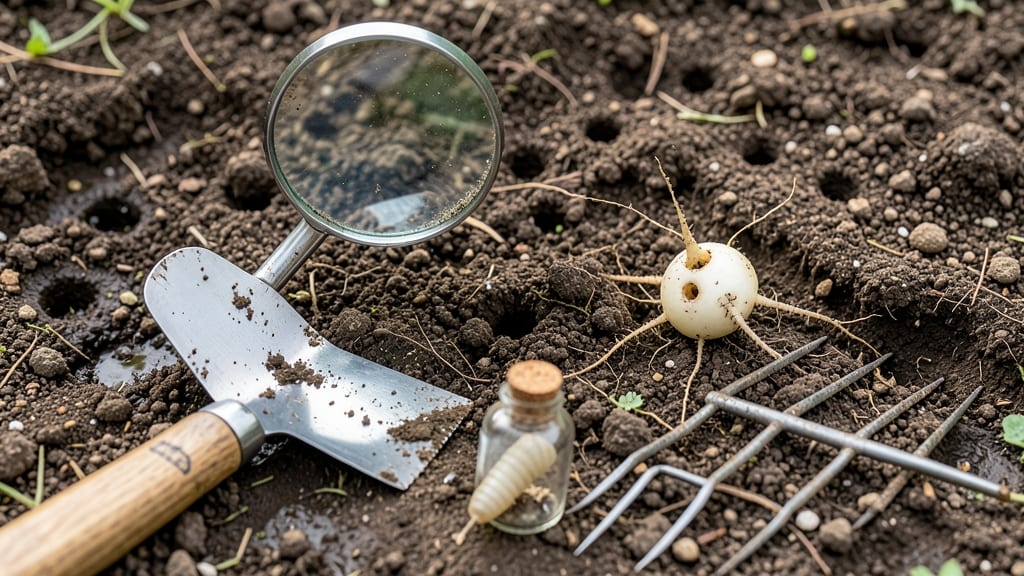
Small holes in garden soil typically indicate underlying issues like insect larvae, fungal networks, or root decay that can harm plants by compromising root systems or disrupting soil structure. Always determine the root cause—whether from grubs, nematodes, or fungal activity—before applying targeted organic solutions.
These tiny soil disturbances often go unnoticed until plants show signs of stress like stunted growth or yellowing leaves. 🔥 The key is acting quickly—what starts as minor surface damage can quickly escalate into larger root problems if left unchecked.
For example, Japanese beetle grubs create characteristic serpentine tunnels, while fungal mycelium forms web-like patterns beneath the surface. I've found that a simple soil inspection with a trowel can reveal whether you're dealing with biological activity or physical decay.
Understanding the difference is crucial because treatments vary widely. Beneficial nematodes work wonders against grubs, while compost tea can help restore fungal balance in the soil ecosystem. The goal isn't just to fill the holes—it's to restore healthy soil architecture that supports robust root development.
💡 In This Article
- Common Causes of Small Holes in Garden Soil
- Organic Solutions to Repair Soil and Protect Roots
Common causes of small holes in garden soil
Japanese beetle grubs are the most common culprits, creating 1/8-inch to 1/4-inch holes as they feed on roots. These grubs tunnel horizontally just below the soil surface, leaving behind a characteristic serpentine pattern when you lift a section of sod.
The damage often appears in late summer when adult beetles emerge, leaving behind weakened plants that struggle to uptake nutrients. Cutworm larvae create similar holes but typically 1/16-inch wide, with a distinctive fecal casting (tiny dark pellets) around the entrance.
Fungal activity creates holes through two distinct mechanisms: beneficial mycorrhizal networks form fine, hair-like strands (hyphae) that aerate soil naturally, while pathogenic fungi like Phytophthora create spongy, decaying pockets around roots. The key difference?
Mycorrhizal holes are white or tan and feel fibrous when probed, whereas fungal decay produces blackened, mushy soil with a foul odor. Nematodes—microscopic roundworms—don't create visible holes but leave speckled, discolored roots when examined closely under a magnifying glass.
Root decay from overwatering or compacted soil creates irregular, jagged holes that often collapse when disturbed. These holes lack the uniform shape of insect tunnels and instead appear as cavities with a wet, crumbly texture.
The damage typically occurs in clay-heavy soils where water pools and starves roots of oxygen. I've noticed this most commonly in vegetable gardens where irrigation systems over-saturate the top 2-3 inches of soil, creating the perfect environment for anaerobic bacteria to thrive.
Visual inspection is your first tool—dig a 3-inch-deep sample and examine the hole structure. Insect holes will have smooth edges, while fungal decay leaves fuzzy, web-like residues. Root damage often shows as brown, stringy fibers rather than clean tunnels.
For accurate identification, place a moistened paper towel over the hole overnight; insect activity will leave behind tiny larvae or frass (insect droppings), while fungal issues may produce mold growth on the towel.
Season matters too: grub activity peaks in July-August, while fungal issues often worsen after prolonged rain or when soil temperatures exceed 75°F. I've found that early morning inspections (when soil is damp but not saturated) reveal the most details.
The key is acting before holes expand—what starts as a pencil-sized opening can become a quarter-sized cavity within weeks if left unchecked.
Don't overlook the plant symptoms either. Grub damage often causes sudden wilting in otherwise healthy plants, while fungal decay leads to yellowing leaves with dark veins. Nematode infestations typically result in stunted growth despite adequate watering. These visual cues help narrow down the cause before applying treatments.