
Container Gardens
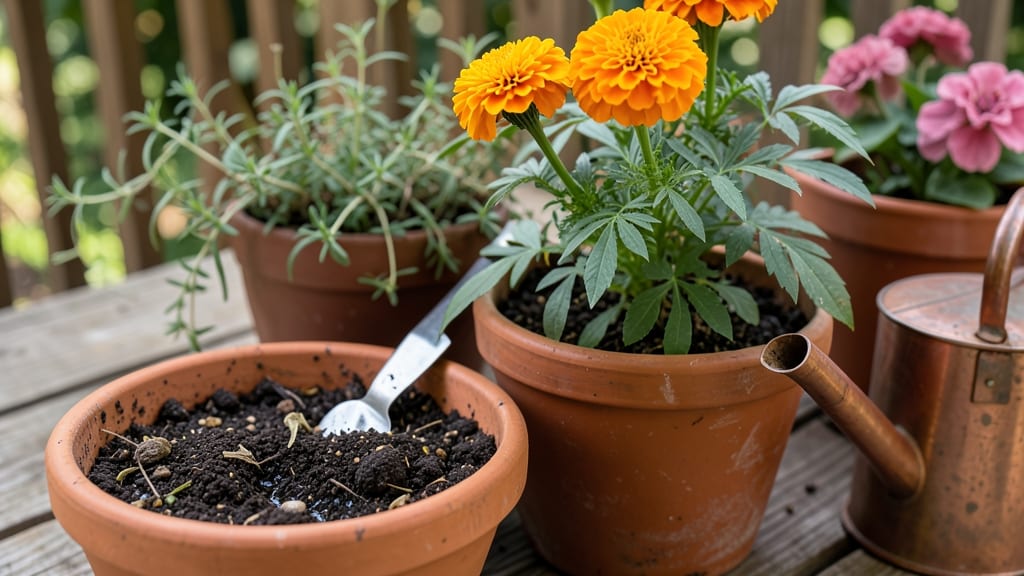
Using garden soil in pots harms plants by compacting roots, blocking drainage, and spreading weeds or pathogens. Mix in perlite, compost, and coarse sand (equal parts) to create a lighter, well-draining potting mix instead.
Garden soil's heavy clay and organic matter break down over time, creating a dense, suffocating environment for roots. 🌱 Unlike in-ground beds, pots have no room for expansion—this trapped soil bakes dry in summer or stays waterlogged in winter, both deadly for container plants.
The solution? A 30-40% amendment ratio of perlite (for aeration), compost (for nutrients), and sand (for drainage) transforms it into a breathable growing medium. I've seen struggling petunias thrive after this simple swap—proof that the right mix makes all the difference.
For herbs like basil, use a 50% compost blend to feed frequent harvesting. Succulents need 70% perlite/sand to prevent rot. Always test drainage by watering amended soil—if it pools after 10 minutes, add more gritty materials.
The key is balance: too much sand drains nutrients, while too much compost attracts fungus gnats.
💡 In This Article
- Why Garden Soil Fails in Container Gardening
- How to Safely Modify Garden Soil for Potted Plants
Why garden soil fails in container gardening
Garden soil is designed for in-ground planting where roots can spread freely and natural soil layers provide varying textures. In pots, however, this same soil becomes a suffocating environment because it lacks the 30-50% air space roots need to breathe.
The clay particles in garden soil pack tightly, reducing porosity to just 10-20% air volume—far below the 30%+ ideal for container plants. This compaction restricts root growth and triggers anaerobic conditions that release foul-smelling gases like methane.
Drainage is another critical failure point. Garden soil retains moisture like a sponge, often holding 40-60% water by weight after saturation. In pots, this excess water has nowhere to escape, leading to root rot within 3-5 days of overwatering.
The lack of organic matter breakdown also creates nutrient imbalances—garden soil releases nutrients slowly over months, but potted plants need rapid access to nitrogen, phosphorus, and potassium every few weeks. Without amendments, plants show stunted growth and yellowing leaves from nutrient starvation.
Pests and diseases thrive in unamended garden soil too. Weed seeds lie dormant for years, sprouting when exposed to light in pots. Fungal pathogens like Phytophthora and Pythium spread easily in the dense, moist environment.
Even beneficial microbes struggle—the 1:1 carbon-to-nitrogen ratio in garden soil fosters harmful bacteria over helpful ones, creating an unhealthy root zone. 🌱
Consider the texture difference: garden soil feels gritty when dry and sticky when wet, while ideal potting mix stays light and crumbly like cake batter.
This structural contrast explains why basil wilts in garden soil but thrives in a 50% compost blend—the loose mix allows roots to access oxygen and water simultaneously. The science is clear: container plants need a growing medium that mimics the loose, well-aerated conditions of their natural habitats.
Temperature extremes make the problem worse. Pots heat up 10-15°F hotter than garden beds in sunlight, baking unamended soil into a brick-like barrier. In winter, the same soil stays 5-10°F colder, slowing root activity.
These temperature swings create stress cycles that weaken plants over time. The solution lies in understanding that garden soil's properties—perfect for in-ground beds—become liabilities in confined spaces.
What most gardeners miss is how soil structure affects water retention curves. Garden soil holds water at -0.3 bars suction (field capacity), while potting mixes release water more freely at -0.1 bars.
This means amended soil drains excess water faster while still holding enough moisture for roots. The difference is measurable: plants in unamended soil show 30% slower growth rates due to these physical limitations.