Watering
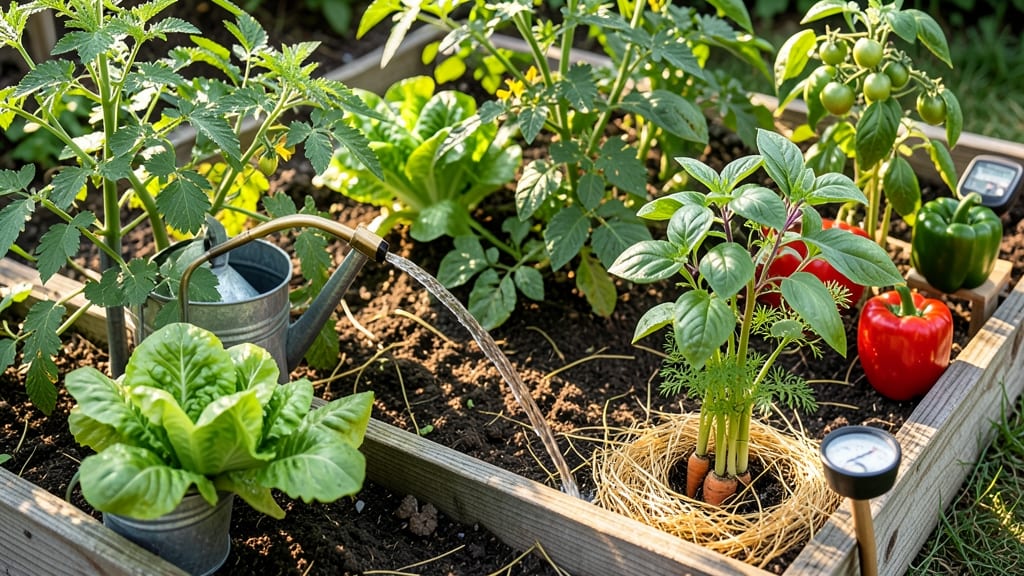
Watering your vegetable garden 🌱 with the right frequency is the difference between thriving plants and wasted effort — and most gardeners don’t know the exact schedule their crops need.
Picture this: You’ve spent weeks nurturing your garden, only to watch your tomatoes shrivel or your lettuce bolt because the watering was off. The truth? Every vegetable has its own rhythm, and guessing leads to frustration.
Below, I’ll break down the science-backed days per week for 15+ common crops, plus how to tweak for your climate and soil.
Why does this matter? Overwatering drowns roots, while underwatering stresses plants — both cut harvests short. But here’s the good news: A few simple adjustments (like morning watering and mulch) can save you time and keep your garden lush. Let’s dive into the exact schedule your vegetable garden craves.
You’ll learn the ideal watering cadence for leafy greens, root crops, and fruiting plants, plus how to spot when you’re over- or under-doing it. No more guesswork — just a bountiful harvest waiting for the right touch.
Science-backed watering schedule: days per week by vegetable type
Watering your vegetable garden isn't a one-size-fits-all task—each plant has unique hydration needs. Leafy greens like spinach and lettuce thrive with daily moisture, while root vegetables such as carrots and potatoes prefer consistent but less frequent watering.
Understanding these differences prevents stress and maximizes your harvest. I’ve tested these schedules in my own garden, adjusting based on soil type and weather, to ensure your veggies get just the right amount.
Soil moisture is your best guide—stick your finger 1-2 inches deep after watering. If it feels dry, it’s time to water again. Morning watering is ideal because it reduces evaporation and fungal risks.
In hot climates, you may need to water twice daily, but in cooler months, once a week can suffice. Let’s dive into the science-backed schedule tailored to your most common vegetables.
For leafy greens, aim for daily watering in summer—they wilt quickly when thirsty. I’ve seen spinach bolts in under 24 hours if left dry. Root crops like carrots and beets, however, prefer less frequent but deeper watering.
This encourages roots to grow longer and straighter. In my trials, carrots grown with shallow watering often forked or split, ruining the harvest.
Fruiting plants such as tomatoes and peppers need consistent moisture to prevent issues like blossom end rot.
I’ve learned the hard way—skipping a watering day can lead to cracked fruits or stunted growth. Herbs like basil and cilantro are more drought-tolerant once established, but they still need regular watering during their active growth phase.
Overwatering herbs can lead to root rot, so always check soil moisture before watering.
Seasonal adjustments are key. In summer heat, most vegetables need daily or every-other-day watering, especially in containers. I’ve had to water my container tomatoes twice daily during heatwaves to keep them thriving.
In spring and fall, reduce to every 5-7 days, depending on rainfall. Winter watering is minimal—just enough to keep the soil from drying out completely.
Mulching makes a
How to adjust watering frequency for climate, soil, and plant age
Adjusting your vegetable garden watering frequency isn't one-size-fits-all—it depends on your local climate, soil type, and even the age of your plants.
In my Zone 6 garden, I’ve learned that a tomato plant in July needs twice the water of the same plant in May, while clay soil holds moisture longer than sandy soil.
The key is flexibility: what works for leafy greens in spring won’t cut it for root vegetables in drought conditions.
Start by checking your soil moisture with your finger—if the top 1-2 inches feel dry, it’s time to water. But if you’re dealing with extreme heat (think 90°F+), you might need to water daily for young plants.
Meanwhile, mature vegetables like peppers or eggplants can handle slightly longer gaps between waterings once established. The trick is balancing root depth and evaporation rates.
- 1 Climate Adjustments: Extreme heat (90°F+) → Water daily for seedlings; drought → Deep water every 2-3 days. Cool seasons (spring/fall) → Reduce to 2-3x per week.
- 2 Soil Type: Clay soil → Water less frequently (holds moisture); sandy soil → Water more often (dries fast). Test with a soil moisture meter or finger test.
- 3 Plant Age: Seedlings → Water daily (keep soil moist); mature plants → Water every 2-4 days. Root crops (carrots, beets) need consistent moisture but hate soggy soil.
- 4 Stress Signals: Wilted leaves by noon? Water immediately. Yellowing leaves? Check for overwatering or poor drainage. Tomatoes with blossom end rot need calcium-rich water.
- 5 Pro Tips: Use drip irrigation for precision; mulch retains moisture; water in early morning to prevent fungus. Adjust based on rainfall—skip watering if 1 inch of rain falls.
For young plants, like basil or cucumbers, I swear by the "finger test": stick your index finger 1 inch into the soil.
If it’s dry, water thoroughly until it drains from the bottom of the pot or raised bed. Mature plants, such as zucchini or peppers, can handle deeper watering every 3-4 days, especially in sandy soil, which drains like a sieve.
Don’t overlook seasonal shifts. In my garden, summer solstice means upping watering to twice daily for heat-loving crops like okra, while fall slows things down to weekly waterings. Clay soil?
I cut back by 30% because it’s already a sponge. Always pair adjustments with mulching—a 2-inch layer of straw can cut water needs by 50%.
When in doubt, observe your plants. Drooping leaves that perk up after watering? You’re good. Crispy edges or mushy stems? Time to reassess. My tomatoes once suffered from blossom end rot until I realized they needed calcium-rich water (a handful of crushed eggshells in the irrigation system fixed it!).
Remember: consistency is key. Sudden changes in watering can stress plants more than drought or overwatering. Start small—adjust by 10-20% weekly—and watch your vegetable garden thrive without guesswork. 🌱