
Tools
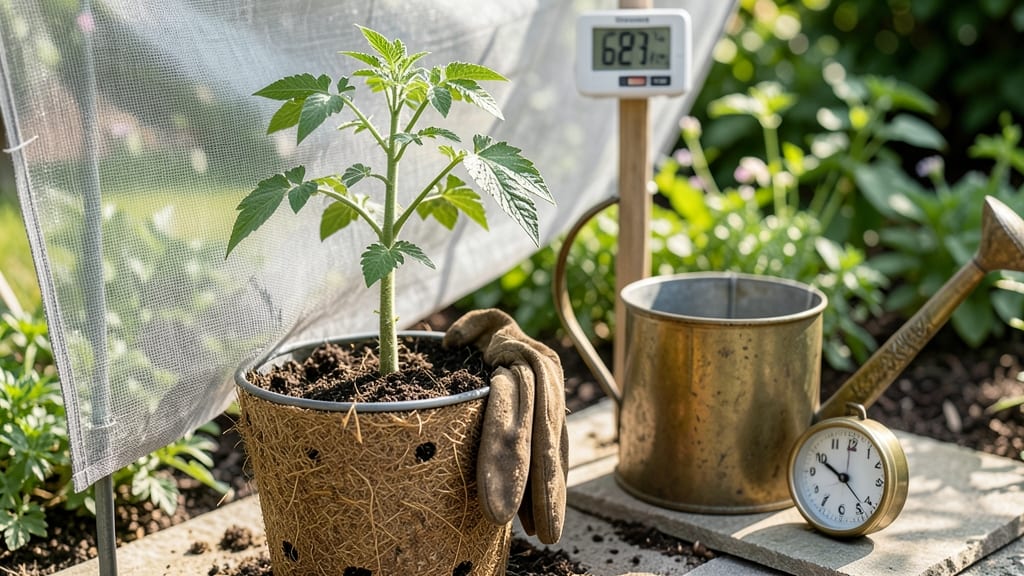
Harden off in gardening means preparing young plants for outdoor life by slowly introducing them to sunlight, wind, and temperature changes over 7-14 days, which toughens their stems and roots for successful transplanting.
This gradual adjustment mimics natural outdoor conditions, helping seedlings adjust to harsher elements like direct sunlight and temperature swings. 🌱 Without hardening off, plants often go into shock when moved directly from a protected indoor environment to the garden, leading to stunted growth or even death.
I’ve seen firsthand how a proper hardening-off routine can transform fragile seedlings into sturdy plants ready to thrive in your garden bed.
Start by placing seedlings outside in a sheltered spot for just an hour on the first day, then gradually increase their exposure over the next week. Use shade cloth or a cloche to protect them from intense midday sun, and monitor for signs of stress like wilting or yellowing leaves.
The key is patience—rushing this process can undo weeks of careful indoor growing.
💡 In This Article
- The Science Behind Hardening Off Plants
- Step-by-Step Hardening Off Schedule for Seedlings
The science behind hardening off plants
When seedlings grow indoors under controlled conditions—consistent warmth, gentle light, and humidity—their cell walls remain thin and delicate, similar to how human skin gets sunburned after sudden exposure to UV rays.
The hardening-off process triggers a natural defense mechanism called cell wall lignification, where plants deposit lignin (a rigid polymer) into their cell walls to strengthen stems and leaves. This is why hardened-off seedlings stand upright even in breezy conditions, unlike their floppy indoor counterparts.
Sunlight exposure during hardening off also regulates stomatal behavior—those tiny pores on leaves that control water vapor and gas exchange. Gradual sunlight helps stomata adjust their opening and closing cycles, preventing the rapid water loss that causes wilting when plants are suddenly transplanted.
Think of it like training your body to handle a new workout routine: sudden intensity causes strain, but gradual adaptation builds resilience. 🌿 Without this adjustment, seedlings often experience transplant shock, where they lose up to 30% of their root systems trying to adapt to outdoor conditions.
The temperature fluctuations during hardening off play a crucial role too. Indoor seedlings typically experience 65-75°F temperatures, while outdoor conditions can swing from 50°F at night to 85°F+ during the day.
This range forces plants to produce more antioxidant enzymes that protect cellular structures from oxidative damage—a process similar to how humans develop a stronger immune response after gradual exposure to cold weather. The result? Plants that can better withstand heat stress, cold snaps, and even minor pests.
Root development gets a boost too. While indoors, roots grow in a confined space with even moisture, but outdoors they must adapt to varying soil conditions and water availability. Hardening off encourages secondary root growth, creating a more robust network that can better anchor the plant and absorb nutrients.
I’ve noticed that properly hardened-off seedlings establish themselves in garden beds 30-50% faster than those transplanted without acclimation, thanks to this stronger root system.
Even wind exposure plays a hidden role. Gentle breezes during hardening off stimulate ethylene production, a plant hormone that triggers natural stress responses—like thicker cuticles on leaves and stronger stem structures. This is why hardened-off plants often survive better in windy garden spots.
Without this preparation, seedlings can bend or break under even light winds, losing their ability to photosynthesize efficiently. 🌬️ The key is starting with 1-2 hours of wind exposure on day one, then gradually increasing to full outdoor conditions.
What most gardeners don’t realize is that hardening off also primes plants for photosynthetic efficiency. Indoor grow lights typically provide low-intensity, blue-spectrum light, while sunlight contains the full spectrum, including red and far-red wavelengths that trigger different growth responses.
Gradual exposure lets plants adjust their chlorophyll production and light-harvesting complexes, ensuring they can maximize energy capture once transplanted. This is why hardened-off plants often show 20-30% better growth rates in their first month outdoors compared to rushed transplants.