
Picking
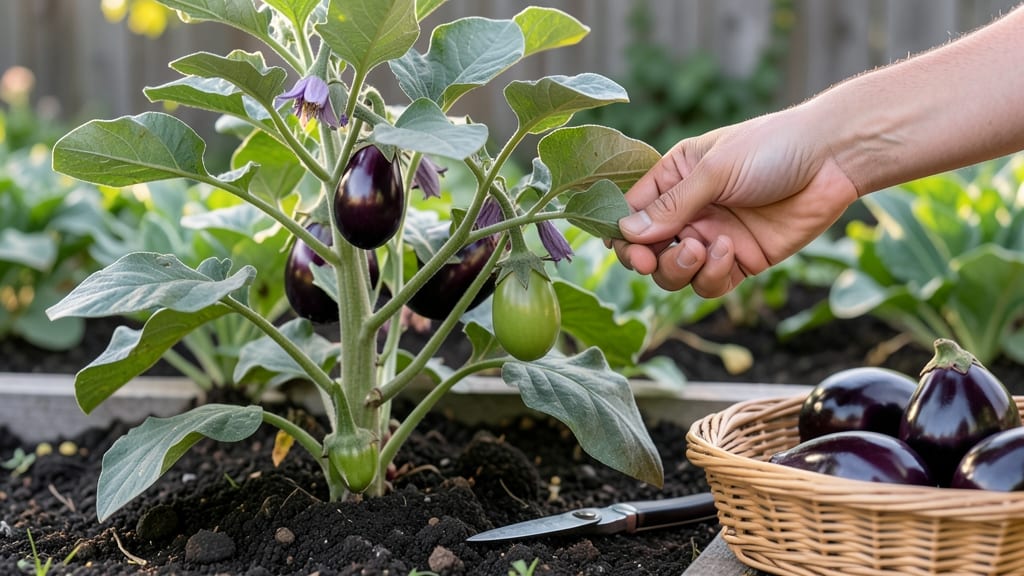
To pick eggplant from your garden at the perfect moment means catching it when its skin is deep and glossy, its stem feels firm, and its weight surprises you in your hand 🍆.
Nothing beats the satisfaction of harvesting your own homegrown eggplant—crisp, vibrant, and packed with flavor—but timing is everything. Pick too early, and you’ll miss out on rich taste; wait too long, and the fruit becomes bitter or mealy.
Most gardeners learn the hard way that color alone isn’t enough: a purple eggplant can still be underripe, while a soft one might be past its prime. The key lies in combining visual cues with a simple touch test that takes just 5 seconds.
In this guide, I’ll break down the exact signs to watch for, the best time of day to harvest for peak freshness, and how to salvage eggplant that’s slightly off—so you never waste another homegrown bounty.
How to tell when eggplant is ripe for harvesting (key visual & tactile cues)
Harvesting eggplant at the perfect moment transforms your garden bounty from good to extraordinary. Unlike many vegetables, eggplant doesn’t ripen further after picking, so timing is critical. The ideal harvest window balances color depth, skin texture, and stem firmness—each clue working together to signal peak ripeness.
I’ve learned the hard way that ignoring these cues leads to either bland or bitter fruit, so let’s break down exactly what to look for.
First, consider your eggplant variety. Globe eggplants (like Black Beauty) mature differently than Asian long varieties (such as Ichiban) or Italian types (e.g., Rosa Bianca). Each has unique size and color markers, but the tactile and visual principles remain the same.
For example, globe types typically reach 6-8 inches in diameter, while Asian varieties can stretch 12+ inches long—but both should feel heavy for their size when ripe.
| Eggplant Type | Size at Harvest | Color Cues | Texture Check | Stem Sign |
|---|---|---|---|---|
| Globe (Black Beauty) | 6-8 inches diameter | Deep purple/black, matte finish | Firm, no give when pressed | Dry, slightly woody |
| Asian Long (Ichiban) | 12-18 inches long | Glossy purple/black | Heavy for length, firm | Hard stem end |
| Italian (Rosa Bianca) | 4-6 inches diameter | Creamy white/pink, dull | Smooth, firm skin | Dry stem base |
| Overripe Warning | Any size | Dull, spotted skin | Soft, spongy texture | Shriveled stem |
The most reliable way to test ripeness is the gentle pressure test. Press your thumb into the eggplant’s skin—if it springs back immediately, it’s ready. If it leaves a dent, the fruit needs more time.
I always check three spots: the top, middle, and base. Uneven firmness often means the eggplant is still maturing unevenly, especially in partial shade conditions.
Color is your second best clue, but don’t rely on it alone. Mature eggplants develop a dull, matte finish (not shiny) and a consistent hue. For example, Black Beauty turns from glossy green to deep purple, while white varieties like Rosa Bianca lose their sheen as they ripen.
Pro tip: Use natural daylight for color assessment—artificial light can distort true shades.
Many gardeners overlook the stem end, but this is a game-changer. A ripe eggplant’s stem should feel slightly woody and dry to the touch, almost like a small twig. If it’s still green and soft, the fruit isn’t ready.
I’ve seen beginners mistake overripe eggplants for ripe ones because they focus only on size—don’t make this mistake! Overripe eggplants develop shriveled stems and may even detach from the plant on their own.
Size alone isn’t enough—some varieties (like Fairy Tale eggplants) stay small but become perfectly edible. Always cross-reference size with the other cues. For instance, a 6-inch globe eggplant with dull skin and a firm stem is ready, while an 8-inch one that’s still shiny and soft needs more time.
When in doubt, harvest a test eggplant, slice it open, and check the seed cavity—ripe seeds should be fully formed but not hard.
Regional climate plays a role too. In hotter zones (9+), eggplants mature faster and may need harvesting 2-3 weeks earlier than in cooler areas. I’ve found that morning harvests in these climates yield the best results because evening heat can accelerate overripening.
Conversely, in Zone 5 or cooler, eggplants take longer to reach maturity, so don’t rush—patience pays off with richer flavor.
One common mistake is harvesting based on fruit count alone. Just because your plant has 10 eggplants doesn’t mean they’re all ready. Prioritize the ones showing the most maturity cues—these are your best candidates.
Leave the rest to develop. I’ve learned to use a harvest schedule: pick every 3-5 days during peak season to encourage continuous production.
Finally, trust your instincts. If an eggplant looks perfectly uniform in color, feels heavy for its size, and has a dry stem end, it’s likely ready.
When you cut it open, the flesh should be firm with no hollow centers. This is your reward for paying attention to the
Best time of day to harvest eggplant for maximum freshness & flavor
Timing your eggplant harvest isn’t just about ripeness—it’s also about when you pick during the day. Morning harvests yield the freshest fruit with peak flavor, while evening picks can lead to softer textures or even bruising.
Most gardeners agree that early morning (between 6-9 AM) is ideal, when temperatures are cooler and the fruit is fully hydrated from overnight moisture.
If you must harvest later, aim for late afternoon (after 3 PM) to avoid the midday heat stress that can accelerate spoilage.
The key is to pick when the plant’s stems are dry—never after rain or when dew is still clinging to the leaves, as this increases disease risk and shortens shelf life.
- 6-9 AM: Best window for crisp, hydrated eggplant with peak sweetness. Ideal for morning harvesters.
- After 3 PM: Second-best option to avoid midday heat damage. Check for stem dryness first.
- Avoid: Harvesting after rain or dew—increases rot risk and bruising.
- Moon phase tip: Some gardeners swear by waxing moon (increasing light) for sweeter, firmer fruit.
- Weather watch: Harvest on cool, cloudy days to prevent sunburn on exposed skin.
After harvesting, handle your eggplant with care to preserve its quality and shelf life. Use a sharp knife or pruners to cut stems, leaving a 1-inch stem attachment to prevent spoilage. Avoid dropping the fruit or stacking it—eggplant is delicate when ripe and bruises easily.
Store in a cool, dark place (like a pantry) for up to 1 week, or refrigerate for 2-3 weeks if you won’t use it immediately.
Pro tip: If you’re harvesting multiple eggplants, prioritize the largest, firmest ones first. Smaller or unevenly colored fruit may still ripen on the vine, but larger specimens often develop bitterness faster once picked. This strategy ensures you maximize yield and flavor throughout the season.
Some gardeners also swear by harvesting during specific moon phases, particularly the waxing moon (when the moon is growing brighter). While scientific evidence is limited, anecdotal reports suggest eggplant harvested under these conditions may have sweeter, denser flesh.
If you’re curious, try tracking your harvests by moon phase and compare the results!
For long-term storage, consider curing your eggplant—a process where you expose it to warmth (80-85°F) for 24 hours before refrigerating. This mimics natural ripening and can extend shelf life by up to 2 weeks.
Just place the whole fruit in a paper bag with a few apples (for ethylene gas) and let it sit in a sunny spot before storing.