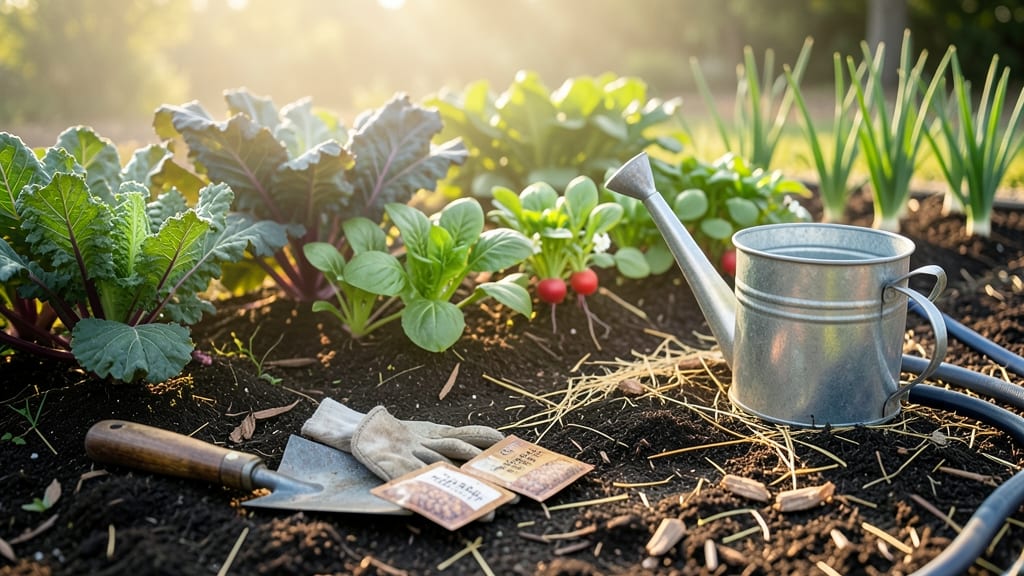
Planting a fall garden in Houston, Texas 🥕 starts between mid-August and early October—a window that balances escaping summer’s brutal heat while giving crops time to mature before frost.
Houston’s scorching summers can make gardening feel impossible—but fall brings the perfect window for thriving vegetables, herbs, and flowers. Timing is everything in Zone 9a, where one wrong week can mean the difference between a bountiful harvest and wilting disappointment.
Most cool-season crops need 6-8 weeks to mature before Houston’s average first frost on December 1. That means broccoli, kale, and carrots should hit the soil by late September, while heat-tolerant greens like collards can wait until early October.
Below, I’ll break down the exact week-by-week planting schedule for Houston’s climate, plus soil prep tips and the top 10 fall crops that thrive here—without the guesswork.
🥕
When to Plant Fall Garden Vegetables Garden Vegetables
Jan
❄️
Feb
❄️
Mar
🌱
Apr
🌱
May
🌸
Jun
☀️
Jul
🌱
Aug
🥕
Sep
🥕
Oct
🥕
Nov
🌱
Dec
❄️
Houston’s fall planting calendar: exact weeks for cool-season crops in Zone 9a
Houston’s fall planting window begins as summer heat fades, typically around mid-August, when soil temperatures dip below 85°F. This 6-8 week window is critical for cool-season crops to establish roots before first frost (usually December 1 in Zone 9a).
Planting too late risks stunted growth, while early planting can stress seedlings in residual summer heat.
For optimal success, align your planting schedule with soil temperature thresholds and moon phases (root crops planted during waxing moon phases thrive better). Houston’s humidity and occasional cold snaps demand careful timing—especially for heat-sensitive varieties like lettuce or spinach.
Below is your week-by-week planting guide, tailored to Houston’s transitional climate. Adjust dates by 1-2 weeks if your microclimate runs cooler (e.g., elevated areas) or warmer (e.g., urban heat islands). Always test soil pH (6.0–7.0) and amend with compost before planting.
📅 Key Dates to Remember:
- August 15–31: Start heat-tolerant varieties (e.g., Swiss chard, kale).
- September 1–15: Peak window for leafy greens and root crops.
- September 16–30: Last chance for broccoli and cauliflower.
- October 1–15: Fast-maturing crops only (e.g., radishes, arugula).
| Week |
Plant Type |
Ideal Varieties |
Soil Temp (°F) |
Sun Needs |
Notes |
| Week 1 (Aug 15–21) |
Heat-Tolerant Greens |
Swiss chard, Malabar spinach, New Zealand spinach |
75–85°F |
Full sun |
Direct sow after 6 PM to avoid heat stress |
| Week 2 (Aug 22–28) |
Root Crops |
Carrots, radishes, turnips |
70–80°F |
Full sun |
Loosen soil to 12" depth; avoid clay pockets |
| Week 3 (Aug 29–Sep 4) |
Leafy Greens |
Kale, collards, mustard greens |
65–75°F |
Partial shade |
Use shade cloth if temps exceed 80°F |
| Week 4 (Sep 5–11) |
Brassicas |
Broccoli, cabbage, Brussels sprouts |
60–70°F |
Full sun |
Start seeds indoors 4 weeks prior |
| Week 5 (Sep 12–18) |
Herbs |
Cilantro, dill, parsley |
65–75°F |
Partial sun |
Harvest cilantro before bolting |
| Week 6 (Sep 19–25) |
Fast Maturing |
Radishes, arugula, bush beans |
60–70°F |
Full sun |
Succession plant every 2 weeks |
| Week 7 (Sep 26–Oct 2) |
Flowers |
Calendula, nasturtium, pansies |
55–65°F |
Full sun |
Attracts pollinators; interplant with veggies |
| Week 8 (Oct 3–9) |
Late Season |
Spinach, lettuce, peas |
Top 10 fall vegetables for Houston gardens (and how to extend their growing season)
Fall gardening in Houston transforms your yard into a cool-season powerhouse, where leafy greens and root vegetables thrive after summer’s heat. The key? Choosing heat-tolerant varieties and using season-extending tricks like row covers.
These top 10 vegetables are my proven winners for Houston’s Zone 9a climate, selected for their ability to handle lingering summer heat while delivering harvests through December.
Houston’s first frost typically arrives around December 1, but with the right strategies, you can push harvests even later. Succession planting and protective covers let you enjoy fresh veggies when most gardens are dormant.
Below, I’ve ranked these crops by harvest window, ease of growth, and Houston-specific performance, plus my best tips for extending their season.
1
Plant by mid-August: Okra and Southern peas (e.g., 'Purple Hull')—heat-lovers that handle Houston’s transition perfectly. Harvest pods before first frost for tender texture.
2
Late August: Kale ('Lacinato' or 'Red Russian') and collard greens—both cold-hardy and heat-tolerant. Use row covers to protect from light frosts and extend harvests into January.
3
Early September: Carrots ('Danvers' or 'Nantes') and beets ('Detroit Dark Red')—direct-sow these root crops for harvests by November. Loosen soil to prevent forked roots in Houston’s clay-heavy dirt.
4
Mid-September: Spinach ('Bloomsdale Long Standing') and lettuce ('Black Seeded Simpson')—sow every 2 weeks for succession harvests. Use shade cloth to prevent bolting in Houston’s lingering heat.
5
Late September: Broccoli ('De Cicco') and cauliflower ('Snowball Y Improved')—transplant 4-6 weeks before frost. Mulch with straw to retain moisture and protect from Houston’s humidity.
6
Early October: Turnips ('Purple Top White Globe') and radishes ('Cherry Belle')—fast-growing crops for quick harvests. Thin seedlings to 2 inches apart to avoid competition in Houston’s compacted soil.
7
Pro Tip: For late-winter harvests, use low tunnels or cold frames on kale, collards, and spinach. These simple structures can add 10-15°F protection, pushing harvests into February in Houston.
My go-to strategy for extending Houston’s fall harvests? Succession planting paired with protective covers. For example, sow lettuce every 2 weeks from August through September to ensure a steady supply.
When temperatures dip below 40°F, drape floating row covers over beds to shield leafy greens and broccoli from frost damage.
Don’t overlook soil preparation—Houston’s clay soil can become waterlogged after summer rains. Amend beds with compost and sand to improve drainage, and mulch heavily with straw to regulate soil temperature. This simple step can mean the difference between wilty seedlings and thriving plants in Houston’s unpredictable fall weather.
For maximum harvests, prioritize heat-tolerant varieties like 'Black Seeded Simpson' lettuce or 'Lacinato' kale—they handle Houston
★★★★★4.8(7 reviews)
|