Planting
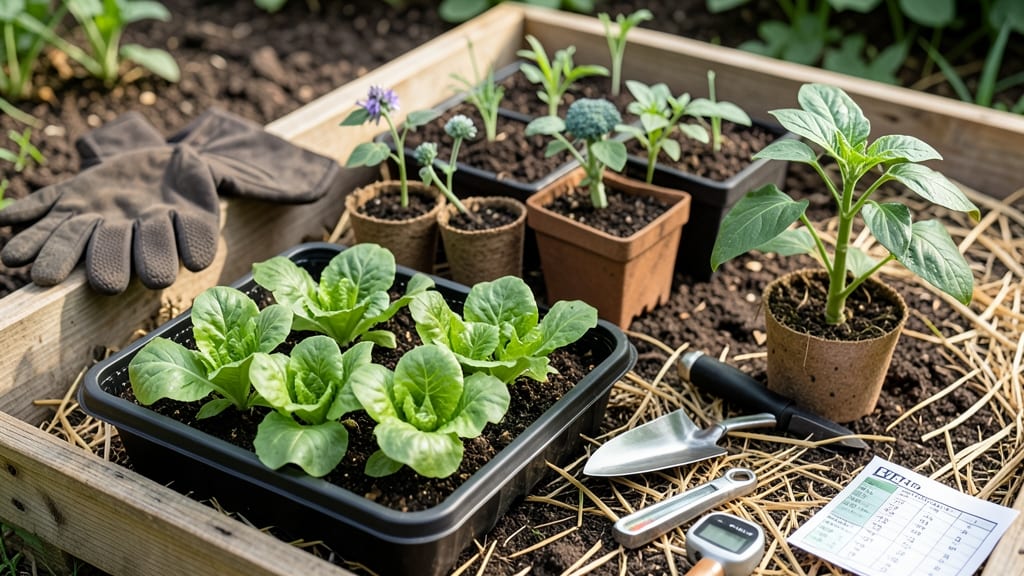
Planting a vegetable garden in Northern California requires timing that varies by microclimate—coastal fog, valley heat, or mountain chill can shift your schedule by months.
Picture this: You’re eager to sow tomatoes in April, only to watch them wilt under a late frost in the Sacramento Valley. Or you plant lettuce in July on the coast, where it bolts before you even notice.
Northern California’s diverse zones mean your neighbors’ planting calendar might as well be in a different state.
This guide cuts through the guesswork with region-specific frost dates, from the Bay Area’s near-frost-free growing to the Sierra foothills’ early chills.
You’ll learn exactly when to start cool-season crops like kale (as early as September in the mountains) and warm-season staples like peppers (wait until May in the valleys).
Beyond the calendar, I’ll share proven tricks to stretch your season—like using row covers to protect coastal greens in winter or mulching to keep valley soil cool for heat-sensitive crops. Ready to grow smarter, not harder?
Northern California planting zones: frost dates by microclimate (coastal vs. Valley vs. foothills)
Northern California’s microclimates create a gardening puzzle—what thrives in foggy San Francisco may wilt in scorching Sacramento. The key? Understanding your USDA Hardiness Zone and last frost dates, which can shift by hundreds of miles.
Coastal areas (like Zone 9b-10a) rarely see frost, while inland valleys (Zone 8a-9a) face chilly snaps as early as December 15. Foothills (Zone 7b) can drop below freezing by October, forcing earlier planting.
Your planting timeline hinges on these three microclimates:
- Coastal (San Francisco, Santa Cruz): No frost or light December-January chills.
- Valley (Sacramento, Stockton): Last frost March 15–April 15, but heatwaves hit by June.
- Foothills (Napa, Lake Tahoe): Last frost April 1–May 1, but earlier frosts in fall.
Use this zone-finder trick: Check your elevation and proximity to water. Coastal gardens near the Pacific Ocean stay 5–10°F cooler than inland spots just 20 miles away. For example, Berkeley (Zone 9b) can be 15°F warmer than Davis (Zone 9a) in summer, affecting tomato ripening.
Here’s how to pinpoint your microclimate:
- Coastal: Look for marine layer fog (common in June Gloom).
- Valley: Note hot afternoons (100°F+) and cool nights (50°F).
- Foothills: Watch for rapid temperature swings and earlier sunsets.
Why does this matter? Heatwaves in the Central Valley can stunt growth or bolt lettuce in June, while coastal gardens can grow year-round greens without frost.
For example, tomatoes in Sacramento need planting by March 1 to avoid June heat stress, but in San Francisco, you can plant them anytime—just watch for July fog.
Pro tip: Use local nurseries as your guide. They stock heat-tolerant varieties like ‘Arkansas Traveler’ tomatoes for valleys or ‘Winter Density’ kale for coastal gardens.
Ask about succession planting: In the Bay Area, you can plant lettuce every 2 weeks from September to May, while in the Sacramento area, focus on fall and spring plantings.
Don’t forget elevation! Even within 50 miles, a 1,000-foot climb
Northern California’s diverse microclimates demand precision timing for your vegetable garden. The Bay Area’s coastal fog delays spring planting by weeks compared to the Central Valley’s heat, while mountain regions face earlier frosts. Mastering these windows ensures bolting-free greens and fruit-heavy tomatoes. I’ll break down month-by-month sowing for both cool-season hardies and heat-loving staples, plus succession planting secrets to keep harvests rolling. Start with cool-season crops like kale, carrots, and peas in late summer (August) for fall harvests. These thrive in 50–65°F soil and tolerate light frosts. In Zone 9b–10a (coastal), you can even direct-sow spinach in October—just use row covers for winter protection. Meanwhile, warm-season crops like tomatoes and peppers need to wait until after your last frost date (typically mid-April inland, May coastal).
📅 Month
🌱 Cool-Season Crops
☀️ Warm-Season Crops
🔄 Succession Planting
For warm-season crops, timing is everything. Tomatoes and peppers bolt if planted too early—wait until soil temps hit 60°F (use a soil thermometer if unsure). In the Central Valley, this is mid-April, while coastal gardeners can start late May. Succession planting is your secret weapon: Sow lettuce every 2 weeks from February to October to avoid gaps. Even in summer, shade cloth (30–50%) lets you grow spinach and kale when temps dip. Pro tip: Transplant seedlings (like tomatoes or basil) 2–3 weeks before the last frost date for a head start. But direct-sow crops like carrots and peas after soil warms to 50°F—they hate being transplanted. Mulch heavily in summer to keep roots cool, and water deeply in the morning to prevent fungal diseases. These tweaks can extend harvests by 4–6 weeks in both directions. Don’t overlook fall planting. After yourMonth-by-month planting calendar: what to sow when for maximum yield in Northern California
📅 Month
🌱 Cool-Season Crops
☀️ Warm-Season Crops
🔄 Succession Planting
January
Peas, spinach, kale, lettuce
—
Sow every 2 weeks
February
Carrots, radishes, broccoli
Start onions indoors
Harvest spinach, replant
March
Cabbage, Brussels sprouts
Transplant peppers (coastal)
Sow lettuce every 3 weeks
April
Last chance for peas
Direct-sow beans, cucumbers
Succession plant radishes
May
Shade cloth for greens
Transplant tomatoes, eggplant
Sow basil, dill
June–August
—
Squash, corn, melons
Harvest warm crops
September
Direct-sow fall broccoli
Plant heat-tolerant tomatoes
Sow green onions
October
Kale, arugula, radishes
—
Cover crops for winter