Planting
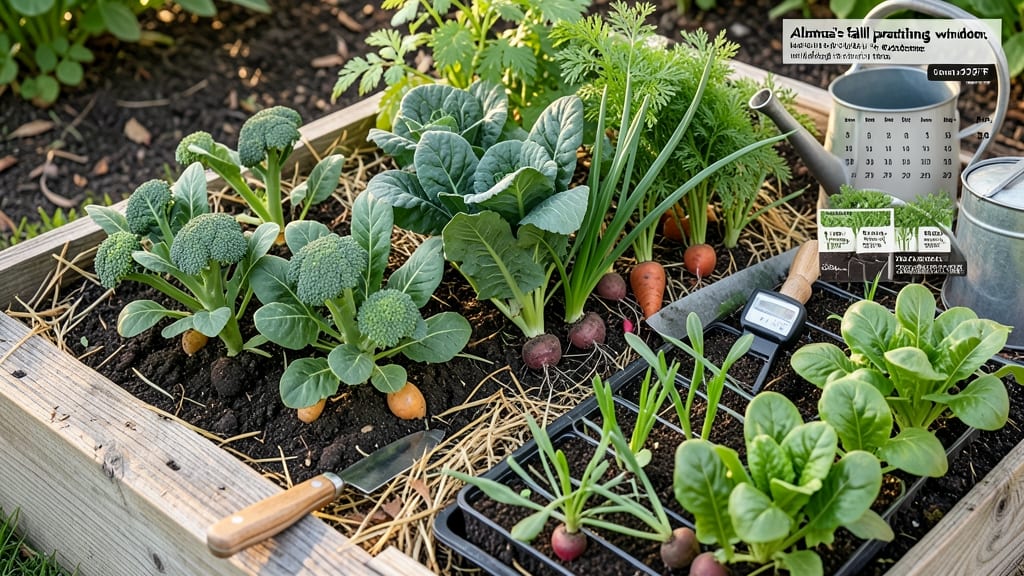
Planting your fall garden in Alabama between mid-August and mid-October is the key to a bountiful harvest before the first frost hits.
Alabama’s warm climate and unpredictable frost dates make fall gardening both exciting and tricky—plant too early, and you risk heat stress; too late, and frost ruins your harvest.
If you’ve ever watched your 🥬 leafy greens bolt in September or your broccoli turn to mush overnight, you know timing matters more than seed packets suggest.
This guide breaks down the exact planting windows for your region, frost-proof crops to prioritize, and how to stretch your harvest well into December.
Alabama’s fall planting timeline: exact dates for last-minute crops
Alabama’s fall planting window is a 6-week sprint between mid-August and mid-October, but timing varies by region. North Alabama’s cooler microclimates (like Huntsville) allow earlier starts, while South Alabama (like Mobile) can extend planting until late October for heat-tolerant crops.
The key? Planting 4-6 weeks before your average first frost—typically November 15 in most areas.
Your soil temperature is the real clock—cool-season crops like broccoli and kale thrive when soil drops below 80°F. Use a soil thermometer to confirm readiness; if temps stay above 85°F, opt for shade cloth until conditions improve.
Southern Alabama’s warmer pockets may need late August starts, while northern zones should wait until early September.
Microclimates are your secret weapon. A south-facing slope warms faster than a north-facing bed, so adjust planting dates accordingly. Urban areas with concrete heat absorption may need earlier starts for greens, while wooded edges can delay planting by 1-2 weeks. Always scout your yard for frost pockets—low areas freeze first!
| Region | Average First Frost | Ideal Planting Window | Soil Temp Goal (°F) | Last-Minute Crops |
|---|---|---|---|---|
| North Alabama (Huntsville, Decatur) | November 10 | September 1 - October 15 | 65-75°F | Kale, Spinach, Radishes |
| Central Alabama (Birmingham, Montgomery) | November 15 | August 25 - October 1 | 70-80°F | Broccoli, Carrots, Lettuce |
| South Alabama (Mobile, Dothan) | November 20 | August 15 - October 15 | 75-85°F | Collards, Turnips, Swiss Chard |
| Coastal Alabama (Gulf Shores) | December 1 | August 1 - October 31 | 80-85°F | Okra, Sweet Potatoes, Peppers |
For last-minute crops, prioritize fast-maturing varieties like radishes (25 days) or bush beans (50 days). If your area’s first frost is November 15, plant these by October 1 to ensure harvest.
Use row covers to push back frost by 2-4 weeks, or opt for cold-hardy greens like kale (tolerates 20°F) or spinach (25°F).
Adjust for heat-sensitive seedlings—if daytime temps exceed 90°F, start seeds indoors 3-4 weeks before transplanting. Direct-sow heat-loving crops like okra in late summer, but shift to cool-season staples (broccoli, cabbage) once nights dip below 75°F.
Check the Alabama Extension’s frost maps annually, as climate shifts delay frosts by 1-2 weeks per decade.
Don’t ignore soil prep—fall gardens need well-draining, nutrient-rich soil. Work in 2-3 inches of compost 2 weeks before planting to boost microbiome activity. Test your soil’s pH (6.0-7.0 ideal) and amend with lime if needed; acid-loving crops like blueberries require pH 4.5-5.5.
Mulch with straw to retain moisture and suppress weeds during Alabama’s unpredictable October rains.
Protect your young seedlings with floating row covers if frost threatens before harvest. These lightweight fabrics trap 5-8°F of heat and shield plants from light frosts.
For hard freezes (<28°F), cover plants with old blankets or cardboard and remove when temps rise. Evergreen boughs also work as a windbreak for delicate greens like arugula.
Track your local frost history—Alabama’s first frost can vary by 10 days from year to year. Use a frost calendar from your county extension office and adjust planting dates accordingly. For example, Montgomery’s average first frost is November 15, but 2022’s hit <
Best fall vegetables for Alabama gardens & how to extend their season
Alabama’s fall garden thrives with the right frost-tolerant vegetables that can handle cool nights and early frosts. The key is selecting varieties that mature quickly and using protective methods to extend your harvest window.
I’ve grown these top 10 cold-hardy crops in my Alabama garden, and they’ve never disappointed!
For maximum success, focus on leafy greens, root vegetables, and brassicas—these handle Alabama’s 50-60°F nights beautifully. Even better, they often taste sweeter after a light frost! Let’s dive into my favorite fall vegetables and how to keep them growing until December.
🌱 Top 10 Fall Vegetables for Alabama Gardens
- 1. Collard Greens 🥬 Plant: Aug 15–Sept 30 | Harvest: Oct–Dec
- 2. Kale 🌿 Plant: Sept 1–Oct 15 | Harvest: Oct–Jan
- 3. Carrots 🥕 Plant: Aug 1–Sept 15 | Harvest: Oct–Nov
- 4. Radishes 🌱 Plant: Sept 1–Oct 1 | Harvest: 30–45 days
- 5. Spinach 🌱 Plant: Sept 15–Oct 15 | Harvest: Oct–Dec
- 6. Broccoli 🥦 Plant: Aug 15–Sept 15 | Harvest: Oct–Nov
- 7. Turnips 🥬 Plant: Aug 1–Sept 15 | Harvest: Sept–Dec
- 8. Beets 🍠 Plant: Aug 1–Sept 15 | Harvest: Oct–Nov
- 9. Lettuce 🥬 Plant: Sept 1–Oct 1 | Harvest: Oct–Nov
- 10. Garlic 🧄 Plant: Oct–Nov | Harvest: Next spring
To extend your season, I swear by row covers and cold frames. A simple floating row cover (like Agribon) can protect plants from light frosts (28–32°F) while still allowing sunlight and airflow.
For heavier frosts, a cold frame or mini greenhouse works wonders—just remove it on warm days to prevent overheating.
Don’t forget to mulch heavily with straw or leaves to insulate roots and retain moisture. In my garden, mulched beds stay 5–10°F warmer than uncovered soil, giving my collards and kale an extra boost before winter. Plus, it suppresses weeds—double win!
Watering is critical in fall. While Alabama’s air gets cooler, soil moisture can still evaporate quickly. I water deeply 2–3 times per week until the ground freezes, focusing on the root zone to encourage strong growth. Avoid wetting foliage at night to prevent fungal diseases like downy mildew.
With these frost-tolerant crops and a few protective tricks, you’ll enjoy fresh homegrown veggies well into December—just in time for holiday meals! Start planting your fall garden by mid-August for the best results, and don’t hesitate to experiment with unusual varieties like Tatsoi or Tokyo Bekana for extra flavor.