
Tools
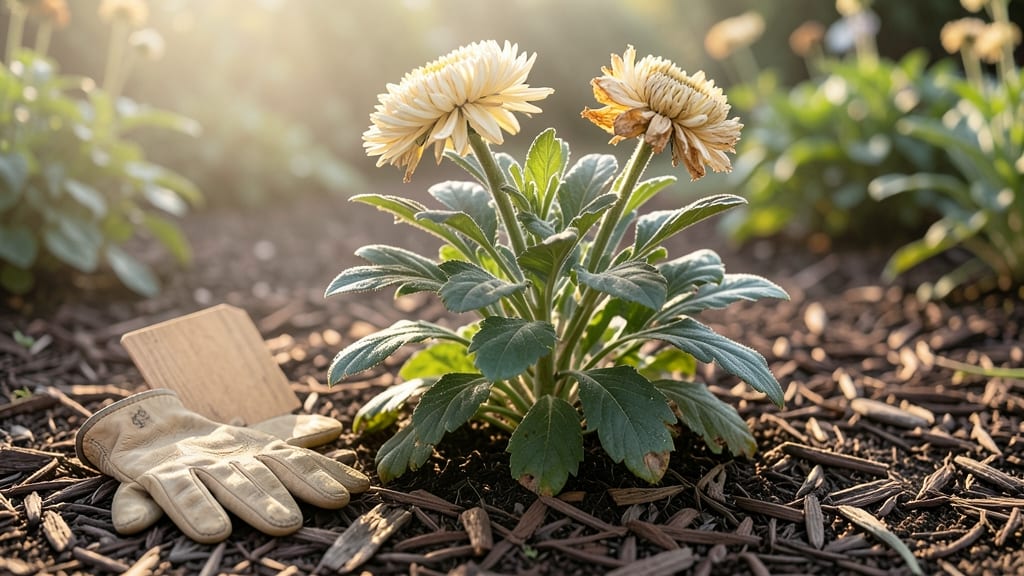
Garden mums will come back yearly when planted in well-draining soil, maintained with steady watering, and shielded from winter's harshest conditions using mulch. Hardy varieties like 'Bonnies' and 'Dedication' reliably return in USDA Zones 5-9 with proper late-season care.
These hardy perennials surprise many gardeners with their resilience, but the key lies in their root systems and how you prepare them for winter. 🌱 The difference between annual and perennial mums often comes down to variety selection and soil conditions—well-draining soil prevents rot while consistent moisture keeps roots hydrated through dry spells.
I've seen mums thrive for decades in my garden when I follow these basic principles, especially in colder climates where proper mulching makes all the difference.
For those in colder regions, choosing the right variety is everything. Some garden mums are bred specifically to withstand freezing temperatures, while others treat them as annuals. The cold-hardy varieties like 'Bonnies' or 'Dedication' have built-in survival mechanisms that annuals simply lack.
What's interesting is how their blooming patterns adapt—these hardy types often bloom later in the season but reward you with vibrant flowers year after year.
💡 In This Article
- Why Some Garden Mums Die Over Winter
- Best Cold-Hardy Chrysanthemum Varieties for Yearly Returns
Why some garden mums die over winter
The survival of garden mums hinges on their root systems and how they handle dormancy. Unlike annual mums that complete their life cycle in one season, perennial varieties develop deep, fibrous roots that store energy for regrowth.
When temperatures drop below 20°F, these roots enter dormancy—but only if they've built up sufficient reserves. Without proper fall care, the roots weaken, making them vulnerable to freeze-thaw cycles that can rupture cell walls and kill the plant.
Moisture management is critical during winter. Soil that's too wet causes root rot, while bone-dry conditions leave roots desiccated. The ideal is well-draining soil that stays consistently moist but never soggy.
I've noticed that mums in containers are especially at risk because they dry out faster and have less insulation from the ground. Mulching with 3-4 inches of organic material (like straw or shredded leaves) acts as a thermal blanket, maintaining soil temperatures around 32-40°F—the sweet spot for root protection.
What most gardeners miss is how late-season sunlight affects survival. Chrysanthemums need 6-8 hours of light even in fall to photosynthesize and store energy. Pruning too late in the season (after mid-October) removes leaves that could still be feeding the roots.
I learned this the hard way when I trimmed back a batch too eagerly—those plants struggled the next spring while the unpruned ones bounced back beautifully.
Cold-hardy varieties have evolved adaptations like thicker root crowns and higher sugar content in their tissues, which acts as a natural antifreeze. Annual mums, however, lack these traits and simply won't survive freezing temperatures.
The difference becomes clear in spring when hardy mums push through the soil while annuals leave empty spaces. Even in Zone 5, I've seen 'Bonnies' return year after year with minimal care, while cheaper nursery mums disappear after their first winter.
Another surprising factor is soil pH. Chrysanthemums prefer slightly acidic to neutral soil (pH 6.0-7.0). In alkaline conditions (above 7.5), nutrient uptake suffers, weakening the plant's ability to store winter reserves.
Testing your soil and amending with sulfur or peat moss can make a dramatic difference in survival rates. I've seen mums in my neighbor's garden (with naturally alkaline soil) struggle to return, while mine thrive with regular pH adjustments.
Here's what actually happens when mums fail: The roots either freeze solid or rot from excess moisture. In both cases, the plant can't regenerate in spring. The key is creating conditions where roots stay dormant but alive—like a hibernating bear that neither starves nor overheats.
With the right prep, your mums can return for years, proving that patience in fall care pays off in spring blooms. 🌿