
Light Requirements
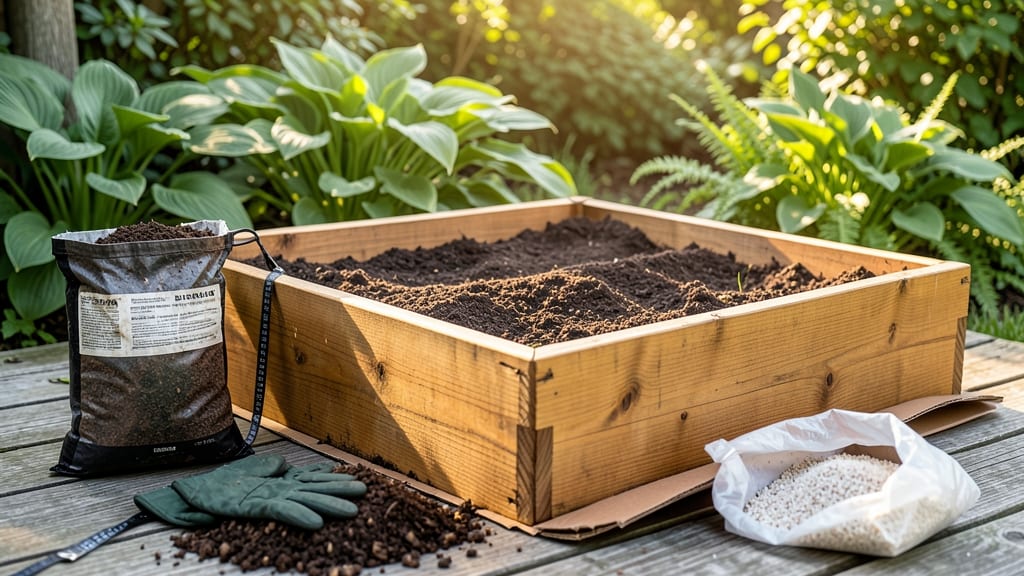
A 4 x 8 raised garden bed requires 1.33 cubic feet of soil per inch of depth—for example, 6.67 cubic feet for 5 inches or 13.33 cubic feet for 10 inches. Multiply bed length × width × depth (in feet) to calculate total soil volume needed for your plants’ root zone.
Figuring out how much soil fits in a 4x8 raised bed depends entirely on how deep you build it. Most gardeners aim for 6 to 12 inches deep—that's because deeper beds give roots more room to spread, while shallower beds work for smaller plants like herbs or lettuce. 🌱 The key is balancing your plant types with the available space; for instance, a 10-inch deep bed will hold about 13.33 cubic feet of soil, which is plenty for most vegetables.
Here's a pro tip: always account for 20% extra soil when shopping. This covers settling and any amendments you might add, like compost or mulch.
I like to mix in about 25% organic matter to improve drainage and fertility—this means you might need slightly more soil than the pure calculation suggests.
💡 In This Article
- Calculating Soil Volume for Raised Beds by Depth
- Best Soil Types and Mixes for 4x8 Raised Gardens
Calculating soil volume for raised beds by depth
The cubic feet formula for your 4x8 raised bed comes from simple geometry: length × width × height (all in feet). A 4-foot by 8-foot bed has a base area of 32 square feet. Multiply this by the depth in feet to find the volume.
For example, a 6-inch (0.5-foot) deep bed needs 16 cubic feet of soil (32 × 0.5), while a 12-inch (1-foot) bed requires 32 cubic feet. This works because soil volume scales linearly with depth—double the depth, double the soil needed.
Depth matters because plant roots need space to grow. Shallow beds (6 inches) work for small plants like lettuce or herbs, while deeper beds (10-12 inches) support root vegetables like carrots or potatoes.
The soil’s texture also affects how much you’ll need: sandy soil settles less than clay-heavy mixes. For instance, a 10-inch bed filled with loose, airy compost blend might require 15% more soil than the same depth of dense garden soil due to settling and air pockets.
When calculating, always convert inches to feet first. A 5-inch bed becomes 5 ÷ 12 = 0.42 feet, so 32 × 0.42 = 13.44 cubic feet. Round up to 13.5 cubic feet for practicality.
Pro tip: Use a soil calculator or spreadsheet to adjust for amendments like compost (which adds bulk) or mulch (which reduces settling). For example, adding 3 inches of compost to a 6-inch bed increases the total volume by about 25%.
Here’s what happens if you miscalculate: Too little soil means roots compete for space, stunting growth. Too much creates waste and compaction issues. For a 10-inch bed, I recommend buying 15 cubic feet of soil to account for settling and amendments.
This ensures your plants have the ideal 6-12 inches of root zone they need, depending on their type. 🌱
Consider this real-world example: A 4x8 bed at 8 inches deep (0.67 feet) needs 21.44 cubic feet of soil. If you use a 50/50 mix of garden soil and compost, the compost’s airy texture might increase the total volume needed by 10-15%.
Always check the bag’s "coverage rate" for pre-mixed soils—this tells you how much area the soil will fill per inch of depth.
For advanced gardeners, layering soil types can optimize root growth. For instance, place 2-3 inches of coarse sand or gravel at the bottom for drainage, then add 6 inches of nutrient-rich topsoil, and top with 2 inches of compost.
This layered approach reduces total soil volume while improving plant health. The key is balancing aeration, drainage, and fertility—all of which affect how much soil you’ll need overall.
Remember: The formula is just a starting point. Factors like soil moisture, organic matter content, and compaction can change the actual volume needed. Always test your soil’s settling rate by filling a small container and measuring how much it compresses over time.
This helps you fine-tune your calculations for your specific garden setup. ✨