
Advice
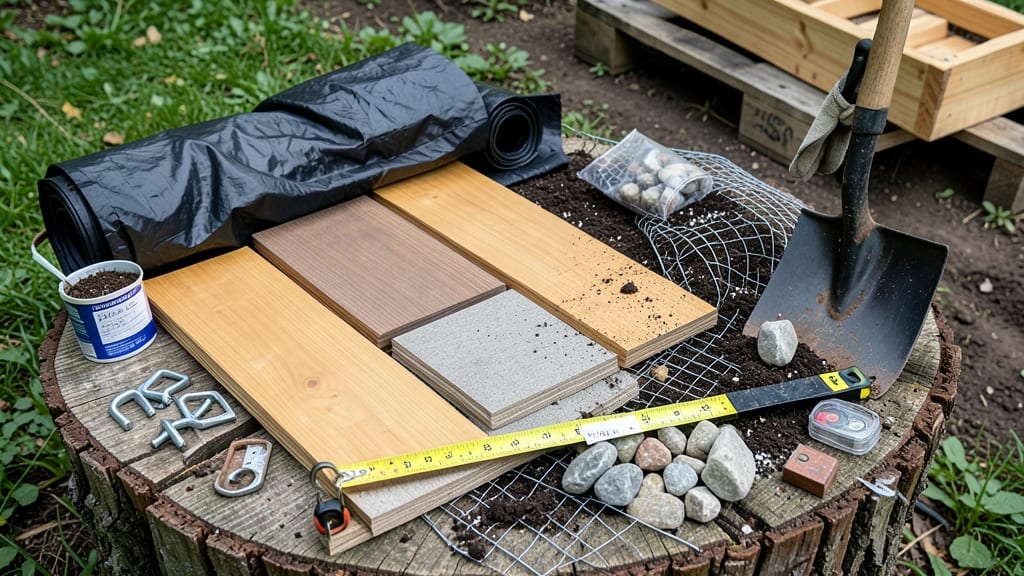
The cost to make a raised garden bed ranges from $100 to $500, with most 4’x8’ beds falling between $150–$350. Your final price depends on lumber type (cedar costs more than untreated wood), whether you DIY or buy a pre-made kit, and extras like soil, liner, and hardware.
The total price varies significantly based on your project's scale and materials. A 4’x8’ cedar bed might run $300–$400, while a larger 6’x12’ composite bed could exceed $600. 🌱 DIY projects save money but require time and tools—pre-made kits eliminate guesswork but often cost 20–30% more.
Don't forget to budget $50–$150 for soil amendments, drainage layers, and fasteners, which can make up 20% of your total cost.
For example, untreated pine lumber keeps costs low at $2–$4 per board foot, but it requires sealing to prevent rot. On the other hand, cedar lasts 10–15 years without treatment but costs $5–$8 per board foot.
If you're building multiple beds, buying in bulk or repurposing materials (like pallet wood) can cut costs by 30%.
💡 In This Article
- Raised Garden Bed Cost Factors by Material Type
- DIY vs Pre-Built Raised Garden Bed Cost Analysis
Raised garden bed cost factors by material type
The cost of your raised garden bed starts with the lumber, where material choices create the biggest price swings. Cedar, the most popular option, costs $5–$8 per board foot due to its natural rot resistance and aromatic qualities.
Redwood runs slightly cheaper at $4–$7 per board foot but requires more maintenance in humid climates. Untreated pine, at $2–$4 per board foot, is the budget-friendly choice but demands sealing every 1–2 years to prevent warping and decay.
Composite lumber offers a middle ground with $8–$12 per board foot pricing, combining durability (15+ years) with low maintenance. For a 4’x8’ bed, cedar framing costs about $250–$350, while composite would run $350–$450. The tradeoff?
Cedar beds last 10–15 years with minimal upkeep, while composite beds resist insects and moisture but cost nearly 50% more upfront. Recycled materials like pallet wood can cut costs by 40–60%, but they require extra effort to sand and treat for food safety.
Durability directly impacts long-term costs. A cedar bed's natural oils act like built-in preservatives, reducing replacement needs. In contrast, untreated wood may need full replacement in 5–7 years if exposed to moisture. Composite materials eliminate rot entirely but can degrade under extreme UV exposure.
Consider your climate: Northern regions benefit from cedar's moisture resistance, while Southern areas might prefer composite's resistance to termites and fungal growth.
Hardware costs add $15–$30 to your total, with galvanized screws ($0.20–$0.50 each) lasting longer than basic nails. For a 6’x12’ bed, you'll need about 100–150 fasteners.
Don't overlook the base layer: Gravel or pavers ($1–$3 per square foot) improve drainage and stability, while landscape fabric ($0.10–$0.20 per square foot) prevents weed intrusion. These "hidden" costs can push your total up by 15–25%.
The size matters too. A 2’x4’ bed might cost $80–$150 in materials, while a 6’x12’ bed jumps to $400–$700. The cost-per-square-foot drops significantly with larger beds: A 4’x8’ cedar bed averages $10–$15 per square foot, while a 6’x12’ composite bed drops to $8–$12 per square foot.
This economies-of-scale effect makes bigger beds more cost-effective per plant.
Consider this example: A 4’x8’ cedar bed built with 2x6 boards uses about 12 board feet of lumber.
At $6 per board foot, that's $72 for materials—but add $25 for screws, $30 for gravel base, and $50 for soil amendments, and you're at $177 before planting. The same bed in composite lumber would cost $250+ but last twice as long.